Skip to content

Coverage desk

Thailand

27 published stories

Intra-Asia freight rates fall 13% as early peak season ends
Geopolitics

Intra-Asia freight rates fall 13% as early peak season ends

Intra-Asia container freight rates have declined for three consecutive weeks, with Shanghai–Jawaharlal Nehru Port rates falling 13% to $1,883 per 40ft container by 9 July 2026. Drewry reported easing congestion, including a 7.8-hour reduction in average vessel waiting times at Manila Port in Week 27. China United Lines launched its new South Korea–China–India (KCI) service on 17 July 2026, deploying the 8,000-teu Mumbai Bridge from Busan and the 6,758-teu Racine in August. Despite the softening, Drewry’s Intra-Asia Index remains 41% above last year’s level, supported by early peak demand and geopolitical-driven cost pressures.

DHL charters Boeing 777 freighters for 6 weekly Asia–Midwest flights
Manufacturing

DHL charters Boeing 777 freighters for 6 weekly Asia–Midwest flights

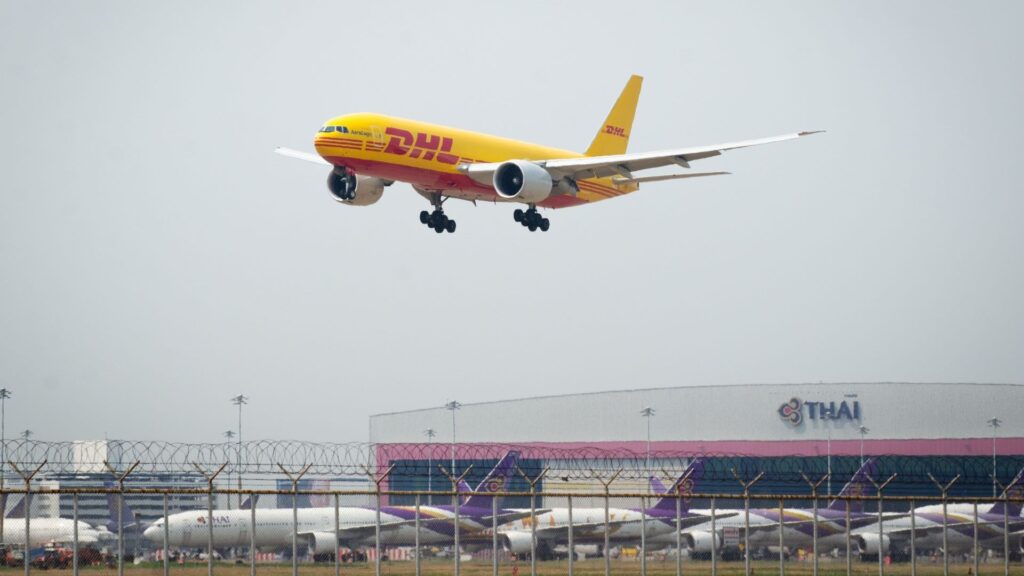
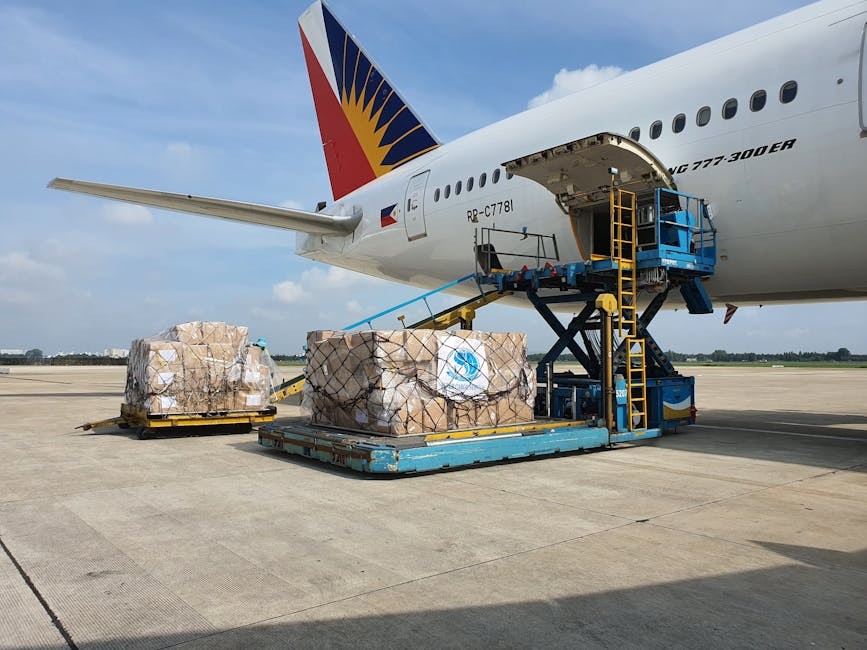
DHL Global Forwarding launched six weekly dedicated Boeing 777 freighter flights between Southeast Asia and the U.S. Midwest in July 2026 — three from Hanoi and Taipei to Cincinnati and Chicago (alternating), plus three from Bangkok to Cincinnati. Kalitta Air operates the Hanoi–Chicago leg, while DHL Aviation manages other routes. The expansion follows new charter services between Liège–Hong Kong (March 2026) and Shanghai–Leipzig (June 1, 2026). DHL joins Ceva Logistics, Kuehne+Nagel, and DSV in deploying dedicated Chicago-area air capacity amid geopolitical volatility and demand for schedule certainty.

Thailand secures $4.1B in EV supply chain investments
Southeast Asia Supply Chain

Thailand secures $4.1B in EV supply chain investments

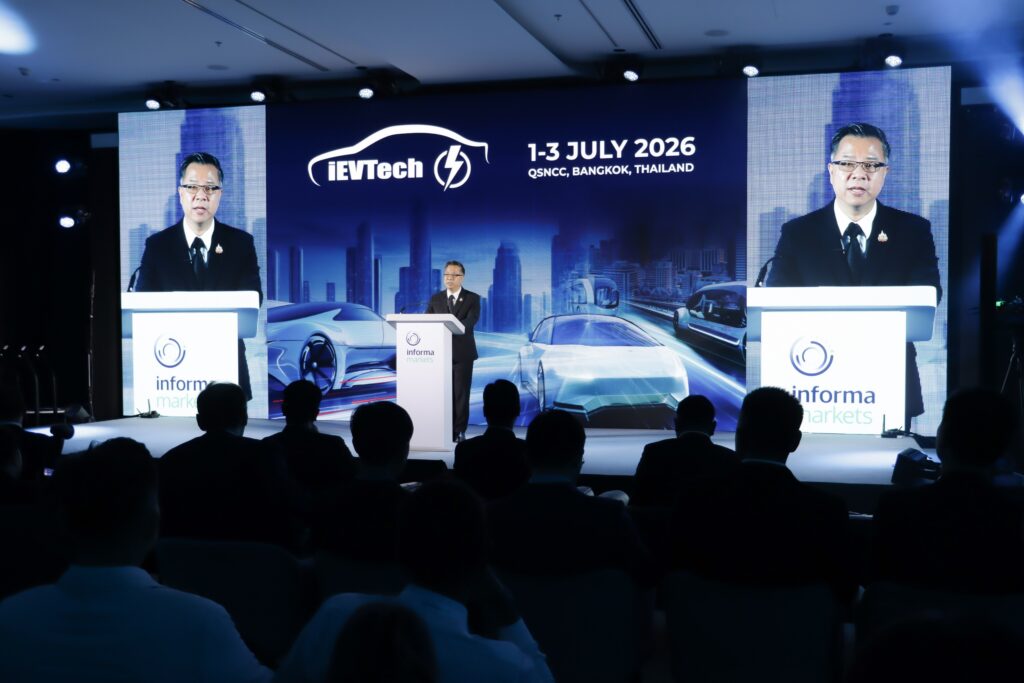
Thailand has secured $4.1 billion in EV supply chain investment across 198 projects, driven by manufacturers from China, South Korea, Germany, and Japan. BEV and hybrid vehicle investments each totaled $1.18 billion, while batteries drew $1.00 billion. Charging infrastructure funding will support over 22,900 stations, including more than 10,000 high-speed DC fast chargers. In 2025, EVs represented over 40% of new vehicle registrations in Thailand. The investments have created more than 16,000 local jobs and enabled over 1,200 supplier matches through BOI-led Sourcing Days.

ASEAN seeks deeper tariff cuts as India’s deficit hits $45.2B
Geopolitics

ASEAN seeks deeper tariff cuts as India’s deficit hits $45.2B

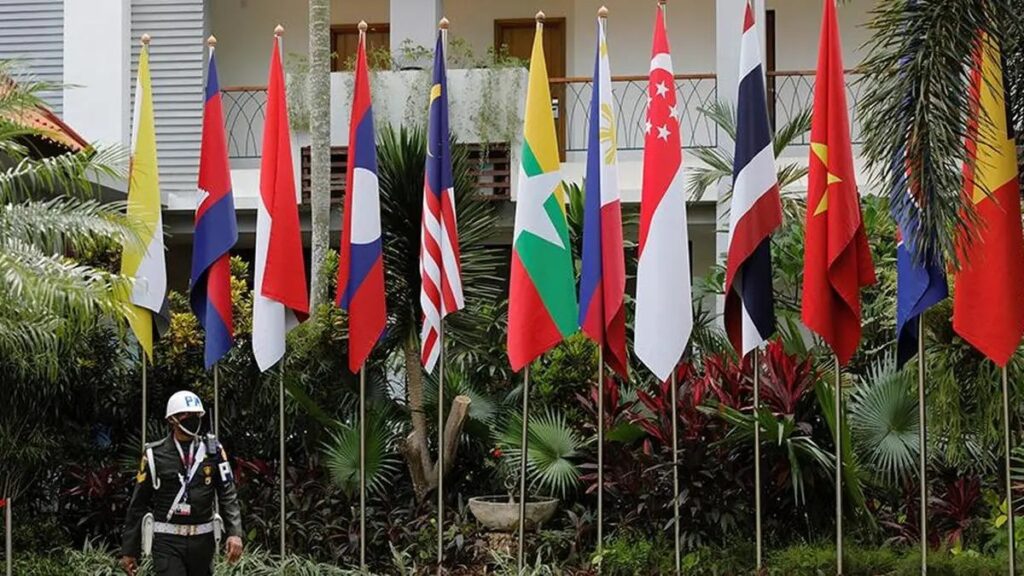
ASEAN is pressing India for deeper tariff cuts amid ongoing review of the ASEAN-India Trade in Goods Agreement (AITIGA). India’s trade deficit with the bloc widened to $45.2 billion in FY25 from $7 billion in 2010. The Department of Commerce is consulting industry on products eligible for tariff reduction — prioritising those where India is a net exporter and domestic producers face minimal risk. Officials cite concerns over rules-of-origin misuse enabling Chinese goods to enter India via ASEAN. Ministry of External Affairs Secretary (East) Rudrendra Tandon confirmed the review seeks 'greater liberalisation on both sides' and requires consensus among all ten ASEAN members.

Nearshoring in Southeast Asia: $224B FDI in 2022
Southeast Asia Supply Chain

Nearshoring in Southeast Asia: $224B FDI in 2022

Southeast Asia attracted a record US$224 billion in FDI in 2022, positioning itself as a top nearshoring destination. Countries like Vietnam and Thailand host multinational and Chinese manufacturers—including Sony, Sharp, JinkoSolar, Growatt, and Hangzhou First Applied Material—seeking lower costs and geopolitical risk mitigation. A skilled, affordable workforce—e.g., Malaysian production workers earning ~US$8,000/year per the Reshoring Institute—and proactive TVET investments strengthen regional competitiveness. Geopolitical uncertainty and U.S.-China trade tensions are accelerating multi-location production strategies across the region.

Logistics Tech Boom in SEA: $360B Market by 2034
AI & Automation

Logistics Tech Boom in SEA: $360B Market by 2034

Southeast Asia’s logistics market — valued at $223.6 billion in 2025 — is forecast to hit $360 billion by 2034, driven by e-commerce expansion, supply chain relocation to Vietnam, Thailand, Indonesia and Malaysia, government infrastructure investment, ecosystem fragmentation, and AI adoption. Platforms enabling supply chain visibility, cross-border coordination, and predictive analytics are becoming critical for shippers and operators navigating complex, multi-jurisdictional flows. The region’s fragmented logistics landscape presents both challenges and high-potential opportunities for scalable tech solutions.

Southeast Asia Supply Chain Realignment Accelerates: 30% Drop in China Exports vs 23% Growth in ASEAN
Geopolitics

Southeast Asia Supply Chain Realignment Accelerates: 30% Drop in China Exports vs 23% Growth in ASEAN

According to MTTSL data, China's exports to the US fell 30% in 2025 while Southeast Asia's exports grew 23%, signaling accelerated supply chain realignment. Strait of Malacca hub ports benefit significantly, with Malaysia and other ASEAN nations enhancing logistics capabilities. Despite geopolitical risks, Southeast Asian supply chains demonstrate resilience through regional trade integration. The next 18-24 months represent a critical phase, requiring strategic adaptation from businesses and governments alike.

Hormuz Paralysis: How Middle East Conflict Is Rewiring Asia-Pacific Supply Chains
Disruptions

Hormuz Paralysis: How Middle East Conflict Is Rewiring Asia-Pacific Supply Chains

The Strait of Hormuz crisis has triggered a cascading failure across Asia-Pacific supply chains — not just in oil and shipping, but in semiconductor gases, fertilizer, remittances, and humanitarian logistics. With daily transits collapsing to under 3,200 vessels, freight costs surging 340%, and helium-4 shortages degrading chip yields by 23%, the region faces a structural recalibration. Vulnerable economies like Sri Lanka and Pakistan confront fuel rationing, currency collapse, and food insecurity, while tech hubs confront elemental scarcity no amount of inventory can buffer. This is not a cyclical shock — it is a permanent reconfiguration of risk architecture.

Thailand’s Data Centre Boom: A Supply Chain Stress Test for Water, Energy, and Regulatory Resilience
ESG & Regulation

Thailand’s Data Centre Boom: A Supply Chain Stress Test for Water, Energy, and Regulatory Resilience

Thailand’s explosive data centre growth—70+ projects in the Eastern Economic Corridor—exposes critical fractures in its water, energy, and regulatory supply chains. With water stress exceeding safe thresholds, grid reserves collapsing to 5.2%, and fragmented ESG oversight enabling compliance arbitrage, the boom reveals systemic vulnerabilities. This analysis dissects the hydrological limits of the EEC, grid fragility amid 4.7 GW of projected demand, regulatory gaps enabling environmental externalities, import dependence stalling localization, and actionable pathways for integrated resource governance. Expert insights and hard data reveal how Thailand’s digital ambition collides with infrastructural reality—and what it must do to transform risk into resilience.

Battery-Swapping Heavy Trucks in Thailand: A Supply Chain Inflection Point for ASEAN Electrification
ESG & Regulation

Battery-Swapping Heavy Trucks in Thailand: A Supply Chain Inflection Point for ASEAN Electrification

U POWER’s deployment of 30 battery-swapping electric heavy trucks in Thailand—kicking off a 1,000-vehicle plan—is a pivotal inflection point for ASEAN supply chains. Unlike plug-in EVs, this model bypasses grid constraints, slashes downtime to under 11 minutes per swap, and enables closed-loop battery recycling with 92% mandated recovery by 2028. Thailand’s dual-track policy—excluding heavy trucks from subsidies while funding swap infrastructure—has catalyzed interoperable standards, ASEAN-wide regulatory alignment, and $1.2 billion in regionally anchored investment. The initiative signals a shift from import-dependent electrification to sovereign, digitally integrated freight infrastructure.

Beyond China+1: The 2026 Asia Supply Chain Realignment and Its Freight Infrastructure Imperative
Manufacturing

Beyond China+1: The 2026 Asia Supply Chain Realignment and Its Freight Infrastructure Imperative

By 2026, Asia's supply chain is shifting from 'China+1' to a multi-polar, infrastructure-driven reality where bonded logistics, regulatory interoperability, and freight lane resilience—not just production cost—define competitiveness. China remains irreplaceable for high-value, compliance-intensive manufacturing, while Southeast Asia grapples with port depth, customs fragmentation, and cross-border friction. India's PLI-driven ascent is tempered by power and rail constraints but offers strategic adjacency advantages. Bonded facilities have evolved into dynamic orchestration hubs, and freight strategy now demands AI-enabled, multi-modal capacity portfolios.

Navigating the Future: Asia Supply Chains in 2026
Strategic Sourcing

Navigating the Future: Asia Supply Chains in 2026

Asia supply chains are reshaping in 2026 with a tri-polar structure: China as the innovation hub, Southeast Asia as the manufacturing base, and India as the strategic pivot. Key trends include China+One strategy adoption, FTZ expansion, and cross-border logistics integration.

Welcome Back!

Login to your account below

Create New Account!

Fill the forms below to register

Retrieve your password

Please enter your username or email address to reset your password.

Add New Playlist