Skip to content

Coverage desk

Saudi Arabia

30 published stories

Houthi blockade cuts Red Sea traffic 40%, raises Middle East conflict risk
Geopolitics

Houthi blockade cuts Red Sea traffic 40%, raises Middle East conflict risk

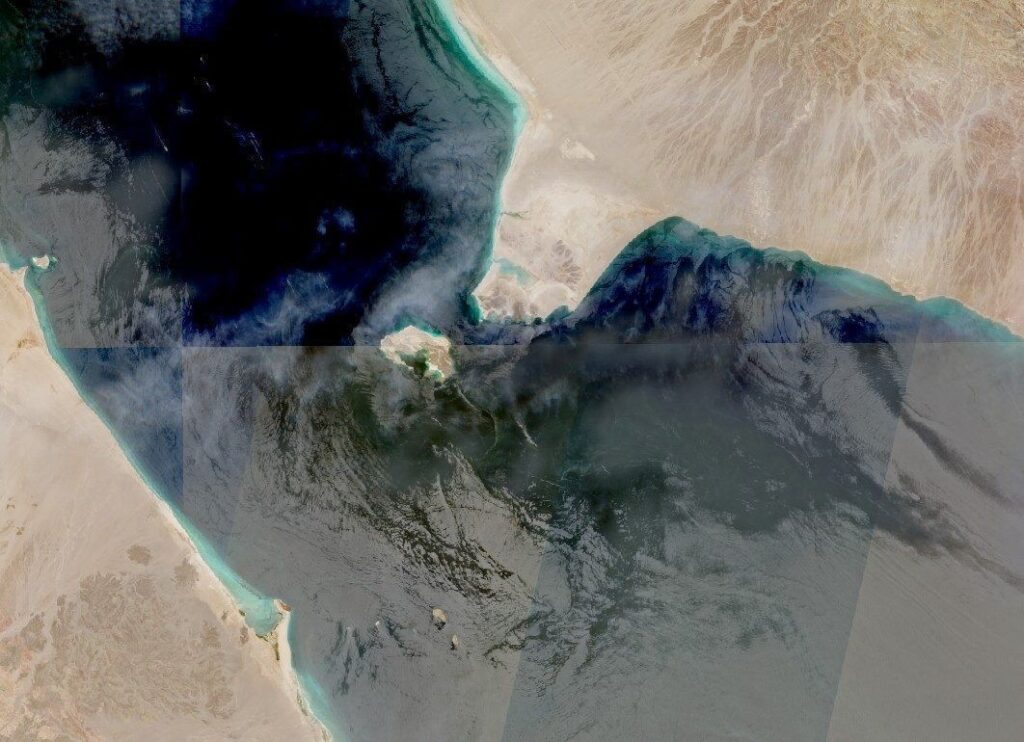
Houthi forces imposed a Saudi shipping embargo on 22 July 2026, cutting Red Sea traffic by 40% and triggering Saudi airstrikes on Hodeidah port. A National Shipping Company of Saudi Arabia oil tanker was hit on 25 July 2026, prompting Donald Trump’s threat to hold Iran responsible. Pakistan activated its mutual defence pact with Riyadh, while U.S. Central Command escalated surveillance. The Red Sea handles 12% of global trade; disruptions have raised Asia–Europe freight rates by 215% and extended auto component lead times by 18–22 days.

Bab el-Mandeb Blockade Threatens 20% Fertilizer Cost Rise for Brazil
Latin America Supply Chain

Bab el-Mandeb Blockade Threatens 20% Fertilizer Cost Rise for Brazil

A potential blockade of the Bab el-Mandeb Strait threatens to raise Brazilian fertilizer import costs by up to 20%, disrupt Black Sea grain exports to Asia, and inflate diesel and freight expenses. Saudi Arabia — a key supplier of phosphate fertilizers and sulfur to Brazil — faces severe export constraints if both Red Sea and Hormuz routes are compromised. Analysts warn DAP prices could surge ahead of India’s major procurement auction, while wheat and corn shipping premiums may rise 15–25%. Brazil’s heavy reliance on imported fertilizers (85%+) and road transport magnifies domestic exposure.

TIACA taps Mammen Tharakan as director general in August
AI & Automation

TIACA taps Mammen Tharakan as director general in August

Mammen Tharakan has been appointed director general of The International Air Cargo Association (TIACA), effective August 2026, succeeding Glyn Hughes who has led the group since 2021. Tharakan brings three years of experience as vice president at Saudi Arabia’s King Salman International Airport Development Company—overseeing development of a new Riyadh airport targeting 100 million annual passengers by 2030—and nearly five years directing e-commerce, cargo, and aviation real estate at Edmonton International Airport in Canada. His prior roles include Air France-KLM station management across North America. TIACA Chair Roos Bakker cited his strategic vision and collaborative leadership. The association will host its Air Cargo Forum in Miami from October 26–29, 2026.

Indonesia Pledges to Insert Local Products into Hajj Supply Chain
Southeast Asia Supply Chain

Indonesia Pledges to Insert Local Products into Hajj Supply Chain

Indonesia’s government is launching a coordinated effort to embed domestic products—starting with fisheries from Baubau, Southeast Sulawesi—into the hajj and umrah supply chain for its 220,000+ annual pilgrims in Saudi Arabia. President Prabowo Subianto directed the move to boost local economies, with Minister Mochamad Irfan Yusuf ordering immediate business matching between Indonesian producers and Saudi importers by mid-July 2026. The plan includes halal certification, cold-chain logistics, and an expo in South Sulawesi targeting concrete export contracts. It follows a Rp4.2 trillion regional tax shortfall in Banten, underscoring urgency for new revenue streams.

Southern African citrus exports drop 24% amid Red Sea disruption
Disruptions

Southern African citrus exports drop 24% amid Red Sea disruption

Southern African trade growth is being stifled by supply chain bottlenecks stemming from Persian Gulf conflict, with South Africa’s citrus exports down 24% year-on-year — from 15.2 million to 11.5 million cartons. While total citrus exports rose 2.1% to 62.1 million cartons, regional shifts accelerated: Europe took 24.3 million (+18.6%), the UK 6.2 million (+12.7%), and Asia 2.9 million (+28.2%). Port congestion worsened, with Cape Town and Durban vessel waits exceeding 48 hours. May 2026 container throughput hit 17.3 million TEU — up 6.2% month-on-month — revealing demand resilience amid infrastructure strain.

Jeddah port congestion halts Gulf land bridge, 5km truck queues
AI & Automation

Jeddah port congestion halts Gulf land bridge, 5km truck queues

Hapag-Lloyd has suspended all bookings into Jeddah amid severe port congestion, with truck queues stretching 5km and container release delays reaching six to eight weeks. Yard occupancy at Jeddah Port has hit 90%, triggering a 20%–25% productivity drop. Demand for the Gulf land bridge remains strong despite recent diplomatic developments, driven partly by seasonal Hajj-related cargo and transit shipments rerouted away from the Strait of Hormuz. Forwarders are advising clients to shift to Arabian Sea ports including Salalah, Khor Fakkan, and Sharjah. Maersk has implemented transhipment via those ports followed by land bridge movement to Sharjah and onward intra-Gulf distribution.

Saudi Arabia launches Red Sea Express linking Yanbu, Jeddah, Ain Sokhna, Aqaba
Geopolitics

Saudi Arabia launches Red Sea Express linking Yanbu, Jeddah, Ain Sokhna, Aqaba

Saudi Arabia has launched the Red Sea Express container line, connecting King Fahad Industrial Port in Yanbu and Jeddah Islamic Port with Ain Sokhna Port in Egypt and Aqaba Port in Jordan. The service began operations on 29 June 2026, carrying its first shipment of 1,100 standard containers. Designed to accelerate supply chains and expand non-oil exports, the corridor supports the National Transport and Logistics Strategy. King Fahad Industrial Port has an annual capacity of 210 million tons. The initiative follows Saudi Arabia’s Q1 2026 trade total of $141.25 billion and a $24.1 billion fiscal surplus.

COSCO, KTZ Express expand Eurasian logistics corridors
Supply Chain

COSCO, KTZ Express expand Eurasian logistics corridors

KTZ Express and COSCO SHIPPING Lines are expanding their strategic cooperation across Eurasian transport corridors, with high-level talks led by Aibek Kapar and Huang Feiwu. The partnership focuses on rail-sea integration between China, Kazakhstan, Central Asia, and Europe. Separately, COSCO SHIPPING Specialized Carriers and COSCO SHIPPING (West Asia) launched their first integrated supply chain hub in Saudi Arabia with Jeddah-based operations. Joint initiatives include IoT-enabled container tracking, electronic documentation, and cold-chain infrastructure upgrades — targeting 18-day China–Europe transit times. COSCO operates over 200 vessels; KTZ manages 40,000 km of rail.

Wio Bank shifts SCF focus to ecosystem resilience amid Strait of Hormuz disruption
Geopolitics

Wio Bank shifts SCF focus to ecosystem resilience amid Strait of Hormuz disruption

Supply chain finance is shifting from working capital optimization to ecosystem-wide resilience, driven by geopolitical disruptions — notably in the Strait of Hormuz. Wio Bank’s Prateek Vahie argues SCF must now stabilize supplier networks amid volatility. The global trade finance gap stands at US$2.5 trillion (Asian Development Bank), with payment terms stretching to 90 days. Buyer-led SCF programs help distribute liquidity to SMEs, reduce production delays, and support sustainability goals. Digital procurement tools and overland corridor expansion are accelerating across the Middle East.

Saudi National Champion Scales Supply Chain Hubs to Boost Resilience
Latin America Supply Chain

Saudi National Champion Scales Supply Chain Hubs to Boost Resilience

Saudi Arabia's national supply chain champion, the Saudi National Logistics Authority (SNLA), is expanding its logistics infrastructure with five new hubs to enhance supply chain resilience. The $1.8 billion investment—$1.2 billion from the Public Investment Fund and $600 million from private partners—is expected to boost inland freight capacity by 42% by 2026. The hubs, operational by Q2 2024, reduce cargo processing time from 72 to under 18 hours. Integration with global logistics providers like Maersk and DHL is underway, alongside AI-driven demand forecasting that reduced overstock by 29% in pilot zones. The SNLA also launched a training program to upskill 15,000 workers by 2026.

Middle East Builds 5+ Alternative Trade Corridors to Bypass Strait of Hormuz — www.logisticsinsider.in
Middle East Supply Chain

Middle East Builds 5+ Alternative Trade Corridors to Bypass Strait of Hormuz — www.logisticsinsider.in

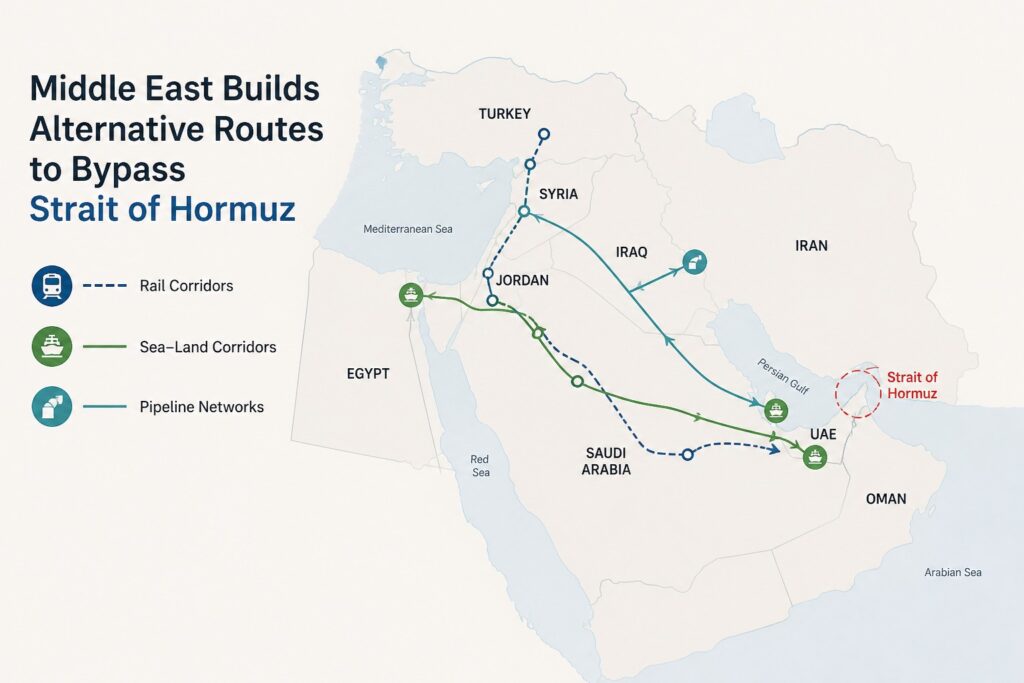
Middle Eastern governments are deploying at least five alternative trade corridors—including UAE–Saudi–Jordan rail links, the revived Hejaz Railway, and the Ceyhan–Basra oil pipeline—to bypass the Strait of Hormuz. Operational since early 2026, the Fujairah–Neom–Aqaba corridor handles cargo diverted from Red Sea routes, where average delays hit 14.3 days in Q1 2026. GCC states committed $22 billion to a unified railway by 2030, while Turkey’s pipeline extension targets 1.2 million bpd capacity by 2029. DP World and Abu Dhabi Ports expanded into Jordan and Syria in 2026, and a $1.8 billion solar desalination initiative will deliver 300,000 m³/day by 2028.

Middle East Pushes New Logistics Corridor to Bypass Hormuz — www.scmp.com
Disruptions

Middle East Pushes New Logistics Corridor to Bypass Hormuz — www.scmp.com

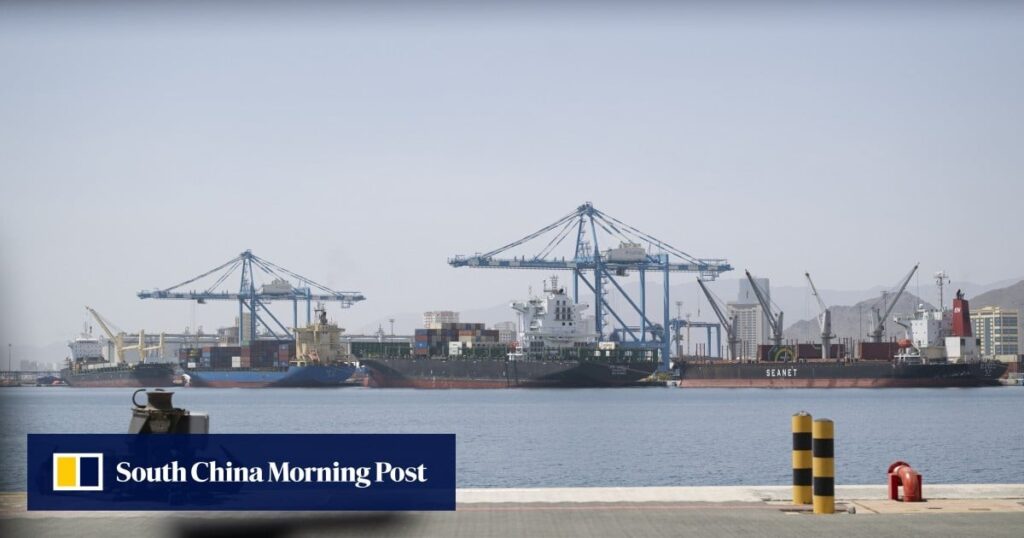
Middle Eastern governments—including Saudi Arabia, Turkey, and the UAE—are developing a multimodal rail-sea logistics corridor to bypass the Strait of Hormuz. The route would connect Indian Ocean ports in the UAE and Oman to the Mediterranean via rail through Saudi Arabia and Jordan, then onward through Egypt’s Suez Canal or Syrian ports Latakia and Tartus. Feasibility studies began in Q1 2026; construction is slated for late 2027. Analysts cite a structural shift away from Persian Gulf dependency, citing $1.31 billion UAE funding, 14.2% YoY growth at Jordan’s Aqaba Port, and regional parallels like India’s INSTC and the EU’s TITR.

Welcome Back!

Login to your account below

Create New Account!

Fill the forms below to register

Retrieve your password

Please enter your username or email address to reset your password.

Add New Playlist