Skip to content

Latin America Supply Chain

Saudi National Champion Scales Supply Chain Hubs to Boost Resilience

Saudi Arabia's national supply chain champion, the Saudi National Logistics Authority (SNLA), is expanding its logistics infrastructure with five new hubs to enhance supply chain resilience. The $1.8 billion investment—$1.2 billion from the Public Investment Fund and $600 million from private partners—is expected to boost inland freight capacity by 42% by 2026. The hubs, operational by Q2 2024, reduce cargo processing time from 72 to under 18 hours. Integration with global logistics providers like Maersk and DHL is underway, alongside AI-driven demand forecasting that reduced overstock by 29% in pilot zones. The SNLA also launched a training program to upskill 15,000 workers by 2026.

Original source: logisticsmiddleeast.com

Saudi National Champion Scales Supply Chain Hubs to Boost Resilience
📋 本文要点

Saudi Arabia's national supply chain champion, the Saudi National Logistics Authority (SNLA), is expanding its logistics infrastructure with five new hubs to enhance supply chain resilience. The $1.8 billion investment—$1.2 billion from the Public Investment Fund and $600 million from private partners—is expected to boost inland freight capacity by 42% by 2026. The hubs, operational by Q2 2024, reduce cargo processing time from 72 to under 18 hours. Integration with global logistics providers like Maersk and DHL is underway, alongside AI-driven demand forecasting that reduced overstock by 29% in pilot zones. The SNLA also launched a training program to upskill 15,000 workers by 2026.

Strategic Infrastructure Expansion Drives National Supply Chain Stability

According to Logistics Middle East, Saudi Arabia’s national supply chain champion has launched a multi-phase infrastructure rollout to strengthen domestic logistics resilience. The initiative includes the development of five new logistics hubs across the kingdom, with four already operational by Q2 2024. These hubs are designed to manage over 12 million metric tons of cargo annually, supporting both import and export flows.

“Our goal is to create a resilient backbone that ensures uninterrupted delivery of essential goods, even during regional disruptions.” — Ahmed Al-Mutairi, Chief Supply Chain Officer, Saudi National Logistics Authority (SNLA)

Public-Private Investment Fuels Capacity Growth

The national champion, operating under the Saudi National Logistics Authority (SNLA), has secured $1.8 billion in public and private investment to support the expansion. Of this, $1.2 billion comes from state funding via the Public Investment Fund (PIF), while $600 million is allocated from strategic private partners, including SABIC and Aramco. The investment is expected to increase the kingdom’s inland freight capacity by 42% by 2026.

According to the report, the new hubs are equipped with automated storage systems, real-time tracking via IoT sensors, and integrated customs clearance platforms. These systems reduce average cargo processing time from 72 hours to under 18 hours at the border, a 75% improvement.

Regional and Global Integration Efforts

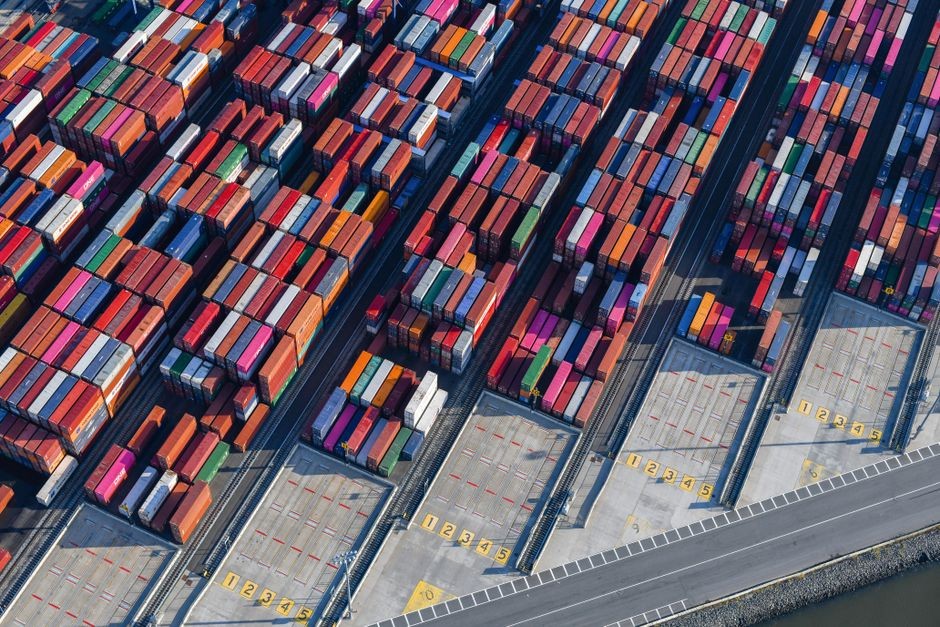
The SNLA has established direct rail and road links connecting the five hubs to major ports, including Jeddah Islamic Port and King Abdullah Port. These routes are designed to handle 30% of the kingdom’s containerized freight by 2027. Additionally, the SNLA has signed agreements with 17 international logistics providers, including Maersk, DHL, and Flexport, to integrate their digital platforms with the national system.

  • Maersk: Direct API integration with SNLA systems by March 2025
  • DHL: Launch of a dedicated Saudi regional hub in Riyadh by Q1 2025
  • Flexport: Real-time shipment tracking via SNLA’s digital twin platform

Workforce and Technology Development

To support operations, the SNLA has launched a national training program in collaboration with King Saud University and the Saudi Technical University. The program aims to upskill 15,000 workers in logistics automation, digital supply chain management, and cybersecurity by 2026. By the end of 2024, over 3,200 trainees had completed certification in warehouse automation systems.

Furthermore, the SNLA has piloted AI-driven demand forecasting models in three major cities—Riyadh, Jeddah, and Dammam—reducing inventory overstock by 29% in pilot zones. The system uses machine learning trained on historical import/export data, weather patterns, and geopolitical event alerts.

Source: www.logisticsmiddleeast.com

Compiled from international media by the SCI.AI editorial team.

Ask SCI.AI Finished reading? Continue with SCI.AI. Explore the related policy, route, company and historical context. Continue asking
UnionPay plugs Chinese apps into Brazil’s Pix after US tariffs
Latin America Supply Chain

UnionPay plugs Chinese apps into Brazil’s Pix after US tariffs

UnionPay International is connecting Chinese mobile payment apps—including the UnionPay app and bank-linked wallets—to Brazil’s Pix instant payment system, enabling Chinese tourists to scan QR codes and pay in real time. The pilot launches in Q3 2026 amid U.S. tariffs targeting Pix’s regulatory model. Pix, launched in November 2020, serves 15 million merchants and processes over 1.2 billion transactions monthly. The integration marks UnionPay’s first direct linkage with a non-Asian national real-time payment system and reflects growing financial infrastructure alignment between China and Latin America.

Walgreens opens Washington micro-fulfillment center, processes 7M prescriptions yearly
Latin America Supply Chain

Walgreens opens Washington micro-fulfillment center, processes 7M prescriptions yearly

Walgreens has launched an automated micro-fulfillment center in Kent, Washington, on July 22, 2026. The facility processes 7 million prescriptions annually and supports 196 stores — 122 of them in Washington state. Part of a resumed initiative paused in 2023, the center combines robotics with pharmacist oversight to improve prescription turnaround and patient care. Jon Joplin, Walgreens’ chief technology and operations officer of automated fulfillment, highlighted how the integration strengthens regional service capacity while freeing pharmacists for clinical work. The site exemplifies a broader shift toward compact, tech-enabled pharmacy logistics nodes.

Trump FCC bans Chinese humanoid robots, power inverters
Latin America Supply Chain

Trump FCC bans Chinese humanoid robots, power inverters

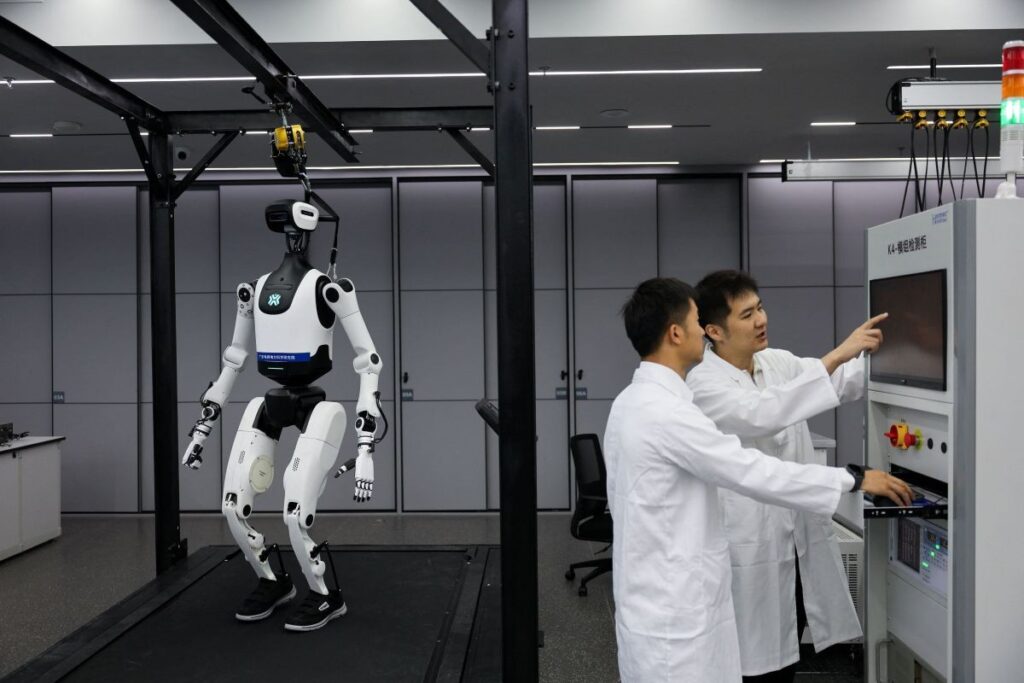
The Trump administration, via the FCC, banned U.S. imports of new Chinese humanoid and quadruped robots and grid-connected power inverters effective 28 July 2026. The move targets AI supply chain security, citing risks of data theft, cyberattacks like Volt Typhoon, and overreliance akin to China’s rare earth dominance. Unitree—holding under 20% of the global humanoid robot market—is directly affected, as are Chinese inverter leaders Sungrow (300274.SZ) and Huawei. The Chinese Embassy pledged countermeasures, while the FCC plans broad exemptions for non-Chinese suppliers.

Welcome Back!

Login to your account below

Create New Account!

Fill the forms below to register

Retrieve your password

Please enter your username or email address to reset your password.

Scan to share via WeChat

Open WeChat and scan the QR code to share

QR Code

Add New Playlist