

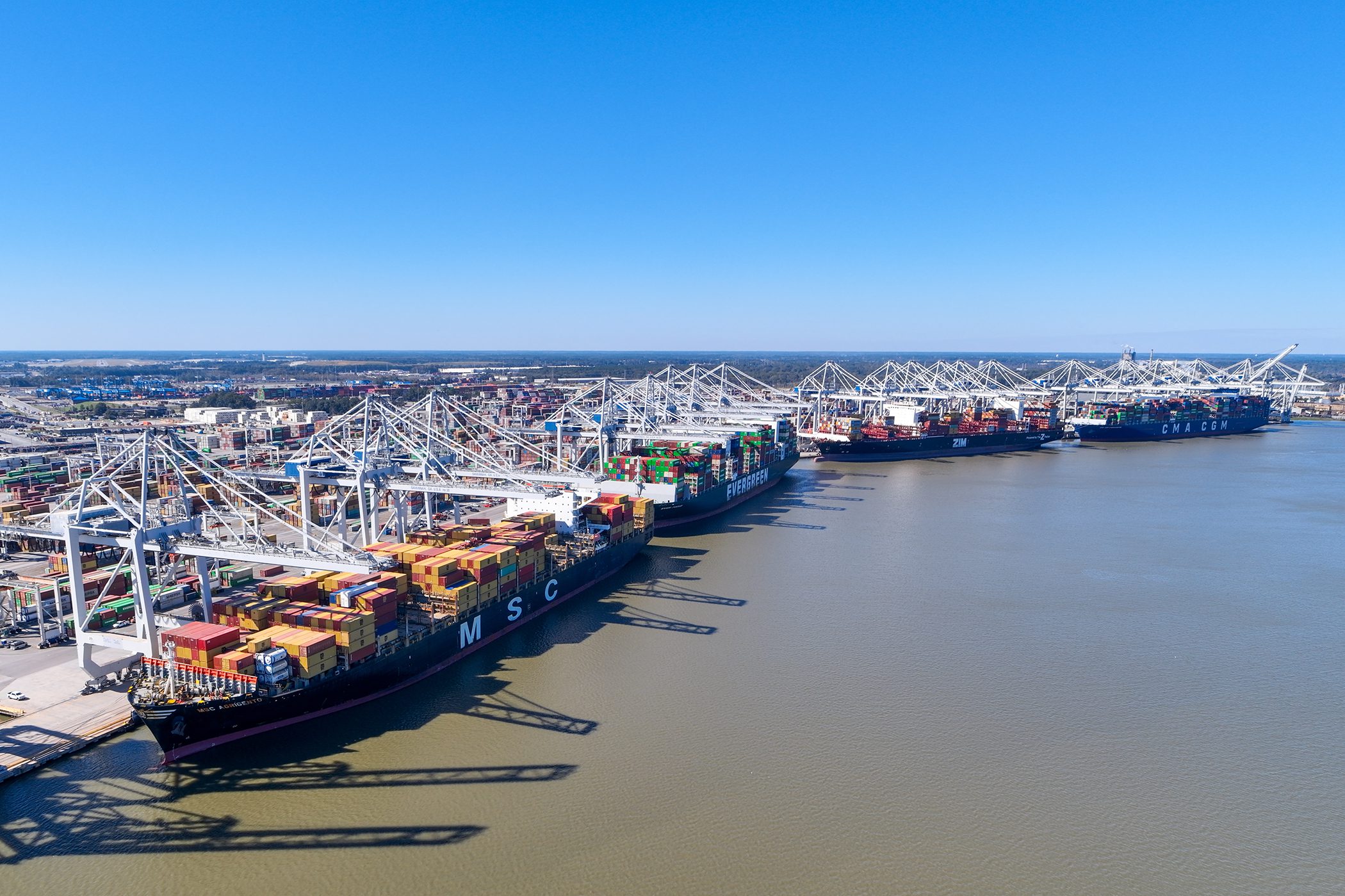
Freight Rates Fall Across All Major Container Trades as Demand Stabilizes
Author: [Gavin van Marle] (The Loadstar) –
Last week, spot freight rates on major container liner routes continued to fall as demand remained stable and a short-term surge in demand expected before National Day has yet to materialize.
National Day begins on October 1st, during which the country will be on a one-week public holiday—previously, there was often a spike in demand two weeks ahead of the holiday.
However, it seems that shippers are facing more pressing issues, particularly with the increasing likelihood of a strike along the US East Coast and Gulf Coast. This can explain the sharp decline in spot freight rates from Asia to the US East Coast this week, as the window for importing goods before October 1st has closed.
The Shanghai-New York route of the Drewry World Container Index (WCI) saw a 21% drop in its spot rate this week, ending at USD 6,661 per 40-foot container.
Drewry stated: “Shippers are diverting their cargo from the US East Coast to the West Coast to avoid the planned International Longshoremen’s Association (ILA) strike in October, leading to a decline in demand.”
“This has led to a significant 21% drop in spot rates on the East Coast. Due to weak demand, Drewry expects further declines in east-west route rates over the next few weeks.”
Freightos’ Chief Analyst Judah Levine explained: “Now that we’ve passed the deadline for shipping containers from Asia to the East Coast, there are more reports of carriers offering discounts and expectations that East Coast rates may drop significantly soon.”
“This deadline might provide some buoyancy to West Coast rates as more cargo is shifting from the East Coast and Gulf regions.”
“There remain significant differences between the ILA and port operators on issues such as wages and port automation, with suspended negotiations increasing the likelihood of a strike.”
“While most importers have already ramped up their peak season shipments, this reason may not broadly impact the availability of holiday-season goods,” he added.
Indeed, in major east-west trade lanes, the WCI’s Shanghai-Los Angeles route saw the smallest decline at 7%, ending at USD 5,627 per 40-foot container, while Xeneta XSI’s trans-Pacific segment fell by 4% to USD 6,342 per 40-foot.
Meanwhile, spot rates on Asia-North Europe and Asia-Mediterranean routes saw double-digit declines again this week, further indicating that the peak season of 2024 has ended prematurely.
The WCI’s Shanghai-Rotterdam route fell by 17%, ending at USD 5,152 per 40-foot container for the week, while the Shanghai-Genoa route declined by 10% to USD 5,256 per 40-foot container.
However, current spot rates on these two routes are still up by 297% and 210%, respectively, compared to last year; the Shanghai-Los Angeles route is up by 160%, while the Shanghai-New York route is only up by 120% from last year.
The Loadstar is considered one of the most influential sources for analysis and commentary at the highest levels of logistics and supply chain management.
Source Website: gCaptain


