

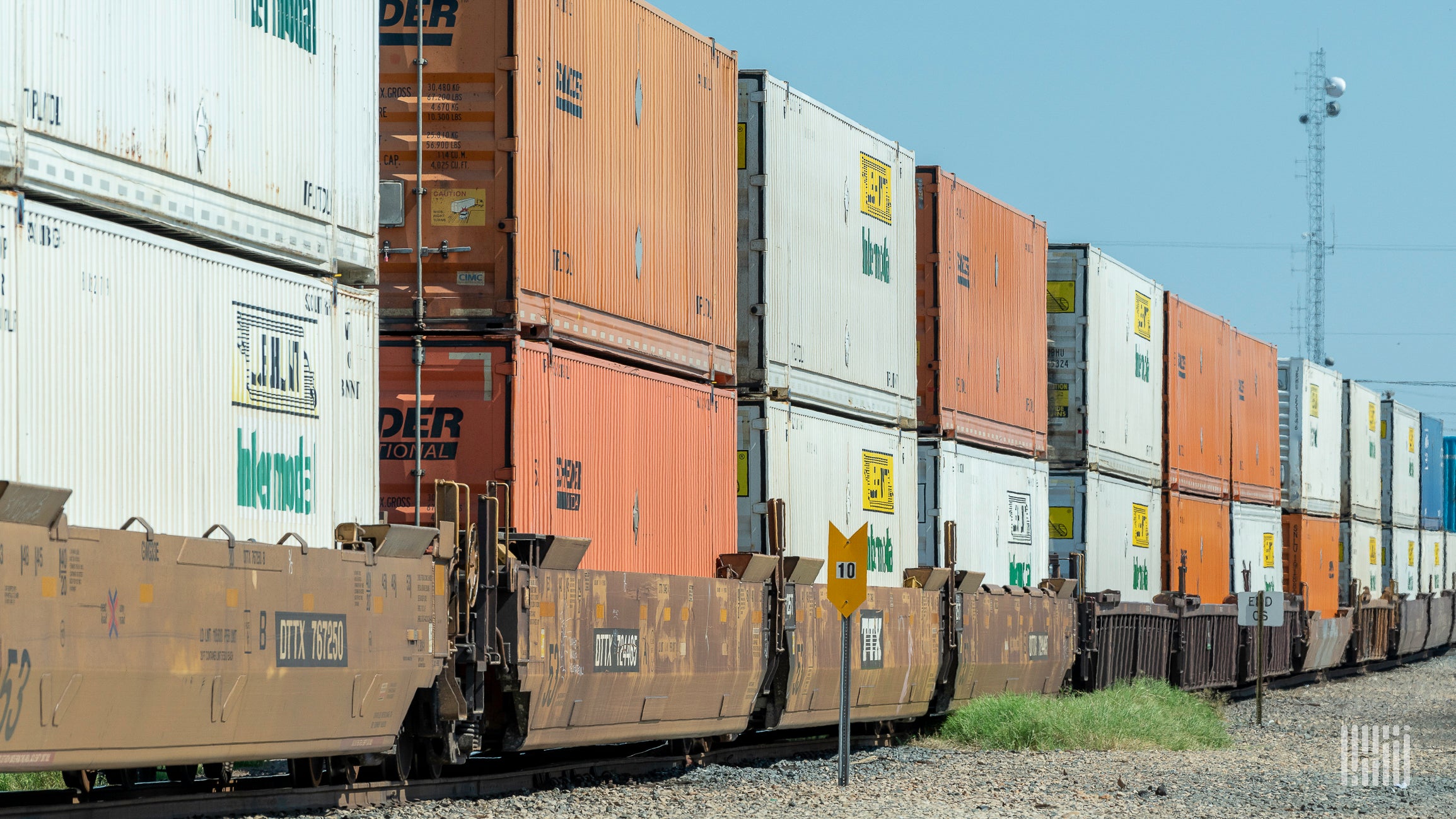
US Rail Sees Highest Weekly Intermodal Volumes Since Pandemic as Ongoing Supply Chain Issues and Looming Port Worker Strikes May Drive Further Growth
Due to the recovery momentum and the threat of a strike at East Coast ports, intermodal volumes reached record levels in the week ending September 14.
The Association of American Railroads (AAR) reported on Wednesday that U.S. rail traffic was 522,557 carloads and intermodal units, up 6.8% from the same period in 2023.
Intermodal volumes surged to 290,403 containers and trailers, a 13% increase over the same period in 2023, leading all other carload categories with 232,154 carloads, matching last year’s numbers.
According to detailed data provided by AAR, U.S. container shipments for the week reached an all-time high of 281,011 units, driven by a post-Labor Day rebound and continued recovery following brief disruptions at Canadian CN and CPKC railways. The total intermodal volume was the highest since Week 17 in 2021 (the pandemic-driven week) and ranks as the 22nd highest week on record.
Compared to the same period in 2023, seven out of ten carload commodity groups saw increases. These included grains, up by 3,048 carloads to 19,372; miscellaneous carloads, up by 1,837 carloads to 10,781; and non-grain and food agricultural products, up by 820 carloads to 17,227.
Commodities that decreased compared to the same period in 2023 included coal, down by 5,797 carloads to 63,017; non-metallic minerals, down by 1,853 carloads to 32,020; and chemicals, down by 310 carloads to 32,444.
In the first 37 weeks of 2024, U.S. railroads reported a cumulative total of 8,012,176 carloads, down 3.3% from the same period in 2023, while intermodal units reached 9,641,820 units, up by 9.5%. Total U.S. traffic amounted to 17,653,996 carloads and intermodal units, an increase of 3.3% from last year.
For the week ending September 14, total reported rail traffic for nine major North American railways in the United States, Canada, and Mexico was 338,817 carloads, down 0.8% from the same period in 2023, with intermodal units at 374,207, up by 9.8%. Total traffic reached 713,024 carloads and intermodal units, an increase of 4.5%. The cumulative total for the first 37 weeks was 24,587,434 carloads and intermodal units, up 2.6% from 2023.
Canadian railways reported a decrease in carloads to 91,036, down by 1.3%, with intermodal units at 71,170, down by 0.3% compared to the same period in 2023. For the first 37 weeks of 2024, Canadian railways reported a cumulative traffic volume of 5,853,653 carloads, containers, and trailers, up by 0.2%.
Mexican railways reported carloads for the week at 15,627, down by 8.9% from 2023, while intermodal units were 12,634, up by 2.1%. For the first 37 weeks of 2024, Mexican railways reported a cumulative total of 1,079,785 carloads and intermodal containers and trailers, an increase of 4.8% from last year.
### Stuart Chirls
Stuart Chirls is a journalist who has covered railroads, intermodal, container shipping, ports, supply chain, and logistics for Railway Age, Journal of Commerce, and IANA. He also held positions at S&P, McGraw-Hill, United Business Media, Advance Media, Tribune Co., The New York Times Co., and worked in supply chain operations at BASF, the world’s largest chemical producer.
—
Source website: FreightWaves


