Skip to content

AI & Automation · Strategy & Planning · Supply Chain · Technology

Amazon Deploys AI Technology in Delivery Vehicles: New Opportunities for Enhancing Logistics Efficiency and Customer Experience

Visual Aid for Parcel Retrieval Aims to Help Drivers Quickly Locate Parcels and Save Route Time.

Original source: Source information pending

Amazon Deploys AI Technology in Delivery Vehicles: New Opportunities for Enhancing Logistics Efficiency and Customer Experience
📋 本文要点

Visual Aid for Parcel Retrieval Aims to Help Drivers Quickly Locate Parcels and Save Route Time.

## Briefing

### Amazon Deploys AI Technology in Delivery Vehicles

Visual-Aided Package Retrieval is designed to help drivers quickly locate packages and save delivery time.

Published on October 17, 2024

**Max Garland**
Senior Reporter

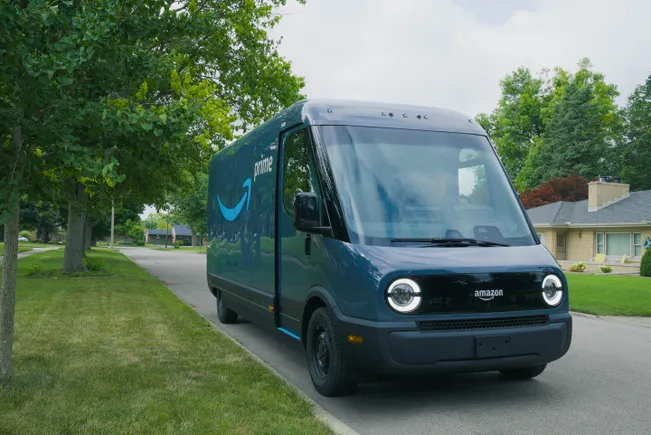
Amazon announced last week that it plans to deploy artificial intelligence technology across its fleet of 1,000 electric delivery vans by early next year to boost driver efficiency. Visual-Aided Package Retrieval (VAPR) uses AI to help drivers quickly find the required packages at each delivery stop. Amazon has tested this technology with contract delivery partners and reported that initial tests saved over 30 minutes per route.

Emptying bags and organizing parcels for the next delivery location typically takes two to five minutes, but with VAPR, this process is reduced to about one minute, according to Bobby Garcia, a driver for Bloomfield Logistics, an Amazon delivery contractor.

## In-Depth Analysis

VAPR employs computer vision technology originally developed for Amazon fulfillment centers to identify items during storage or picking operations. The technology can locate and interpret multiple barcodes in real-time without the need for manual scanning.

To optimize VAPR’s application environment inside vehicles, Amazon has integrated it with delivery route navigation systems and paired it with on-board light projectors and cameras.

“We had to consider unique factors of the delivery experience, such as lighting conditions and space constraints within the vehicle,” said John Colucci, a product manager at Amazon Transportation Services in the announcement.

According to Amazon, VAPR will prevent drivers from wasting time organizing packages for site-specific deliveries, reading shipping labels, or checking customer names or addresses to ensure they have the right package. Instead, this technology projects a green “O” mark on the correct parcel and a red “X” on all other parcels.

“With audio and visual cues, VAPR confirms the correct package has been located before the driver enters the cargo area,” Amazon stated.

Amazon is one of several companies using AI to streamline and improve delivery processes. For example, FedEx uses AI to generate more accurate estimates for package arrival times. UPS’s DeliveryDefense service relies on AI to identify high-risk shipments that may need rerouting to other locations.

—

Source: Supply Chain Dive

Ask SCI.AI Finished reading? Continue with SCI.AI. Explore the related policy, route, company and historical context. Continue asking
Stay ahead of supply chain shifts

One email a week: the stories that matter and new risk events — in English, free.

Prefer RSS? Articles Risk events

NRF: Early peak shipping season to subside in September
Supply Chain

NRF: Early peak shipping season to subside in September

The National Retail Federation (NRF) and Hackett Associates report that the early peak shipping season is ending, with U.S. port imports expected to decline for the rest of 2026. May was the busiest month at 2.24 million TEU. Tariff changes and supply chain disruptions drove retailers to pull forward orders. Consumer spending remains resilient. Full-year 2026 imports are projected at 25.5 million TEU, up 0.1% from 2025.

China’s exports rise 14%, imports up 22% amid trade war resilience
Supply Chain

China’s exports rise 14%, imports up 22% amid trade war resilience

China’s foreign trade rose 17.3% to ¥30.13 trillion in the first seven months of 2026, with exports up 14% and imports surging 22%. High-tech exports jumped over 50% in July, accounting for nearly 60% of monthly export growth. U.S.-China trade fell 1.6%, while ties with over 180 countries—including ASEAN and the EU—expanded. Green exports like EVs and lithium batteries posted double-digit growth for the 17th straight month. China also applies zero tariffs to imports from 63 countries.

TSMC revenue up 33.7%, ASML ships 86 lithography machines
Manufacturing

TSMC revenue up 33.7%, ASML ships 86 lithography machines

TSMC reported $40.2 billion in Q2 2026 revenue — up 33.7% year-on-year — with 2-nm process contributing 3% of sales. ASML shipped 86 new lithography machines in the same quarter, boosting revenue to €9.32 billion ($10.69 billion). TSMC holds 73% of the global foundry market, while ASML’s EUV tools remain essential for sub-3-nm chip production. Both companies’ five-year net income grew over 90% (ASML) and 251% (TSMC). TSMC’s $100 billion Arizona expansion will support 2-nm manufacturing and advanced packaging.

Welcome Back!

Login to your account below

Create New Account!

Fill the forms below to register

Retrieve your password

Please enter your username or email address to reset your password.

Scan to share via WeChat

Open WeChat and scan the QR code to share

QR Code

Add New Playlist

