

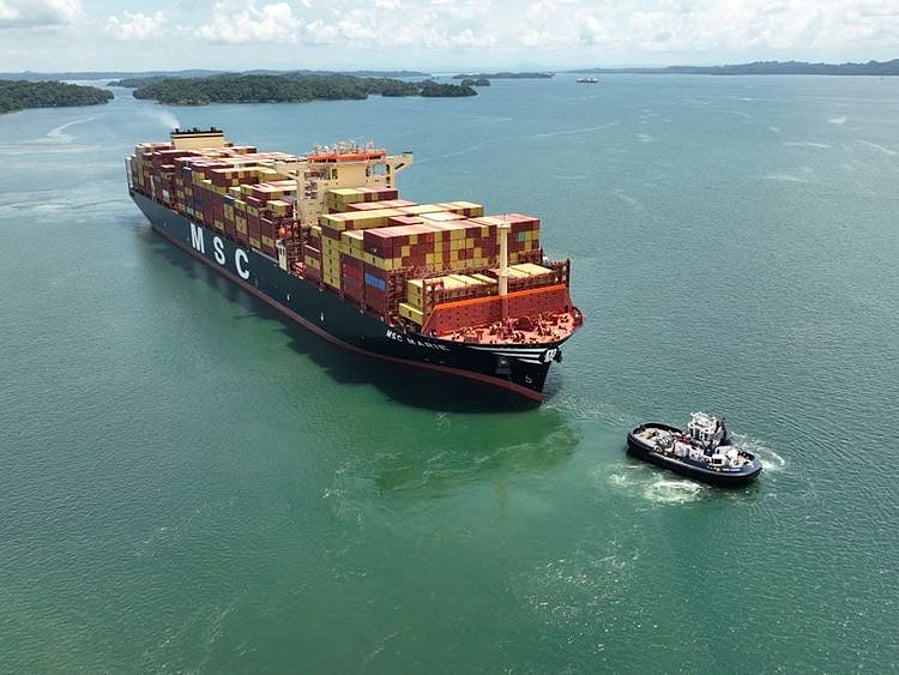
Maersk Successfully Completes First Trial Voyage in Red Sea, Analysts Warn of 36% Global Container Capacity Growth by 2027 with Potential 10% Drop in Freight Rates; Leading Shipping Giants Face Loss Risks as Industry Moves Towards Correction Post-Crisis Bonanza in 2026.
Maersk completes Red Sea trial run, analysts warn of potential 10% further drop in freight rates; major shipping giants face risk of losses.
The Double-Edged Sword of Red Sea Route Resumption: A Bittersweet Victory for the Shipping Industry
At the beginning of 2026, the global container shipping industry stands at a critical turning point. With Danish shipping giant Maersk (Maersk) successfully navigating the Red Sea for the first time since Houthi attacks, market expectations for the full resumption of routes are rapidly rising.
However, this seemingly positive news is a double-edged sword for shipping companies—the restoration of the Red Sea route means shorter voyages and released capacity, which will accelerate the downward trend in freight rates, exposing the industry’s long-standing issue of structural overcapacity.
Main shipping companies including Maersk, Hapag-Lloyd (Hapag-Lloyd), Nippon Yusen Kaisha (Nippon Yusen), Cosco Shipping Holdings (Cosco Shipping Holdings), and Orient Overseas are expected to record weaker performance in 2026.
Alarming Data: Capacity Up by 36%, Demand Shrinking
Bloomberg Intelligence analyst Kenneth Loh’s data is alarming: global container ship capacity is projected to grow by about 36% between 2023 and 2027, while demand growth is far from keeping pace with this rate.
Even more concerning, if shipping companies fully resume the Red Sea route, container transport demand may contract by 1.1% in 2026. Capacity is growing, but demand is shrinking—this is what U.S. Bank analysts describe as “structural overcapacity.”
Freight rate data has already begun to reflect this trend. According to the Drewry World Container Index, as of the week ending January 29:
- Global liner freight rates fell by 4.7%
- The price per 40-foot container dropped to $2,107
- Port congestion is easing, and prices driven by disruptions over the past two years are fading away.
Successful Maersk Trial Run, Market Expectations Shift Rapidly
Since the Houthi attacks in the Red Sea at the end of 2023, vessels have been forced to take longer routes around the Cape of Good Hope. These longer routes “absorbed” a large amount of capacity, supporting freight rates even as new ships were delivered at record speed.
Maersk’s successful trial run has disrupted this balance. Hong Kong-based analyst Parash Jain previously expected that if the Red Sea disruption continued until mid-2026, this year’s rate decline would be limited to between 9% and 16%.
However, after Maersk resumed navigation, HSBC warned: a rapid resumption could trigger an additional 10% drop in freight rates, enough to push Maersk and Hapag-Lloyd into loss territory. Consensus forecasts show that Maersk may record its first annual loss since 2017.
Short-Term Buffer: Can the Replenishment Cycle Save the Day?
Not all analysts are pessimistic. The team of Citi analyst Kaseedit Choonnawat believes that if route resumption coincides with a restocking cycle in Western economies, it could provide short-term support for freight rates. Additionally, a sudden influx of ships into European ports might cause congestion, temporarily easing pressure on freight rates.
However, after this short-term buffer, the pressure is expected to intensify further. U.S. Bank predicts that Maersk will issue “weak” 2026 earnings guidance and cut its share buyback program by half.
The Shipping Companies’ Dilemma
In the face of uncertain security situations, shipping companies are caught in a dilemma:
- Maersk has resumed limited Red Sea voyages.
- CMA CGM (CMA CGM), after briefly resuming operations, withdrew its decision.
- ONE (Ocean Network Express), which reported a net loss of $88 million in the third fiscal quarter, said ships might continue to take longer routes around the Cape of Good Hope.
Drewry shipping consultants’ analysts noted: “Shippers are concerned about putting valuable cargo at risk and have grown accustomed to longer voyages, while ports cannot cope with a sudden large influx of vessels.”
Relative Resilience in Asian Markets
In the backdrop of global shipping pressures, intra-Asian trade has shown relative resilience. Analysts say that intra-regional routes are less affected by geopolitical disruptions and do not face direct tariff or Red Sea security risks like trans-Pacific and Asia-Europe routes.
However, for Japanese shipping companies such as Nippon Yusen Kaisha, Jefferies analyst Carlos Furuya believes that profit pressures will mainly come from overcapacity and tariff uncertainties.
2026 Outlook: From “Crisis Windfall” to “Return to Normalcy”
The crisis-driven windfall for the container shipping industry is fading. While energy shipping maintains high premiums due to geopolitical risks, container shipping is entering a new phase characterized by overcapacity, falling freight rates, and narrowed profit margins.
As Bloomberg analyst Kenneth Loh put it, the full resumption of Red Sea routes is this year’s “biggest variable” for Asian shipping, with an impact even greater than tariff risks.
The core challenge in 2026 will no longer be dealing with crisis disruptions but managing a delayed industry correction caused by crises.
Source: Gulf News / AFP, February 14, 2026


