

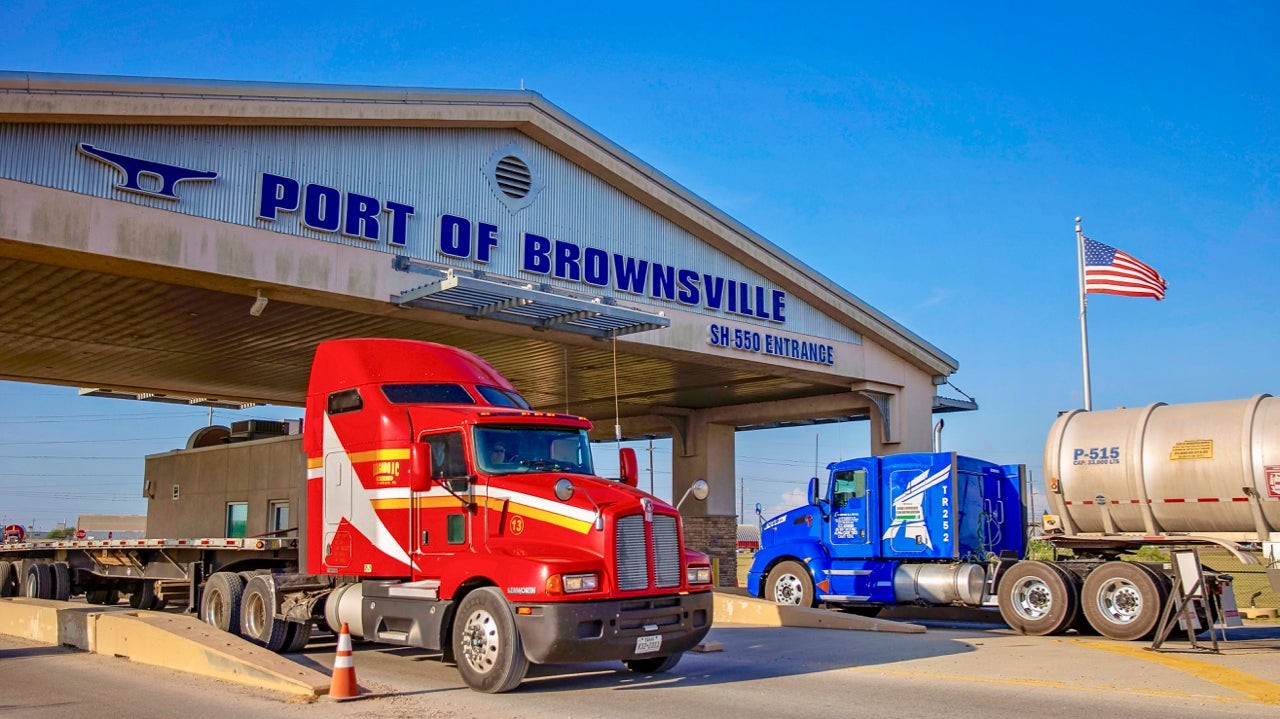
According to www.freightwaves.com, Saronic, an autonomous maritime technology company, has selected the Port of Brownsville in Texas as the site for Port Alpha — a next-generation shipyard with a planned investment of $3 billion.
Project scope and timeline
Construction is scheduled to begin later this year, with operations targeted to commence by 2028. The facility will initially occupy 835 acres at the port and has room to expand to nearly 4,400 acres. Port Alpha will be capable of building vessels up to 850 feet long, with future expansion enabling construction of ships exceeding 1,200 feet.
The Port of Brownsville — founded in 1936 — is a 40,000-acre deepwater seaport located along the U.S.-Mexico border. It connects to the Gulf of Mexico via a 17-mile-long ship channel. In June, the port completed the $295.2 million Brazos Island Harbor Improvement Project, which deepened the Brownsville Ship Channel by 10 feet.
Economic impact and workforce commitments
Saronic projects that Port Alpha will generate more than $160 billion in economic impact for Cameron County and $264.5 billion statewide. The company pledged to invest approximately $3.2 billion and create 10,000 jobs over the next decade — a commitment that secured a tax incentive package from Cameron County.
According to reporting by the Texas Tribune, county officials approved a tax break valued at roughly $211 million. The incentives have drawn criticism from environmental groups and local residents concerned about ecological consequences, defense-sector expansion, and equitable distribution of economic benefits.
Strategic positioning and policy alignment
Saronic describes Port Alpha as a software-defined shipyard focused on building autonomous maritime vessels for both commercial and defense applications. The project aligns with recent federal initiatives, including former President Donald Trump’s executive order on restoring U.S. maritime dominance, as well as proposed legislation such as the SHIPS Act and the Maritime Action Plan — all aimed at strengthening domestic shipbuilding capacity.
The Brownsville facility complements Saronic’s existing shipyard in Franklin, Louisiana, which the company acquired in early 2025 and where it is investing $300 million to expand production of its 180-foot autonomous Marauder vessel.
Leadership vision and industrial rationale
“America’s maritime future depends on our ability to build again,” said Dino Mavrookas, co-founder and CEO of Saronic, in a news release. “Port Alpha is our commitment to that mission … It is about rebuilding the industrial capacity, workforce, and manufacturing advantage required to ensure American maritime leadership for decades to come.”
“America’s maritime future depends on our ability to build again. Port Alpha is our commitment to that mission … It is about rebuilding the industrial capacity, workforce, and manufacturing advantage required to ensure American maritime leadership for decades to come.” — Dino Mavrookas, co-founder and CEO of Saronic
The location offers direct waterfront access, deepwater navigation, multimodal transportation connections, and sufficient land area for future manufacturing growth. Saronic emphasized that Port Alpha represents one of the largest private investments in U.S. shipbuilding in decades — underscoring a broader reindustrialization trend gaining momentum across critical infrastructure sectors.
Source: FreightWaves
Compiled from international media by the SCI.AI editorial team.


