Skip to content

Supply Chain · Warehousing & Transport

MAHB, Mitsui Fudosan launch RM80M Subang air cargo logistics complex

Malaysia Airports Holdings Bhd (MAHB) and Mitsui Fudosan Group are jointly investing RM80 million to develop an air cargo logistics complex in Subang Aerotech Park. MAHB holds a 30% stake; Mitsui Fudosan owns 70%. Built on 1.78 hectares, the facility will deliver 254,420 sq ft of gross floor area and is scheduled for completion in Q3 2027, with operations launching in Q4 2027. Transport Minister Anthony Loke highlighted Mitsui Fudosan’s experience at Tokyo’s Haneda Airport and noted Penang handles 75% of Malaysia’s air cargo due to its semiconductor industry.

Original source: theedgemalaysia.com

MAHB, Mitsui Fudosan launch RM80M Subang air cargo logistics complex

According to theedgemalaysia.com, Malaysia Airports Holdings Bhd (MAHB) and Mitsui Fudosan Group have launched a joint RM80 million air cargo logistics complex in Subang, with MAHB holding a 30% stake and Mitsui Fudosan owning the remaining 70%.

Strategic Joint Venture in Subang Aerotech Park

The facility is being developed by MFMA Industrial Sdn Bhd, a joint venture between Mitsui Fudosan (Asia) Malaysia Sdn Bhd and Malaysia Airports (Subang) Sdn Bhd. Located on a 1.78-hectare site within the Subang Aerotech Park, the complex will deliver approximately 254,420 sq ft of gross floor area. It is designed to serve aviation, aerospace, and logistics operators across the Klang Valley, offering flexible tenancy options aligned with diverse operational needs.

Government Backing and Regional Air Cargo Strategy

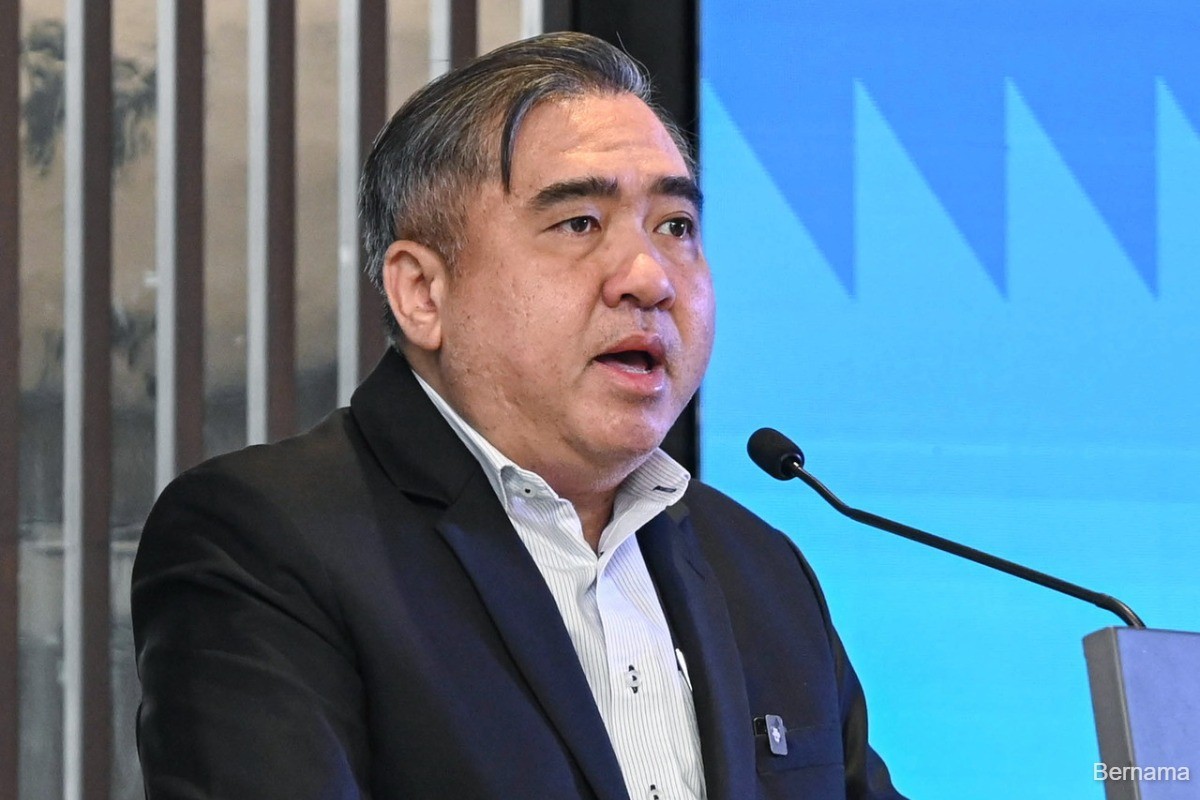
Transport Minister Anthony Loke Siew Fook confirmed the project during the groundbreaking ceremony for the Subang maintenance, repair and overhaul (MRO) logistics complex on July 9, 2026. He emphasized that the partnership leverages MAHB’s airport land assets alongside Mitsui Fudosan’s proven expertise — notably its development and operation of logistics complexes at Haneda Airport in Japan.

“In this regard, I understand they (Mitsui Fudosan) have expertise in Japan. They have also built and operated logistics complexes at Haneda Airport. Therefore, this will greatly assist us in minimising the risks to MAHB.” — Anthony Loke Siew Fook, Transport Minister

Loke outlined broader national efforts to scale air cargo capacity, naming Kuala Lumpur International Airport (KLIA) and Kota Kinabalu International Airport (KKIA) as priority sites. He noted that Penang currently accounts for about 75% of Malaysia’s total air cargo throughput — a direct reflection of its role as the country’s semiconductor manufacturing hub. The ministry is also collaborating with the Sabah government to repurpose Terminal 2 at KKIA into a dedicated air cargo hub.

Timeline and Operational Readiness

The project is scheduled for completion in the third quarter of 2027, with commercial operations set to begin in the fourth quarter of 2027. Attendees at the groundbreaking included Embassy of Japan in Malaysia Minister Daisuke Nihei, MAHB managing director Datuk Mohd Izani Ghani, and Mitsui Fudosan (Asia) Malaysia managing director Masayoshi Saito. The complex forms part of MAHB’s broader strategy to monetize underutilized airport land through high-value, sector-specific industrial developments anchored by international partners with domain expertise.

The initiative supports Malaysia’s positioning of KLIA as ASEAN’s regional air cargo hub — a goal advanced through bilateral collaboration with China. As air freight demand grows amid rising semiconductor exports and regional supply chain reconfiguration, infrastructure like the Subang logistics complex directly addresses capacity constraints and service-level gaps in Malaysia’s air cargo ecosystem.

Source: theedgemalaysia.com

Compiled from international media by the SCI.AI editorial team.

Ask SCI.AI Finished reading? Continue with SCI.AI. Explore the related policy, route, company and historical context. Continue asking
NRF: Early peak shipping season to subside in September
Supply Chain

NRF: Early peak shipping season to subside in September

The National Retail Federation (NRF) and Hackett Associates report that the early peak shipping season is ending, with U.S. port imports expected to decline for the rest of 2026. May was the busiest month at 2.24 million TEU. Tariff changes and supply chain disruptions drove retailers to pull forward orders. Consumer spending remains resilient. Full-year 2026 imports are projected at 25.5 million TEU, up 0.1% from 2025.

China’s exports rise 14%, imports up 22% amid trade war resilience
Supply Chain

China’s exports rise 14%, imports up 22% amid trade war resilience

China’s foreign trade rose 17.3% to ¥30.13 trillion in the first seven months of 2026, with exports up 14% and imports surging 22%. High-tech exports jumped over 50% in July, accounting for nearly 60% of monthly export growth. U.S.-China trade fell 1.6%, while ties with over 180 countries—including ASEAN and the EU—expanded. Green exports like EVs and lithium batteries posted double-digit growth for the 17th straight month. China also applies zero tariffs to imports from 63 countries.

TSMC revenue up 33.7%, ASML ships 86 lithography machines
Manufacturing

TSMC revenue up 33.7%, ASML ships 86 lithography machines

TSMC reported $40.2 billion in Q2 2026 revenue — up 33.7% year-on-year — with 2-nm process contributing 3% of sales. ASML shipped 86 new lithography machines in the same quarter, boosting revenue to €9.32 billion ($10.69 billion). TSMC holds 73% of the global foundry market, while ASML’s EUV tools remain essential for sub-3-nm chip production. Both companies’ five-year net income grew over 90% (ASML) and 251% (TSMC). TSMC’s $100 billion Arizona expansion will support 2-nm manufacturing and advanced packaging.

Welcome Back!

Login to your account below

Create New Account!

Fill the forms below to register

Retrieve your password

Please enter your username or email address to reset your password.

Scan to share via WeChat

Open WeChat and scan the QR code to share

QR Code

Add New Playlist

