

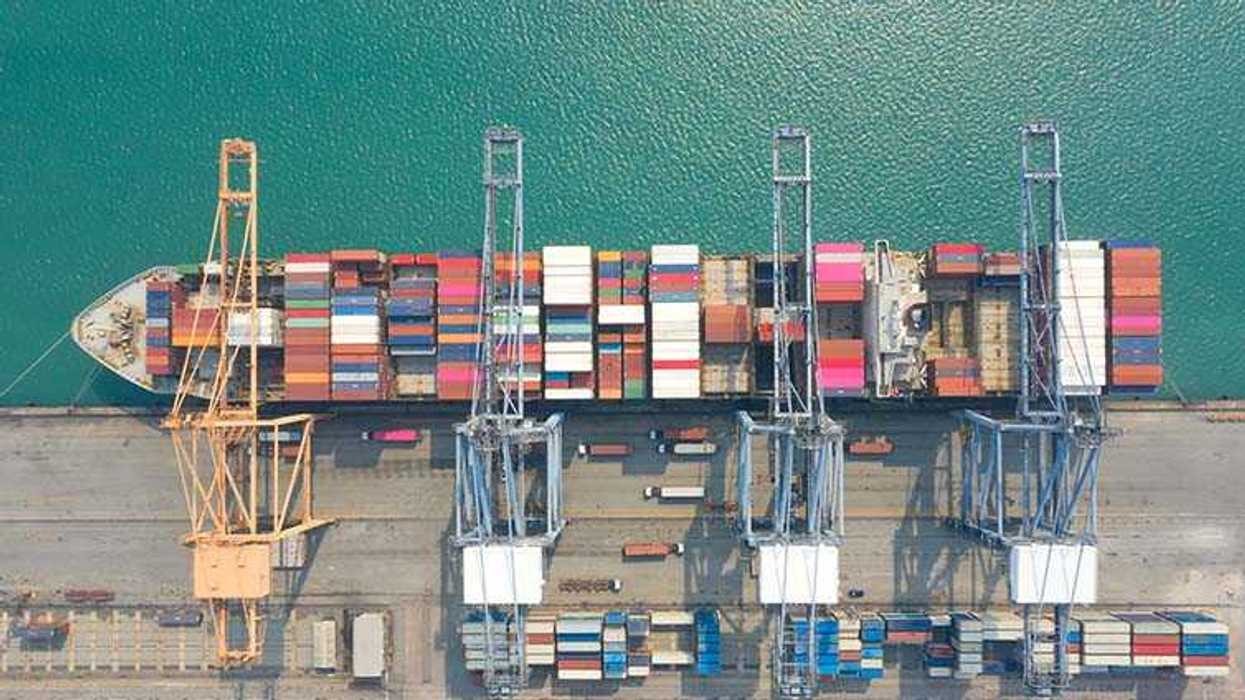
Ocean freight rates surged in June 2026 as an early peak season compressed capacity and intensified competition. Transpacific rates to the U.S. West Coast jumped 19% to over $5,700/FEU, while transatlantic rates rose 13% to $7,400/FEU. Drivers include frontloading ahead of July manufacturer price hikes, new Section 301 tariffs, bunker surcharge increases, Red Sea diversions, and Strait of Hormuz disruptions. C.H. Robinson confirmed peak season has started early, with shippers now competing not just for space—but for specific sailings. The market is expected to worsen before easing.
According to www.thescxchange.com, ocean container shipping rates have risen sharply amid an unusually early peak season, driven by shipper urgency and multiple cost pressures.
Early peak season triggers rate spikes
Freightos reported a 19% increase in transpacific container rates to the U.S. West Coast, pushing spot prices to more than $5,700 per FEU (forty-foot equivalent unit). Transatlantic rates to the U.S. East Coast rose 13%, reaching $7,400/FEU. These gains occurred despite a slight easing of stratospheric fuel costs this week — a temporary relief attributed to sporadic progress on reopening ship traffic through the Strait of Hormuz.
The early onset of peak season is not seasonal but strategic: shippers are urgently frontloading orders to avoid upcoming cost hikes. According to industry analysis, three concurrent pressures are accelerating booking activity — impending increases in bunker adjustment factors (fuel surcharges), the expiration of Section 122 tariffs and introduction of new Section 301 tariffs for transpacific trade, and manufacturer price hikes scheduled for July 2026.
Capacity constraints intensify amid demand surge
Even as the global container fleet continues to grow, demand has outpaced available capacity. Freightos noted that spot rates have already surpassed last year’s peak season high — a sign that “very elevated levels” reflect not just volume but structural bottlenecks. Key contributors include Red Sea diversions, port congestion during peak season, and delays that effectively reduce usable vessel capacity.
These dynamics have compressed the window for securing preferred sailings. As Mike Short, president of global forwarding at C.H. Robinson, stated:
“We’re seeing booking activity pull forward across Trans-Pacific lanes as shippers position inventory earlier and react to expected cost increases. Peak season has effectively started early, and it’s shrinking the window to secure preferred departures. Shippers aren’t just competing for space right now, they’re competing for the right sailing.”
Market outlook: tightening conditions ahead
C.H. Robinson’s assessment aligns with broader industry sentiment: ocean shipping conditions have tightened faster than expected, and the market is likely to worsen for shippers before improving. The report underscores that the current pressure is not transient — it stems from overlapping geopolitical, regulatory, and operational variables converging in June 2026.
For supply chain professionals, this means immediate implications: extended lead times, higher landed costs, and intensified competition for space on key eastbound routes. Securing capacity now requires proactive coordination with carriers and freight forwarders — especially given that the Red Sea rerouting continues to strain vessel availability and schedule reliability. Experts also warn that the Panama Canal could impose further restrictions later this summer if El Niño–driven drought conditions persist, adding another layer of uncertainty to transpacific and transatlantic flows.
Source: thescxchange.com
Compiled from international media by the SCI.AI editorial team.


