Skip to content

AI & Automation · Disruptions · ESG & Regulation · Geopolitics · Manufacturing · Procurement · Risk & Resilience · Supply Chain · Sustainability · Technology · Warehousing & Transport

Zim Posts $86M Q1 Net Loss Amid Merger Turmoil — The Loadstar

Zim Integrated Shipping Services reported a $86m net loss in Q1 2026—down 129% year on year—with revenue falling 30% to $1.4bn and volumes down 8% to 866,000 teu. Outgoing CEO Eli Glickman cited Persian Gulf conflict-driven bunker cost volatility and outlined mitigation steps, including freight rate hikes and LNG supply agreements with Shell. A $4.5bn all-cash bid from Haim Sakal—$300m above Hapag-Lloyd’s offer—includes a $250m employee bonus, though Loadstar Premium’s Ale Pasetti notes Hapag-Lloyd has secured 97% of shareholder votes and neither bid appears viable given Zim’s share price trading ~30% below Hapag-Lloyd’s cash offer. Contract renewals effective 1 May retain prior-year volumes, with 65% of transpacific volume exposed to spot rates.

Original source: theloadstar.com

Zim Posts $86M Q1 Net Loss Amid Merger Turmoil — The Loadstar
📋 本文要点

Zim Integrated Shipping Services reported a $86m net loss in Q1 2026—down 129% year on year—with revenue falling 30% to $1.4bn and volumes down 8% to 866,000 teu. Outgoing CEO Eli Glickman cited Persian Gulf conflict-driven bunker cost volatility and outlined mitigation steps, including freight rate hikes and LNG supply agreements with Shell. A $4.5bn all-cash bid from Haim Sakal—$300m above Hapag-Lloyd’s offer—includes a $250m employee bonus, though Loadstar Premium’s Ale Pasetti notes Hapag-Lloyd has secured 97% of shareholder votes and neither bid appears viable given Zim’s share price trading ~30% below Hapag-Lloyd’s cash offer. Contract renewals effective 1 May retain prior-year volumes, with 65% of transpacific volume exposed to spot rates.

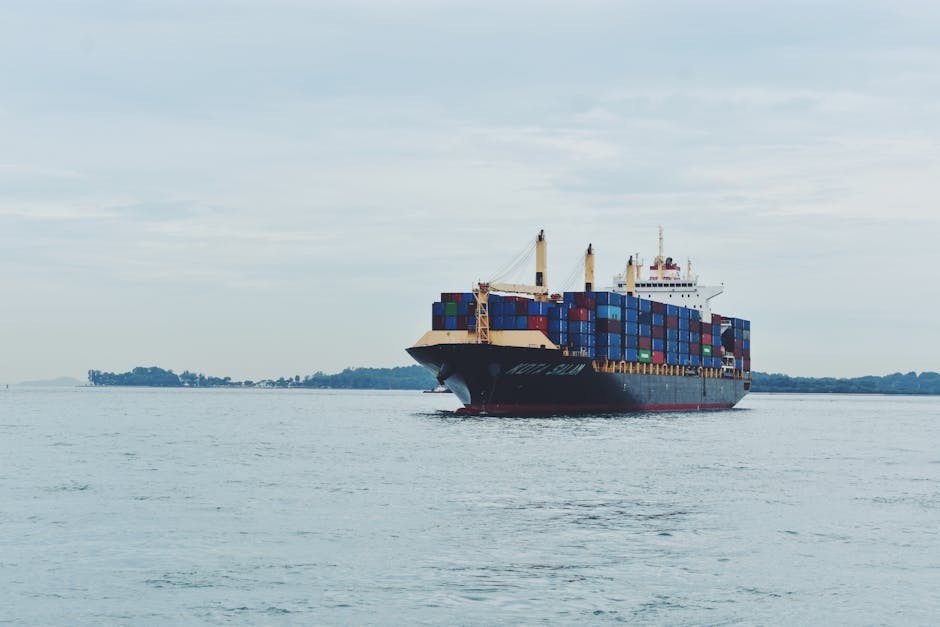
First-quarter earnings for Israeli liner Zim plummeted more than 129% year on year, and it recorded a net loss of $86m, as efforts to get its merger deal with Hapag-Lloyd over the line continue, despite an alternative late-in-the-day offer.

Sharp Decline in Volumes and Revenue

After net income of $296m just 12 months ago, turbulence in the Israeli carrier’s sphere of operations was always likely to prompt a decline in performance, shown by the 8% year-on-year dip in volumes, to 866,000 teu, and 30% drop in revenue, to $1.4bn.

CEO Comments on Bunker Costs and LNG Strategy

“The conflict in the Persian Gulf sparked a sharp increase and significant volatility in bunkering costs.
“While the impact on Q1 results was minimal, we expect a more meaningful effect in the second quarter, before our actions to offset these costs, including increased freight rates and bunker-specific surcharges, begin to take hold.
“Zim is likely to see incremental benefits from our early adoption of LNG technology and long-term agreements with Shell securing LNG supply.” — Eli Glickman, outgoing chief executive

Sakal’s $4.5bn Bid and Employee Bonus Package

Its latest results followed news that entrepreneur Haim Sakal, backed by Israeli investors, had tabled an all-cash offer for the carrier of $4.5bn, $300m higher than the bid from Hapag-Lloyd. Reports indicate that not only has Mr Sakal confirmed that both Zim’s fleet and operational headquarters would remain in Israel, his offer includes an employee bonus package believed to be in the region of $250m.

Market Doubts Over Either Bid

However, Loadstar’s Premium’s Ale Pasetti pushed back on chances that Mr Sakal’s offer could unseat that of Hapag-Lloyd, noting that the German carrier had secured 97% of shareholder votes and was binding. But he cautioned: “Neither [offer] has a chance to go through, judging by the current share price at nearly 30% discount to Hapag’s cash offer”.

Contract Renewals and Spot Rate Exposure

Perhaps seeking to assuage the prospective buyer, Mr Glickman noted that on its main trades, Zim had “recently observed a positive change” that had resulted in both the rates and demand situation improving, with expectations that second half financials could be much improved. He added: “In parallel, we completed annual contract negotiations, which went into effect on 1 May, maintaining similar contracted volumes to last year with approximately 65% of our transpacific volume exposed to spot rates.”

Source: The Loadstar

Compiled from international media by the SCI.AI editorial team.

Ask SCI.AI Finished reading? Continue with SCI.AI. Explore the related policy, route, company and historical context. Continue asking
DHL, Vinted expand German circular fashion logistics
ESG & Regulation

DHL, Vinted expand German circular fashion logistics

DHL and Vinted are expanding their partnership in Germany to support the booming second-hand fashion market. The global second-hand market is valued at US$210-220bn, growing 3x faster than firsthand sales. DHL plans to grow its locker network from 18,500 to more than 30,000 locations by 2030, with 67% of German online shoppers already selling items via marketplaces. The partnership combines Vinted's 17 million UK users with DHL's 41,000 parcel points to make circular fashion logistics more accessible.

Singapore climate envoy: climate is ‘mother’ of supply chain disruption
Disruptions

Singapore climate envoy: climate is ‘mother’ of supply chain disruption

Singapore's climate action ambassador Ravi Menon called climate change the "mother of all" supply chain disruptions at the Bloomberg Sustainable Business Summit 2026. Using El Niño as an example, he explained how climate events cascade through food systems, hydroelectric power, and energy supply chains. Menon also highlighted grid infrastructure and battery storage as key investment opportunities, arguing that private capital must complement public and philanthropic funding to drive climate action.

BHP faces A$120M/day loss as 48-hour Port Hedland strike looms
Disruptions

BHP faces A$120M/day loss as 48-hour Port Hedland strike looms

BHP faces a A$120 million per day revenue loss as a 48-hour strike at Port Hedland, the world's largest iron ore export terminal, begins August 8, 2026. The two-phase action by the Combined Ports Unions involves ~150 workers, targeting ship-loading and full operations. With 256.9 million tonnes exported in FY2026, the disruption tests supply chain resilience.

Welcome Back!

Login to your account below

Create New Account!

Fill the forms below to register

Retrieve your password

Please enter your username or email address to reset your password.

Scan to share via WeChat

Open WeChat and scan the QR code to share

QR Code

Add New Playlist

