Skip to content

AI & Automation · Disruptions · ESG & Regulation · Geopolitics · Manufacturing · Procurement · Risk & Resilience · Supply Chain · Sustainability · Technology · Warehousing & Transport

FedEx to Spin Off LTL Unit with 80.1% Share Distribution — FreightWaves

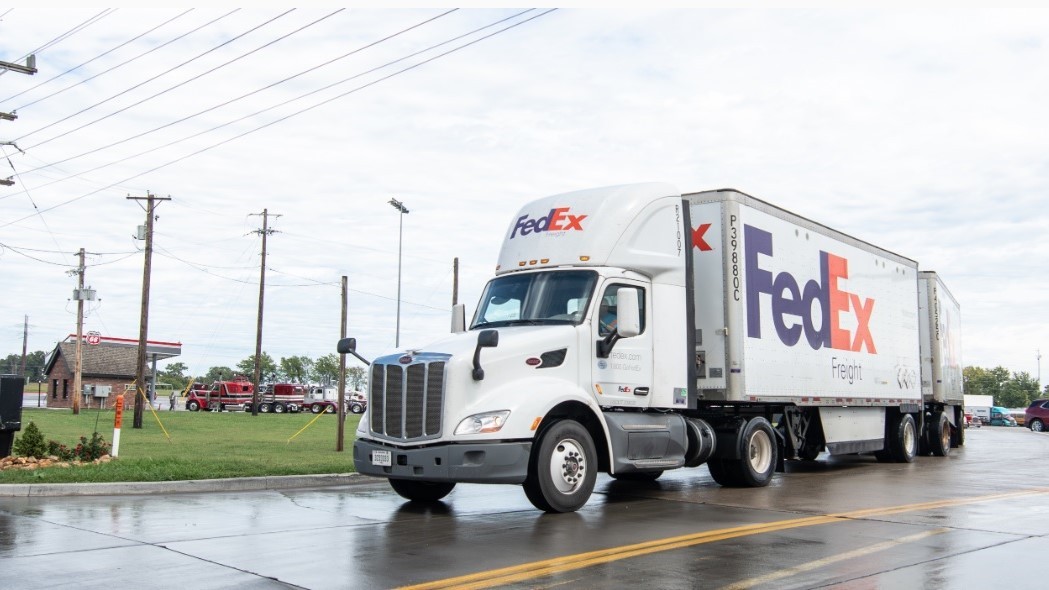
FedEx Corp. has received board approval to spin off its less-than-truckload (LTL) unit, FedEx Freight, with the separation set to conclude by June 1, 2026. Under the plan, FedEx will distribute 80.1% of FedEx Freight’s shares to shareholders on a pro rata basis, with investors of record as of Friday receiving one share of the new company, FDXF, for every two shares of FDX held. FedEx will retain a 19.9% stake and intends to divest it within 24 months. The new entity will trade on the NYSE under the ticker FDXF, while the legacy company continues as FDX. The distribution is expected to be tax-free. FedEx Freight, the nation’s largest LTL carrier, employs 40,000 people, operates 365 terminals and 30,000 vehicles, and generates approximately $9 billion in annual revenue. The move allows FedEx to offer targeted exposure to the LTL market and focus on its broader transformation strategy.

Original source: freightwaves.com

FedEx to Spin Off LTL Unit with 80.1% Share Distribution — FreightWaves
📋 本文要点

FedEx Corp. has received board approval to spin off its less-than-truckload (LTL) unit, FedEx Freight, with the separation set to conclude by June 1, 2026. Under the plan, FedEx will distribute 80.1% of FedEx Freight’s shares to shareholders on a pro rata basis, with investors of record as of Friday receiving one share of the new company, FDXF, for every two shares of FDX held. FedEx will retain a 19.9% stake and intends to divest it within 24 months. The new entity will trade on the NYSE under the ticker FDXF, while the legacy company continues as FDX. The distribution is expected to be tax-free. FedEx Freight, the nation’s largest LTL carrier, employs 40,000 people, operates 365 terminals and 30,000 vehicles, and generates approximately $9 billion in annual revenue. The move allows FedEx to offer targeted exposure to the LTL market and focus on its broader transformation strategy.

FedEx Board Approves Spinoff of LTL Unit

FedEx Corp. is officially moving forward with the spinoff of its less-than-truckload unit, FedEx Freight, following formal approval from its board of directors. The Memphis-based company announced Wednesday that the separation is set to conclude by June 1.

Share Distribution and Ownership Structure

Under the approved plan, FedEx (NYSE: FDX) will execute a pro rata distribution of 80.1% of FedEx Freight’s outstanding common stock to its shareholders. Investors of record as of Friday will receive one share of the new standalone company for every two shares of FedEx held. FedEx will retain a 19.9% stake in FedEx Freight, which it intends to dispose of within 24 months through debt repayment or dividend distributions to shareholders.

“Today’s announcement is an important step as we prepare for a seamless separation of the FedEx Freight business on June 1,” said Brad Martin, executive chairman of FedEx’s board and incoming chairman of FedEx Freight’s board. “As separate organizations, FedEx and FedEx Freight will build on their respective industry leadership positions to serve customers with excellence, while creating value for their stockholders.”

Trading and Tax Implications

FedEx Freight, the nation’s largest LTL carrier, is scheduled to begin trading on the New York Stock Exchange under the ticker symbol “FDXF” on June 1, while the legacy company will continue trading under “FDX.” The company said the distribution is expected to be tax-free for U.S. federal income tax purposes.

Strategic Rationale

By splitting the freight operations from its broader express and ground networks, FedEx aims to provide investors with more targeted exposure to the LTL market while allowing the legacy business to focus on its transformation strategy.

Historical Background

FedEx began LTL operations in 1998 with the acquisition of Viking Freight. It acquired American Freightways in 2001 and Watkins Motor Lines in 2006. In 2011, it merged its national (Watkins) and regional (Viking and American Freightways) operations into one network offering priority and economy services.

Operational Scale and Revenue

FedEx Freight has 40,000 employees, 365 terminals (26,000 doors) and 30,000 vehicles (17,000 tractors), generating approximately $9 billion in annual revenue.

More FreightWaves articles by Todd Maiden:

Source: FreightWaves

Compiled from international media by the SCI.AI editorial team.

Ask SCI.AI Finished reading? Continue with SCI.AI. Explore the related policy, route, company and historical context. Continue asking
DHL, Vinted expand German circular fashion logistics
ESG & Regulation

DHL, Vinted expand German circular fashion logistics

DHL and Vinted are expanding their partnership in Germany to support the booming second-hand fashion market. The global second-hand market is valued at US$210-220bn, growing 3x faster than firsthand sales. DHL plans to grow its locker network from 18,500 to more than 30,000 locations by 2030, with 67% of German online shoppers already selling items via marketplaces. The partnership combines Vinted's 17 million UK users with DHL's 41,000 parcel points to make circular fashion logistics more accessible.

Singapore climate envoy: climate is ‘mother’ of supply chain disruption
Disruptions

Singapore climate envoy: climate is ‘mother’ of supply chain disruption

Singapore's climate action ambassador Ravi Menon called climate change the "mother of all" supply chain disruptions at the Bloomberg Sustainable Business Summit 2026. Using El Niño as an example, he explained how climate events cascade through food systems, hydroelectric power, and energy supply chains. Menon also highlighted grid infrastructure and battery storage as key investment opportunities, arguing that private capital must complement public and philanthropic funding to drive climate action.

BHP faces A$120M/day loss as 48-hour Port Hedland strike looms
Disruptions

BHP faces A$120M/day loss as 48-hour Port Hedland strike looms

BHP faces a A$120 million per day revenue loss as a 48-hour strike at Port Hedland, the world's largest iron ore export terminal, begins August 8, 2026. The two-phase action by the Combined Ports Unions involves ~150 workers, targeting ship-loading and full operations. With 256.9 million tonnes exported in FY2026, the disruption tests supply chain resilience.

Welcome Back!

Login to your account below

Create New Account!

Fill the forms below to register

Retrieve your password

Please enter your username or email address to reset your password.

Scan to share via WeChat

Open WeChat and scan the QR code to share

QR Code

Add New Playlist

