Skip to content

Middle East Supply Chain

Amazon Launches Supply Chain Services — www.emarketer.com

Amazon has launched Amazon Supply Chain Services (ASCS), offering external companies access to its freight, fulfillment, distribution, and parcel shipping infrastructure. The service targets healthcare, automotive, manufacturing, and retail firms, with early adopters including Procter & Gamble, 3M, Lands’ End, and American Eagle. ASCS mirrors Amazon’s AWS strategy—commercializing internally built infrastructure. Its third-party logistics unit generated $172.2 billion in 2025 (25% of Amazon’s total revenue), growing 10.3% YoY. The global 3PL market is valued at over $1.4 trillion in 2026. ASCS competes directly with DSV, DHL, and Kuehne + Nagel.

Original source: emarketer.com

Amazon Launches Supply Chain Services — www.emarketer.com
📋 本文要点

Amazon has launched Amazon Supply Chain Services (ASCS), offering external companies access to its freight, fulfillment, distribution, and parcel shipping infrastructure. The service targets healthcare, automotive, manufacturing, and retail firms, with early adopters including Procter & Gamble, 3M, Lands’ End, and American Eagle. ASCS mirrors Amazon’s AWS strategy—commercializing internally built infrastructure. Its third-party logistics unit generated $172.2 billion in 2025 (25% of Amazon’s total revenue), growing 10.3% YoY. The global 3PL market is valued at over $1.4 trillion in 2026. ASCS competes directly with DSV, DHL, and Kuehne + Nagel.

According to www.emarketer.com, Amazon has officially launched Amazon Supply Chain Services (ASCS), a unified suite of third-party logistics offerings targeting healthcare, automotive, manufacturing, and retail enterprises. The service grants external businesses access to Amazon’s global freight, distribution, fulfillment, and parcel shipping infrastructure—capabilities previously optimized for its own retail operations.

Strategic Parallels to AWS

The ASCS launch deliberately mirrors Amazon’s 2006 introduction of Amazon Web Services (AWS). In both cases, Amazon first built internal infrastructure to solve scale and reliability challenges—then productized that infrastructure for external customers. ASCS commercializes Amazon’s end-to-end logistics network, which spans ocean, air, ground, and rail freight; AI-driven distribution and fulfillment powered by a unified inventory pool; and parcel shipping delivering across channels in two to five days. This infrastructure supports billions of packages annually, according to the report.

Early Adopters and Use Cases

Several major corporations are already deploying ASCS capabilities:

  • Procter & Gamble uses Amazon’s freight services to move raw materials and finished goods;
  • 3M transports products from manufacturing sites to global distribution centers;
  • Lands’ End leverages a unified inventory pool to fulfill orders across online, mobile, and retail channels;
  • American Eagle relies on Amazon’s parcel network to deliver ecommerce orders nationwide.

Market Context and Competitive Positioning

Amazon’s third-party logistics business—including Fulfillment by Amazon (FBA) and related services—generated nearly $172.2 billion in revenue last year, representing approximately 25% of Amazon’s total revenue. That unit grew 10.3% year-over-year. Until ASCS, these capabilities were not formally packaged as an integrated solution for non-marketplace B2B clients. By launching ASCS, Amazon positions itself as a direct competitor to established third-party logistics (3PL) providers including DSV, DHL, and Kuehne + Nagel. The global 3PL market is projected to generate more than $1.4 trillion in 2026, per Armstrong & Associates, as cited in the source.

Operational and Commercial Implications

ASCS strengthens Amazon’s capital efficiency: it layers new revenue streams onto existing infrastructure—warehouses, transportation assets, and software systems—freeing up funds to further invest in scale and automation. That advantage compounds: faster delivery times for consumer orders directly increase sales of high-turnover everyday essentials like paper towels and shampoo. For supply chain professionals, ASCS offers standardized API integrations, real-time visibility into multi-modal shipments, and demand forecasting tools trained on Amazon’s historical order data—capabilities historically accessible only to large enterprises with bespoke IT investments. The service is available initially in the United States, with global expansion implied by references to ocean freight and global distribution centers.

Source: www.emarketer.com

Compiled from international media by the SCI.AI editorial team.
Ask SCI.AI Finished reading? Continue with SCI.AI. Explore the related policy, route, company and historical context. Continue asking
Iran pushes alternative transport corridors to boost supply chain resilience
Middle East Supply Chain

Iran pushes alternative transport corridors to boost supply chain resilience

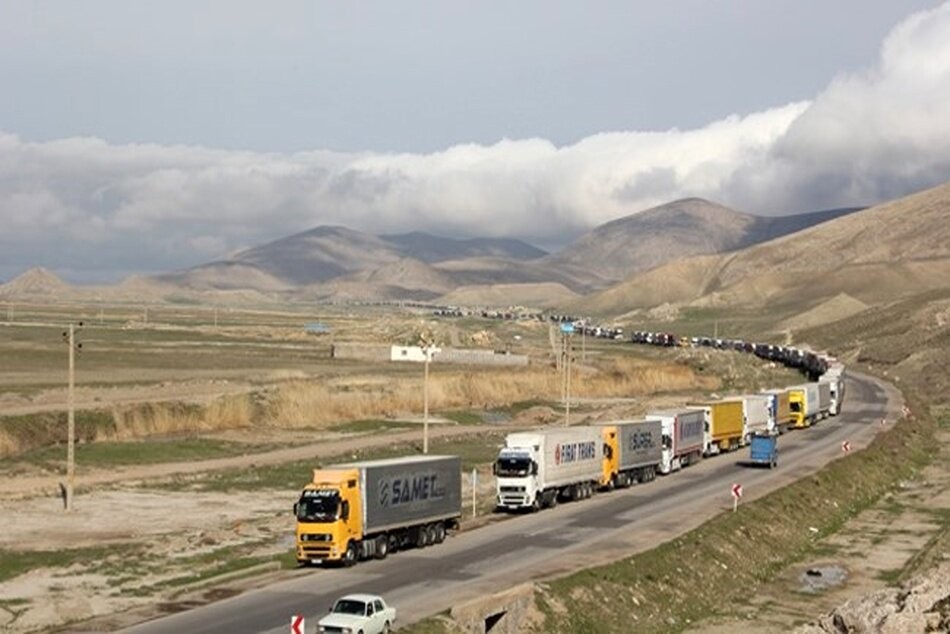
Iran is accelerating development of alternative land transport corridors to bolster supply chain resilience amid geopolitical volatility and maritime vulnerabilities. Seyed Ali Emami, Director General of the Readiness and Support Office at Iran’s Trade Promotion Organization, stated that ensuring uninterrupted goods movement — not just market competitiveness — is now the core trade priority. With maritime routes dominating global cargo but facing growing risks at chokepoints like the Strait of Hormuz and Red Sea, Iran is piloting new land corridors as of August 2026. While exports show strong growth, transit volumes have declined — prompting infrastructure upgrades, cost-reduction measures, and policy reforms targeted for completion in 2026.

DP World launches 15,250-sq-m multi-client warehouse in Riyadh
Middle East Supply Chain

DP World launches 15,250-sq-m multi-client warehouse in Riyadh

DP World has opened its first multi-client 3PL warehouse in Saudi Arabia — a 15,250-square-metre facility in Riyadh’s Al Mashael Logistics Hub offering over 17,000 pallet positions. The non-bonded warehouse supports consumer goods, automotive, retail, industrial, and technology sectors, and integrates with DP World’s broader Saudi network, including the $250 million Jeddah Logistics Park. Launched on 30 July 2026, the project advances Vision 2030’s logistics goals amid rising demand from e-commerce and manufacturing. It follows strong regional growth, exemplified by stc Group’s SAR 40.1 billion H1 2026 revenue and 30.3 million mobile subscribers.

Hormuz Ship Backlog Spurs Bioinvasion Risk Alert
Middle East Supply Chain

Hormuz Ship Backlog Spurs Bioinvasion Risk Alert

Scientists warn that over 1,500 ships stranded in the Strait of Hormuz since late February 2026 have accumulated dangerous levels of marine biofouling — including algae, mussels, and barnacles — raising high risks of global 'bioinvasion.' With vessels idle for at least 40 times longer than typical port stays, invasive species may spread to ports worldwide upon departure. A July 22, 2026 report urges mandatory hull inspections and cleaning before resuming voyages, and calls for coordinated early detection at receiving ports. The Strait of Hormuz, handling ~20% of global oil shipments, is now an ecological flashpoint with cascading supply chain and regulatory implications.

Welcome Back!

Login to your account below

Create New Account!

Fill the forms below to register

Retrieve your password

Please enter your username or email address to reset your password.

Scan to share via WeChat

Open WeChat and scan the QR code to share

QR Code

Add New Playlist