

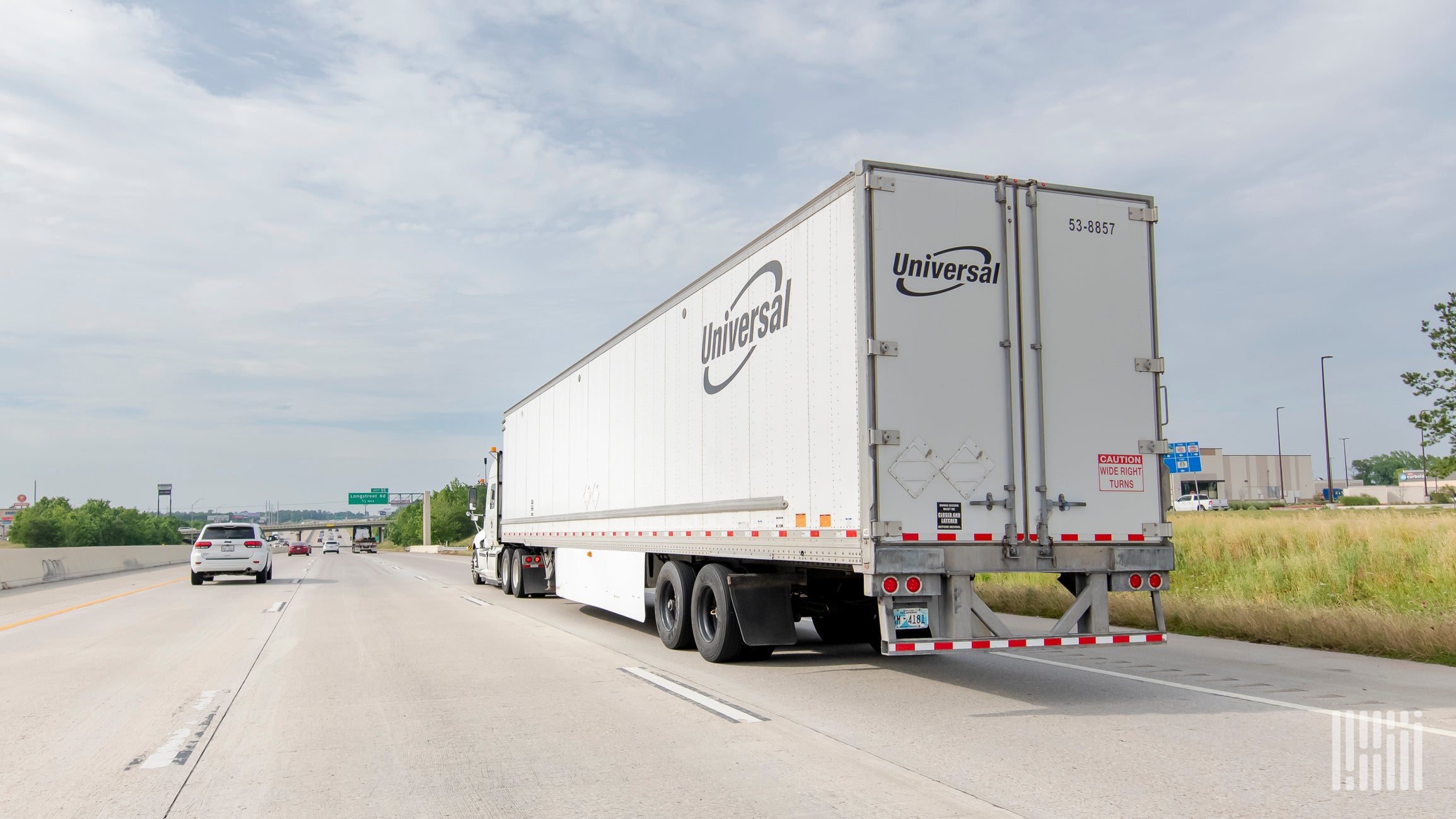
Universal Logistics Holdings reported a Q1 2026 net loss of $3.5 million—reversing $6 million profit in Q1 2025—as intermodal revenue plunged 32.3% to $47.9 million amid volume drops of 23.3% and double-digit pricing erosion. Contract logistics revenue rose 5.3% to $269.5 million but saw operating margins narrow to 6.5%. Trucking revenue fell 9.7% to $50.2 million; brokerage revenue dropped 17.4% to $16.7 million. EBITDA fell to $40.7 million (11.1% margin), and the company maintained its 10.5-cent dividend. CEO Tim Phillips cited persistent intermodal softness as the chief drag on results.
Universal Logistics Holdings swung to a loss in the first quarter as continued weakness in its intermodal segment dragged down overall performance, despite modest growth in its contract logistics business. The Warren, Michigan-based logistics provider reported Q1 2026 revenue of $367.6 million, down from $382.4 million a year earlier, alongside a net loss of $3.5 million, or $(0.13) per share, compared to net income of $6 million, or $0.23 per share, in Q1 2025. Universal’s ( NASDAQ: ULH ) operating income also fell sharply to $4.8 million, with operating margin compressing to 1.3%, down from 4.1% last year.
Intermodal Segment Collapse Drives Loss
CEO Tim Phillips pointed to ongoing softness in intermodal markets as the primary driver behind the weak quarter.
“Our first-quarter performance reflects a slow start to the year driven primarily by continued weakness in our intermodal segment, including lower volumes and pricing pressure,” Phillips said in a news release.
Universal’s intermodal segment saw the steepest decline, with revenue falling 32.3% year over year to $47.9 million as both volumes and pricing deteriorated. Load volumes dropped 23.3%, while revenue per load declined more than 10%, pushing the segment to an operating loss of $13.1 million and a negative margin of 27.4%. The company said the recovery in intermodal is taking longer than expected, though it is implementing operational changes aimed at restoring profitability.
Contract Logistics Provides Partial Buffer
In contrast, Universal’s contract logistics segment continued to provide a buffer against broader market softness. Revenue in the segment rose 5.3% year over year to $269.5 million, driven by dedicated transportation and value-added services. However, profitability declined, with operating income falling to $17.5 million and margins narrowing to 6.5%, suggesting rising costs and lower efficiency across programs.
Trucking and Brokerage Also Weaken
The trucking segment also posted declines, with revenue down 9.7% to $50.2 million amid lower volumes and pricing pressure. Brokerage activity, embedded within trucking, generated $16.7 million in revenue, down from $20.3 million a year earlier. Operating income in trucking fell to just $0.6 million, reflecting tighter margins across the segment.
Financial Summary and Capital Position
Universal’s EBITDA declined to $40.7 million, down from $51.7 million last year, with EBITDA margin falling to 11.1%. The company ended the quarter with $17.9 million in cash and $754.7 million in debt, while capital expenditures totaled $9.6 million. Despite the weaker quarter, the company declared a quarterly dividend of 10.5 cents per share, signaling confidence in its longer-term outlook.
Q1 2026 Financial Snapshot
- Total Revenue: $367.6M (−3.9% YoY)
- Trucking Revenue: $50.2M (−9.7% YoY)
- Brokerage Revenue: $16.7M (−17.4% YoY)
- Intermodal Revenue: $47.9M (−32.3% YoY)
- Contract Logistics Revenue: $269.5M (+5.3% YoY)
- Adjusted EPS: $(0.13) (−156.5% YoY)
Source: FreightWaves
Compiled from international media by the SCI.AI editorial team.


