Skip to content

Coverage desk

Taiwan

23 published stories

TSMC Shares Drop 3.65% Amid $122.22B Revenue, 2nm Capex Pressure
ESG & Regulation

TSMC Shares Drop 3.65% Amid $122.22B Revenue, 2nm Capex Pressure

TSMC shares fell 3.65% on July 17, 2026, driven by rising 2nm node capital expenditure, gross margin compression concerns, and renewed geopolitical risk premiums linked to Taiwan Strait tensions. With $122.22B annual revenue and $55.12B net profit — both second-highest in the Technology Equipment sector — the company faces near-term pressure from uneven smartphone and PC demand recovery, client concentration risk with NVIDIA and Apple, and energy-cost sensitivity in domestic facilities. Technical indicators show neutral-to-oversold conditions.

AI cargo raises air freight rates 33% amid Middle East capacity loss
AI & Automation

AI cargo raises air freight rates 33% amid Middle East capacity loss

AI-related shipments are offsetting softening e-commerce demand in air cargo, driving a 33% year-on-year increase in global air freight rates in June 2026. Semiconductor sales surged 106% YoY in April, making the transpacific the strongest air cargo corridor. Middle East conflict removed 12% of global air cargo capacity in late February, pushing first-half rates up 17% YoY. Cargolux and Cathay Pacific have indefinitely postponed Middle East freighter services. Analysts warn peak-season rates could rise as early as September 2026 — ahead of the traditional Q4 timing.

China Airlines cargo revenue up 43.9% to T$23.6bn on AI demand
AI & Automation

China Airlines cargo revenue up 43.9% to T$23.6bn on AI demand

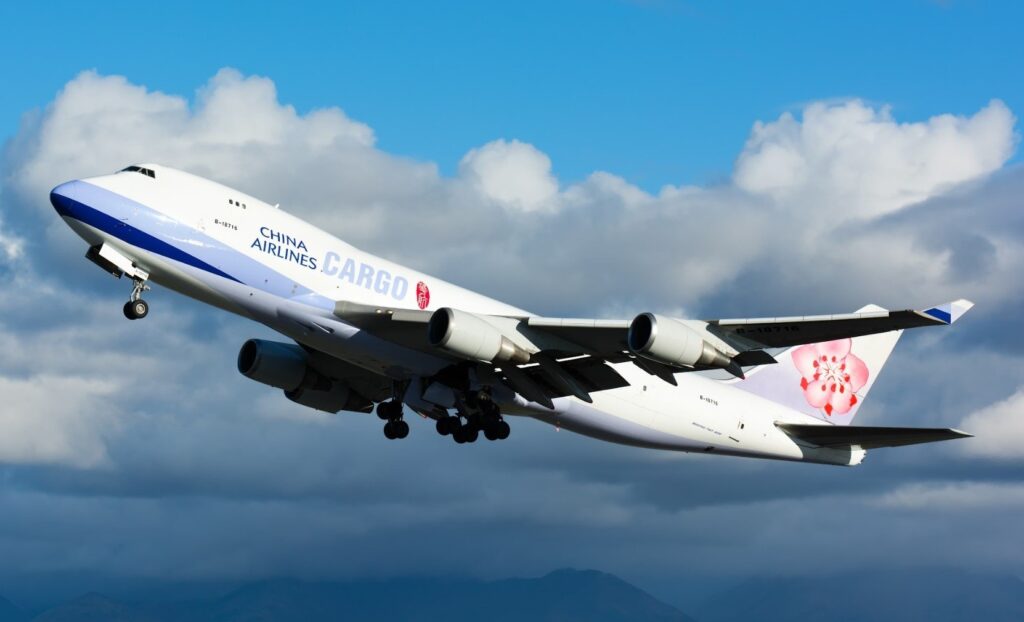
Taiwan-based China Airlines reported a 43.9% year-on-year rise in cargo revenue to T$23.6 billion in Q2 2026, driven by surging demand for AI servers, semiconductors, and ICT equipment. Freight tonne-kilometres grew 8.6% to 1.5 billion, while cargo load factor reached 70.5%. The airline expanded its Boeing 777-8F order to eight units and acquired four 777Fs, while divesting four Boeing 747-400Fs to Cargolux. Yield improved to T$15.78 per FTK from T$11.01 a year earlier.

TSMC raises 2026 revenue outlook to >40%, AI demand to 2030
Supply Chain

TSMC raises 2026 revenue outlook to >40%, AI demand to 2030

TSMC has raised its 2026 revenue forecast to growth of slightly above 40% in US dollar terms, citing robust AI-related demand expected to last through 2029 or 2030. Q2 revenue reached $40.2 billion (+36% YoY), with high-performance computing accounting for 66% of sales. Air cargo demand surged 42% in 2025, adding 170,000 tonnes to US air imports in Q1 2026 alone. Capital expenditure is now projected at $60–64 billion for 2026, up from $52–56 billion. North America represented 78% of sales, while manufacturing expansion spans Taiwan, Arizona, Japan, and Germany.

Taiwan Semiconductor Supply Chain Revenue Rises YoY in June
Procurement

Taiwan Semiconductor Supply Chain Revenue Rises YoY in June

All 13 sub-sectors of Taiwan’s semiconductor supply chain posted year-over-year revenue growth in June 2026, per DIGITIMES. Memory revenue nearly quadrupled YoY, while TSMC and Vanguard lifted silicon foundry revenue 54% YoY. Advanced packaging rose 37% YoY, and logic IC design grew 22%. The surge reflects broad-based AI infrastructure demand — from cloud servers to automotive AI — driving synchronized capacity expansion across design, fabrication, packaging, and test. Industry-wide coordination has tightened lead times for substrates and thermal materials.

DHL charters Boeing 777 freighters for 6 weekly Asia–Midwest flights
Manufacturing

DHL charters Boeing 777 freighters for 6 weekly Asia–Midwest flights

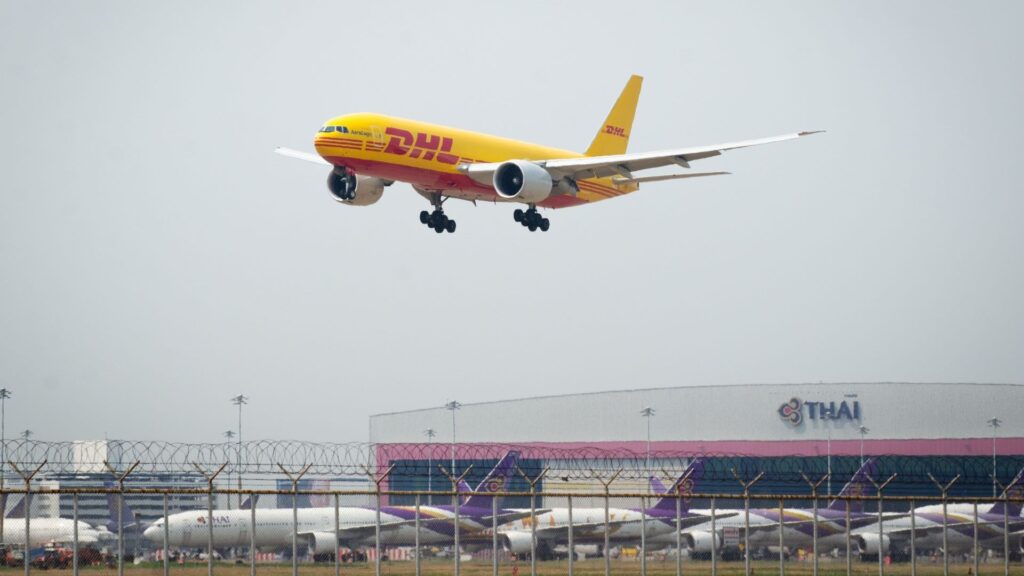
DHL Global Forwarding launched six weekly dedicated Boeing 777 freighter flights between Southeast Asia and the U.S. Midwest in July 2026 — three from Hanoi and Taipei to Cincinnati and Chicago (alternating), plus three from Bangkok to Cincinnati. Kalitta Air operates the Hanoi–Chicago leg, while DHL Aviation manages other routes. The expansion follows new charter services between Liège–Hong Kong (March 2026) and Shanghai–Leipzig (June 1, 2026). DHL joins Ceva Logistics, Kuehne+Nagel, and DSV in deploying dedicated Chicago-area air capacity amid geopolitical volatility and demand for schedule certainty.

AI Data Center Build-Out Slows, Cutting Asia Air Cargo Demand
Supply Chain

AI Data Center Build-Out Slows, Cutting Asia Air Cargo Demand

A regulatory crackdown on AI data center construction — including federal standoffs over xAI’s turbines and local moratoriums — is dampening air cargo demand growth from Asia. Logistics providers face underutilized capacity, volatile spot rates, and longer lead times. DHL has expanded its Asia Pacific data center logistics capabilities, while CH Robinson signals M&A readiness amid rising infrastructure complexity. Analysts project AI capex may exceed $1 trillion in 2027, but delays in U.S. permitting have pushed three major projects to Q3 2026 or later. Shenzhen airport saw a 5% YoY air freight tonnage decline in May 2026, and transit time variability rose 37% for AI hardware shipments.

Global Chip Supply Chain Crosses Borders 70 Times, TSMC Holds 70% Advanced-Fab Share
Japan & Korea Supply Chain

Global Chip Supply Chain Crosses Borders 70 Times, TSMC Holds 70% Advanced-Fab Share

The global semiconductor supply chain crosses borders up to 70 times per chip, with TSMC holding 70% of advanced-fab market share. Global chip revenue nears $820 billion, yet extreme geographic concentration — especially in Taiwan — creates acute geopolitical risk. Government initiatives like the U.S. CHIPS Act and India’s ISM 2.0 have secured multi-billion-dollar funding to re-shore production, but fab construction remains slow and capital-intensive. Upstream bottlenecks in rare gases and specialty chemicals further strain resilience, while export controls on EUV tools and EDA software disrupt design and manufacturing workflows worldwide.

Hon Hai Q2 sales surge 40% to $79 billion on AI server demand
Procurement

Hon Hai Q2 sales surge 40% to $79 billion on AI server demand

Hon Hai (Foxconn) reported second-quarter revenue of US$79 billion, a 40% year-on-year increase driven by AI server assembly for Nvidia-powered infrastructure. June sales alone surged 52%. Major cloud providers — Alphabet, Amazon, Meta, and Microsoft — are collectively spending US$725 billion on AI in 2026. The company also remains Apple’s key assembler for iPhones and MacBooks, with iPhone 17 launch timing critical for H2 2026 performance. Despite a global memory chip shortage, executives say premium product lines remain insulated from material shortages.

Hong Kong launches $730M AI infrastructure push targeting 36x compute growth by 2032
AI & Automation

Hong Kong launches $730M AI infrastructure push targeting 36x compute growth by 2032

Hong Kong has committed HK$6.84 billion (US$730 million) to AI infrastructure—including HK$2.84 billion for a semiconductor centre, HK$3 billion for an AI subsidy scheme, and HK$1 billion for an advanced AI R&D institute. A new data centre at Sandy Ridge, granted 11 hectares of land in March 2026, aims to increase computing power 36-fold by 2032. Yet electricity cost disparities with mainland China raise viability concerns. Regina Ip, Executive Council convenor and New People’s Party chairwoman, urges realistic goals, noting Hong Kong need not outspend Silicon Valley or outscale Shenzhen. U.S. AI investment is projected at US$800 billion by year-end 2026.

US Export Controls Pressure VPEC’s AI Optical Comm Supply Chain
Africa Supply Chain

US Export Controls Pressure VPEC’s AI Optical Comm Supply Chain

U.S. export controls introduced in May 2026 are disrupting the optical communications supply chain for AI data centers, directly affecting Taiwanese wafer supplier Visual Photonics Epitaxy Co. (VPEC). With 70% of its 2026 capex earmarked for optical components, VPEC faces extended license review times (112 days avg.) and constrained InP wafer capacity — only five global fabs produce them. Industry-wide, 68% of AI OEMs now mandate full substrate-to-module traceability, adding 14–19 days to lead times. VPEC’s focus on silicon photonics substrates comes amid sub-62% yields for 300-mm InP-on-silicon wafers.

Semiconductor Manufacturing by Country 2026 — worldpopulationreview.com
Japan & Korea Supply Chain

Semiconductor Manufacturing by Country 2026 — worldpopulationreview.com

According to worldpopulationreview.com, Taiwan leads global semiconductor fabrication with 79 plants in 2025, followed by Japan (96), the U.S. (78), and China (77). TSMC alone manufactures ~50% of the world’s chips. South Korea’s semiconductor exports made up 15% of its total exports in 2021. The U.S. held 12% of global manufacturing capacity in 2021 but 46.3% of total market share, with $62 billion in semiconductor exports. Europe held 12.7% of the semiconductor market in 2024.

Welcome Back!

Login to your account below

Create New Account!

Fill the forms below to register

Retrieve your password

Please enter your username or email address to reset your password.

Add New Playlist