Skip to content

AI & Automation · Technology

China Airlines cargo revenue up 43.9% to T$23.6bn on AI demand

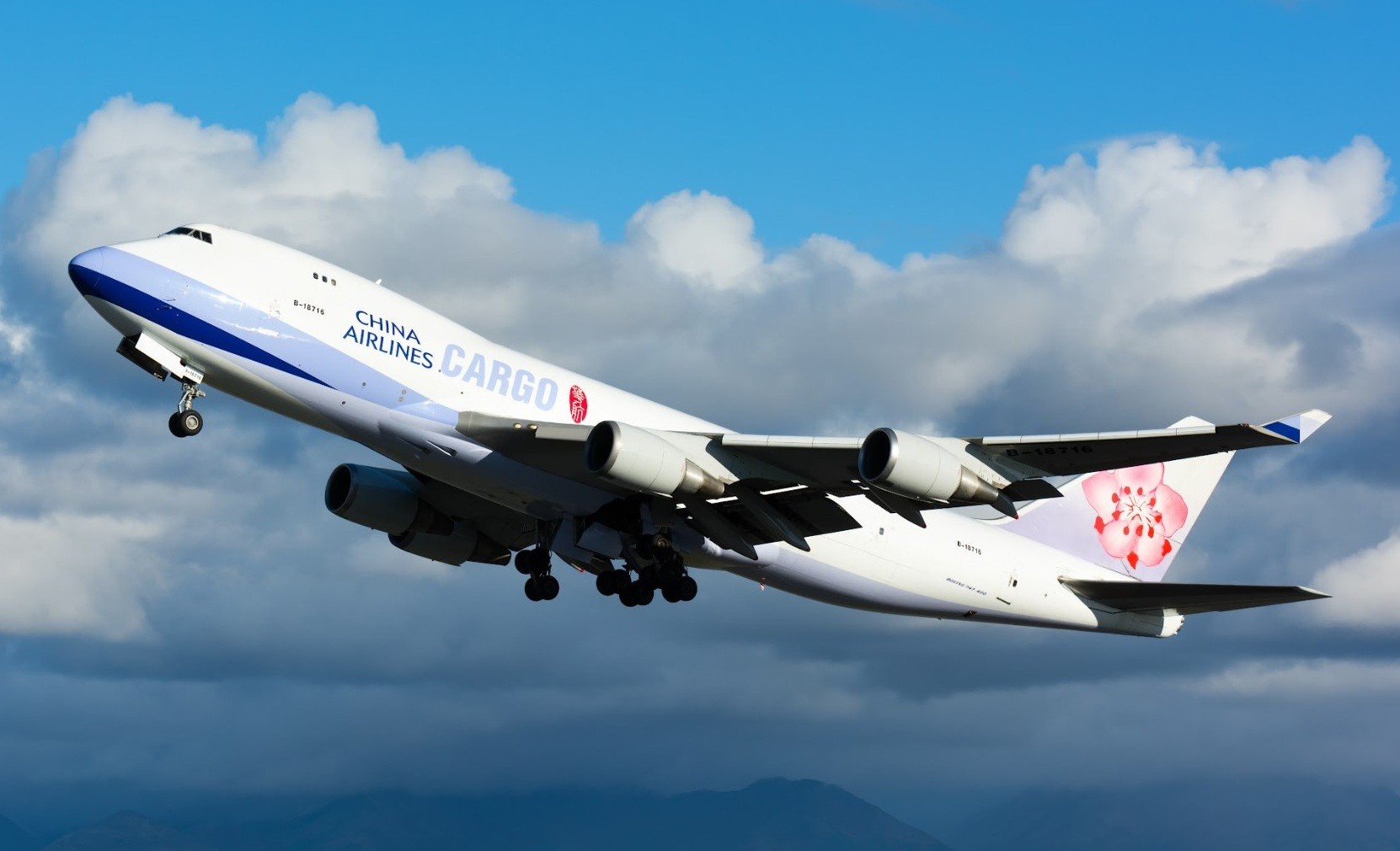
Taiwan-based China Airlines reported a 43.9% year-on-year rise in cargo revenue to T$23.6 billion in Q2 2026, driven by surging demand for AI servers, semiconductors, and ICT equipment. Freight tonne-kilometres grew 8.6% to 1.5 billion, while cargo load factor reached 70.5%. The airline expanded its Boeing 777-8F order to eight units and acquired four 777Fs, while divesting four Boeing 747-400Fs to Cargolux. Yield improved to T$15.78 per FTK from T$11.01 a year earlier.

Original source: aircargonews.net

China Airlines cargo revenue up 43.9% to T$23.6bn on AI demand

According to www.aircargonews.net, Taiwan-based China Airlines reported a 43.9% year-on-year surge in cargo revenue for the second quarter of 2026, reaching T$23.6 billion. Freight tonne-kilometres (FTK) rose by 8.6% to 1.5 billion, while available freight tonne-kilometres (AFTK) increased by 2.6% to 2.1 billion.

Cargo load factor and yield gains

The growth in demand outpaced capacity expansion, lifting the cargo load factor to 70.5% from 66.6% a year earlier. Revenue growth outstripped volume growth due to stronger pricing: average yield climbed to T$15.78 per FTK, up from T$11.01 per FTK in Q2 2025. The airline attributed this to higher-value shipments, noting that “

“In addition to existing high-tech cargo demand such as AI servers and semiconductor equipment, seasonal fruits and high-value spot cargo also boosted revenues [in June], helping to maintain stable cargo performance.”

”

AI and semiconductor-driven demand

The surge aligns with rapid expansion in Taiwan’s high-tech export sector, particularly driven by global demand for AI infrastructure and advanced semiconductors. TSMC — the world’s largest contract chipmaker — controls over half the global semiconductor foundry market and manufactures approximately 90% of the world’s most advanced microchips. This ecosystem has intensified air cargo requirements across key Asian export markets, including those served by China Airlines routes linking Taiwan with North America, Japan, and Southeast Asia.

Fleet modernization and strategic capacity management

To meet sustained demand, China Airlines is expanding its freighter fleet. In November 2025, the carrier confirmed it had increased its order for Boeing 777-8F aircraft to eight units, in addition to purchasing four 777Fs. Simultaneously, it announced plans to sell four older Boeing 747-400Fs to Cargolux. The airline stated it is “closely monitoring market dynamics to maximise passenger and cargo capacity by actively securing high-yield charter and block-space opportunities.” It also expects “the gradual decline in international oil prices [to] further expand profit margins.”

Forward outlook and regional implications

Looking ahead to Q3 2026, China Airlines anticipates continued strong demand for AI servers, semiconductors, and information and communications technology (ICT) products. As noted in its official statement: “

“Looking ahead to the third quarter, sustained demand for the shipment of AI servers, semiconductors, and info-comm related products is expected to maintain steady performance across key Asian export markets.”

” This trajectory reflects broader industry trends: air cargo stakeholders are increasingly prioritizing yield optimization and asset flexibility amid rising e-commerce logistics pressure and tightening labour availability in global aviation hubs.

Source: Air Cargo News

Compiled from international media by the SCI.AI editorial team.

Ask SCI.AI Finished reading? Continue with SCI.AI. Explore the related policy, route, company and historical context. Continue asking
BlueGrace acquires Idaho 3PL Truk TMS to expand Pacific Northwest LTL
AI & Automation

BlueGrace acquires Idaho 3PL Truk TMS to expand Pacific Northwest LTL

BlueGrace Logistics has acquired Idaho-based third-party logistics provider Truk TMS to strengthen its presence in the Pacific Northwest. The deal brings Truk TMS—previously a BlueGrace partner—fully into the company’s ecosystem, granting its customers access to BlueGrace’s Managed Logistics platform and BlueShip technology. Financial terms remain undisclosed. BlueGrace, headquartered in Tampa, Florida, serves over 10,000 customers from nine offices across the U.S. and Mexico and operates a carrier network exceeding 250,000. As a Warburg Pincus portfolio company, BlueGrace previously acquired STB Freight Group and FreightCenter in 2025. Truk TMS CEO Mark Barnes emphasized continuity of service backed by expanded capabilities.

project44 launches LSP44 AI unit, splits operations
Digital Platforms

project44 launches LSP44 AI unit, splits operations

Chicago-based project44 has split into two independent businesses as of July 14, 2026: the original project44 serving enterprise shippers, and LSP44—a new AI-dedicated platform for logistics service providers. LSP44 processes 2.3 million shipment events per hour, reduced manual tendering time by 68% in pilots, and launches commercially in Q3 2026. The move reflects accelerating AI adoption among LSPs, which grew 41% year-over-year in 2026 per the 37th State of Logistics Report. Early deployments are underway in Chicago, Dallas, and Rotterdam.

Brisbane Warehouse Boom Raises Efficiency Standards
Robotics

Brisbane Warehouse Boom Raises Efficiency Standards

Brisbane’s industrial sector saw record investment in 2025, with 155,000 sq m of warehouse space delivered early in 2026 and leased immediately. Australia’s NABERS Energy ratings now benchmark warehouse efficiency, while equipment rental models — like those offered by All Lift Forklifts — cut emissions by one-third through shared utilization. Space heating consumes 39% of warehouse energy; lighting accounts for 15%. Adelaide and Perth more than doubled investment volumes in 2025. To meet national targets, resource productivity must rise 30% by 2030.

Welcome Back!

Login to your account below

Create New Account!

Fill the forms below to register

Retrieve your password

Please enter your username or email address to reset your password.

Scan to share via WeChat

Open WeChat and scan the QR code to share

QR Code

Add New Playlist

