Skip to content

Japan & Korea Supply Chain

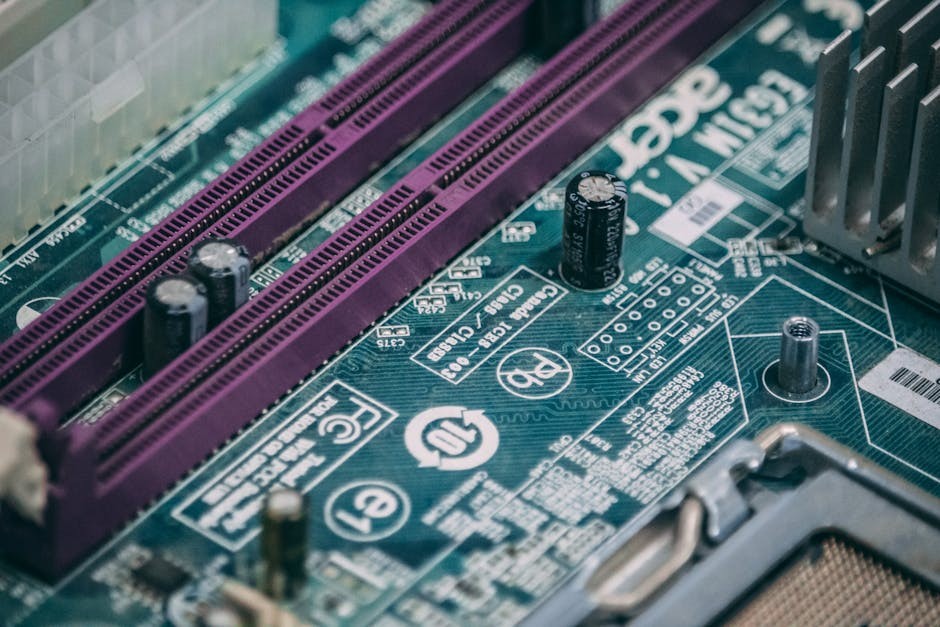
Semiconductor Manufacturing by Country 2026 — worldpopulationreview.com

According to worldpopulationreview.com, Taiwan leads global semiconductor fabrication with 79 plants in 2025, followed by Japan (96), the U.S. (78), and China (77). TSMC alone manufactures ~50% of the world’s chips. South Korea’s semiconductor exports made up 15% of its total exports in 2021. The U.S. held 12% of global manufacturing capacity in 2021 but 46.3% of total market share, with $62 billion in semiconductor exports. Europe held 12.7% of the semiconductor market in 2024.

Original source: worldpopulationreview.com

Semiconductor Manufacturing by Country 2026 — worldpopulationreview.com

According to worldpopulationreview.com, Taiwan leads global semiconductor fabrication plant count with 79 plants in 2025 — the highest among all nations surveyed. This positions Taiwan ahead of Japan (96 plants), the United States (78 plants), China (77 plants), and Germany (20 plants). The data covers 468 total fabrication plants across 34 countries and territories, including Singapore (17 plants), South Korea (16 plants), and Russia (15 plants).

Taiwan Dominates Foundry Output

Taiwan’s manufacturing dominance stems largely from Taiwan Semiconductor Manufacturing Co. (TSMC), which alone produces approximately 50% of the world’s semiconductors. Unlike integrated device manufacturers (IDMs) such as Samsung or Intel, TSMC operates exclusively on a foundry model — manufacturing chips for third-party clients including Apple, AMD, Nvidia, and Qualcomm. As of 2021, Taiwan held the largest share of global semiconductor manufacturing capacity, though exact percentage figures are not specified in the source beyond its top-ranked plant count.

South Korea: Export Powerhouse

South Korea’s semiconductor sector is anchored by Samsung Electronics and SK Hynix. Collectively, their 70+ fabrication plants produce chips that constituted 15% of South Korea’s total exports in 2021. Samsung functions both as an IDM and a foundry, enabling dual-revenue streams from internal product integration and external contract manufacturing.

Japan and the U.S.: Capacity vs. Market Share

Japan hosts 96 semiconductor fabrication plants, many owned by Japanese, American, or Taiwanese firms. Meanwhile, the United States held 12% of global chip manufacturing capacity in 2021 — down from 37% in 1990. Despite this decline in physical production share, U.S.-based companies commanded 46.3% of the total global semiconductor market share in 2021. Semiconductor exports contributed $62 billion USD to the U.S. economy that year — exceeding exports of every product except refined oil, aircraft, crude oil, and natural gas.

Global Distribution and Process Technology

The report distinguishes between advanced and mature semiconductor manufacturing processes. Advanced nodes refer to ≤16/14 nanometer (nm) technology, while mature processes are defined as 28 nm or larger. Mature-node chips power cost-sensitive applications like home appliances and fitness trackers. Europe’s semiconductor industry held a 12.7% market share in 2024, per the source. Other notable national counts include Malaysia (10 plants), France and Israel (5 plants each), India and the Netherlands (4 plants each), and Brazil, Italy, Switzerland, and Ireland (3 plants each).

Source: worldpopulationreview.com

Compiled from international media by the SCI.AI editorial team.
Ask SCI.AI Finished reading? Continue with SCI.AI. Explore the related policy, route, company and historical context. Continue asking
South Korea, Brazil Ink Deal to Restart Mercosur FTA Talks
Japan & Korea Supply Chain

South Korea, Brazil Ink Deal to Restart Mercosur FTA Talks

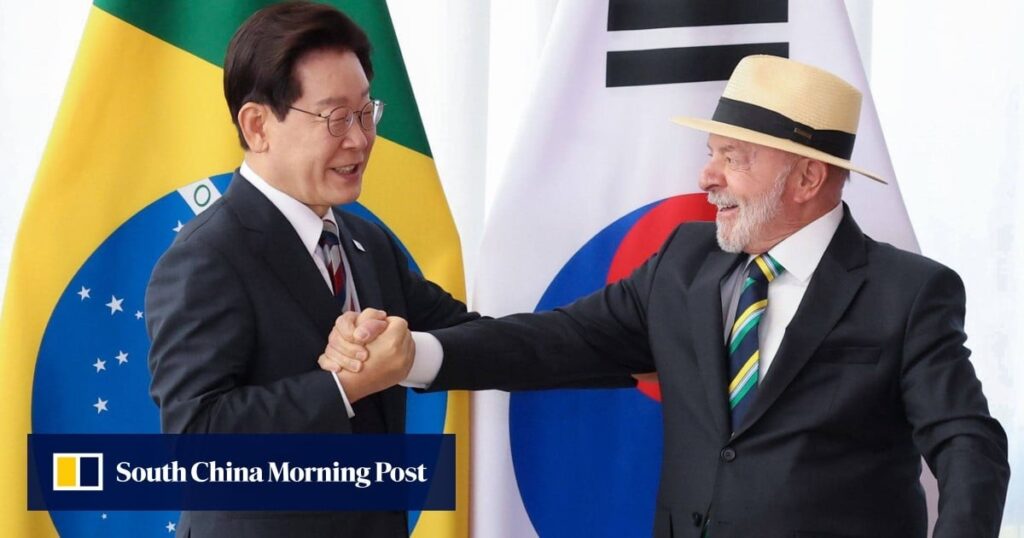
South Korean President Lee Jae Myung and Brazilian President Luiz Inacio Lula da Silva agreed on 29 July 2026 to restart free-trade negotiations with Mercosur — the South American bloc of Argentina, Brazil, Paraguay, Uruguay, and Bolivia. A joint working group will prepare a formal declaration for the Mercosur summit in December 2026. Talks, launched in 2018, stalled in late 2021 amid manufacturing-sector concerns. Analysts say Seoul must back diplomacy with real investment and technology transfer. Mercosur’s $3.5 trillion GDP and 270 million consumers make it a high-stakes opportunity for Korean exporters and supply chain planners.

Nissan to export US-built Murano to Japan in early 2027
Japan & Korea Supply Chain

Nissan to export US-built Murano to Japan in early 2027

Nissan will begin exporting the U.S.-built Murano SUV from its Smyrna, Tennessee plant to Japan in early 2027 — enabled by a September 2025 U.S.-Japan trade agreement that lowered U.S. tariffs on Japanese vehicles from 25% to 15% and allowed U.S. safety certification to satisfy Japanese regulatory requirements. The move follows similar announcements by Toyota and Honda to export U.S.-assembled models to Japan. Nissan sold 42,747 Muranos in the U.S. in 2025 (+121% YoY), while U.S. imports from Japan fell 17.4% to 113,094 units.

Japan pulls rare earths from Pacific seabed; yttrium at 1,000 ppm
Japan & Korea Supply Chain

Japan pulls rare earths from Pacific seabed; yttrium at 1,000 ppm

Japan has extracted yttrium (at 1,000 ppm) and dysprosium from deep-sea mud near Minamitorishima Island in the Pacific Ocean. The seabed deposit lies 2,000 meters below the surface and forms part of Japan’s strategy to cut reliance on China, which supplies over 90% of global refined rare earths. Despite promising assays, commercialization remains distant due to high extraction costs, with no large-scale pilot expected before the late 2030s. Japan has committed ¥15 billion to seabed R&D and is pursuing alternatives including domestic smelting (Shin-Etsu, 2027), recycling (Toyota Tsusho), and international partnerships (France, Greenland). Rare-earth costs for Japanese firms rose over 20% in early 2026.

Welcome Back!

Login to your account below

Create New Account!

Fill the forms below to register

Retrieve your password

Please enter your username or email address to reset your password.

Scan to share via WeChat

Open WeChat and scan the QR code to share

QR Code

Add New Playlist