Skip to content

Geopolitics · Trade & Tariffs · Warehousing & Transport

Logistics Reshapes North America’s Trade Map: 3 Key Shifts

Logistics has shifted from cost-driven execution to a strategic enabler of North American trade under USMCA. In 2025, Mexican exports to the US hit $448B (first 10 months), while US-Mexico bilateral trade remains deeply interdependent across automotive, agribusiness, and electronics. Canada—often overlooked—represents a stable $22B+ market (2022) offering diversification. Supply chain professionals must now embed resilience, visibility, and multi-corridor planning into core strategy—not just operations.

Original source: Source information pending

Logistics Reshapes North America’s Trade Map: 3 Key Shifts
📋 本文要点

Logistics has shifted from cost-driven execution to a strategic enabler of North American trade under USMCA. In 2025, Mexican exports to the US hit $448B (first 10 months), while US-Mexico bilateral trade remains deeply interdependent across automotive, agribusiness, and electronics. Canada—often overlooked—represents a stable $22B+ market (2022) offering diversification. Supply chain professionals must now embed resilience, visibility, and multi-corridor planning into core strategy—not just operations.

According to mexicobusiness.news, logistics has evolved from an operational function into a strategic pillar shaping how companies grow and sustain presence across North America — driven by USMCA integration, border dynamics, and rising uncertainty in trade policy.

From Cost Efficiency to Resilience

Historically, logistics prioritized low costs and next-day delivery. But as political tensions and regulatory adjustments intensify, operational efficiency alone no longer suffices. Supply chain leaders now prioritize resilient, flexible networks over rigid structures. As Francisco Ricaurte, President of UPS Latin America, states:

“Flexibility is today’s stability.” — Francisco Ricaurte, President, UPS Latin America

This shift positions logistics as a core risk management tool — where scenario analysis, multi-route planning, and real-time visibility directly support operational continuity and corporate reputation.

US-Mexico Trade Hits Record Levels

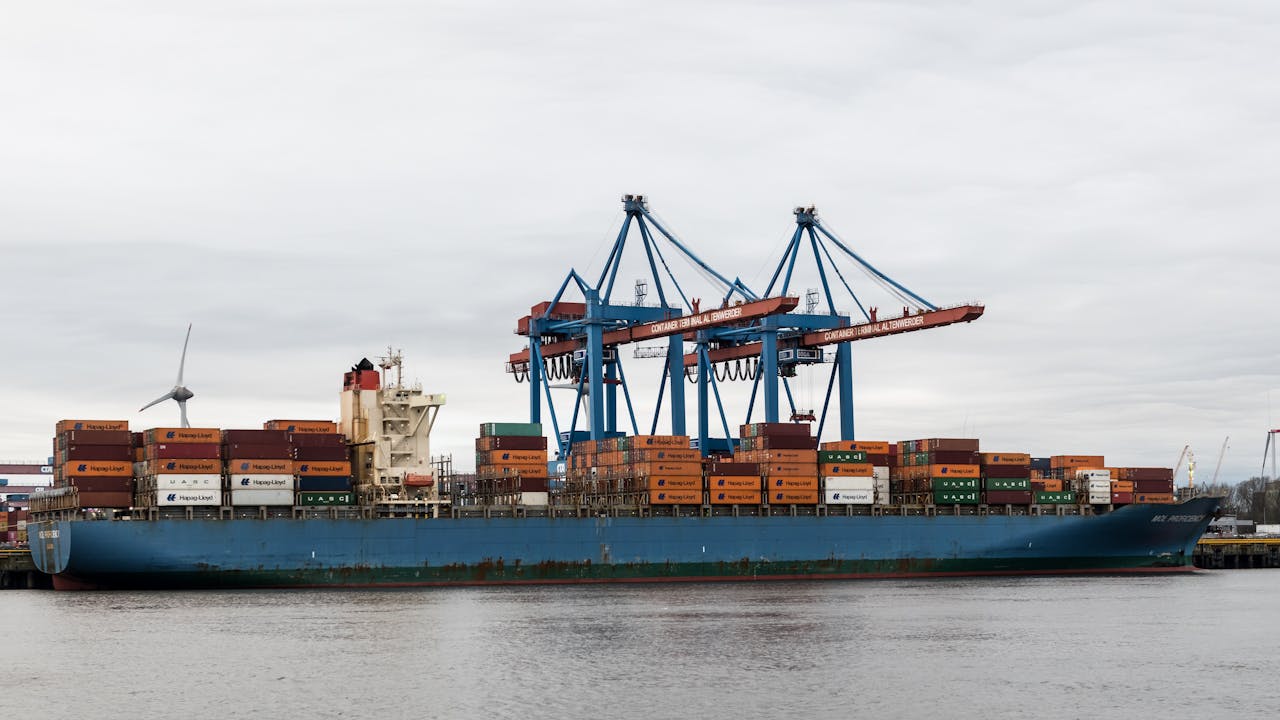
US-Mexico trade reached unprecedented scale in 2025. According to the US Department of Commerce Census Bureau, Mexican exports to the United States totaled US$448 billion in the first 10 months of 2025 — a new record. Total Mexican exports to the US for the full year stood at US$399.5 billion. Meanwhile, US shipments to Mexico exceeded US$283 billion in the same 10-month period. Critical border crossings — including Laredo, Ciudad Juárez, and Tijuana — serve as high-volume funnels, with Highway 57 acting as a key north-south artery. These flows span vehicles, engine parts, avocados, beer, electronics components, heavy machinery, and natural gas — underscoring deep interdependence.

Back row: Alban Miranda, BNY; Dyanne Carenza, Scotiabank; Antonio Federico, Citi; Caryn Pace Messenger, Bank of America; João Galvão, Standard Chartered Front row: Geoff Brady, Bank of America; Jonath

Canada: An Underutilized Corridor

While the US dominates Mexican export destinations, Canada represents a stable, predictable, and underleveraged market fully integrated under USMCA. In 2022, Mexico exported more than US$22 billion worth of goods to Canada — led by delivery trucks, auto parts, and tropical fruits. Unlike major US market entry, integrating Canada often requires only route optimization across existing North American distribution centers — not full operational redesign. This makes it a practical lever for supply chain diversification and de-risking.

Supply chain industry image

Practitioner Implications

For global supply chain professionals, three actions are now critical: (1) Treat logistics as a strategic function — not just execution — embedding it early in market-entry and nearshoring decisions; (2) Prioritize end-to-end visibility and predictive demand technology to avoid bottlenecks at key land ports; and (3) Actively assess Canada as a complementary corridor to reduce overreliance on single-border lanes. As infrastructure analysis from Mexecution confirms, agility at chokepoints like Laredo hinges on synchronized inventory, adaptive routing, and trusted third-party partners capable of navigating customs, compliance, and cross-border variability.

Source: mexicobusiness.news

Compiled from international media by the SCI.AI editorial team.

Ask SCI.AI Finished reading? Continue with SCI.AI. Explore the related policy, route, company and historical context. Continue asking
NRF: Early peak shipping season to subside in September
Supply Chain

NRF: Early peak shipping season to subside in September

The National Retail Federation (NRF) and Hackett Associates report that the early peak shipping season is ending, with U.S. port imports expected to decline for the rest of 2026. May was the busiest month at 2.24 million TEU. Tariff changes and supply chain disruptions drove retailers to pull forward orders. Consumer spending remains resilient. Full-year 2026 imports are projected at 25.5 million TEU, up 0.1% from 2025.

China’s exports rise 14%, imports up 22% amid trade war resilience
Supply Chain

China’s exports rise 14%, imports up 22% amid trade war resilience

China’s foreign trade rose 17.3% to ¥30.13 trillion in the first seven months of 2026, with exports up 14% and imports surging 22%. High-tech exports jumped over 50% in July, accounting for nearly 60% of monthly export growth. U.S.-China trade fell 1.6%, while ties with over 180 countries—including ASEAN and the EU—expanded. Green exports like EVs and lithium batteries posted double-digit growth for the 17th straight month. China also applies zero tariffs to imports from 63 countries.

BlueGrace acquires Idaho 3PL Truk TMS to expand Pacific Northwest LTL
AI & Automation

BlueGrace acquires Idaho 3PL Truk TMS to expand Pacific Northwest LTL

BlueGrace Logistics has acquired Idaho-based third-party logistics provider Truk TMS to strengthen its presence in the Pacific Northwest. The deal brings Truk TMS—previously a BlueGrace partner—fully into the company’s ecosystem, granting its customers access to BlueGrace’s Managed Logistics platform and BlueShip technology. Financial terms remain undisclosed. BlueGrace, headquartered in Tampa, Florida, serves over 10,000 customers from nine offices across the U.S. and Mexico and operates a carrier network exceeding 250,000. As a Warburg Pincus portfolio company, BlueGrace previously acquired STB Freight Group and FreightCenter in 2025. Truk TMS CEO Mark Barnes emphasized continuity of service backed by expanded capabilities.

Welcome Back!

Login to your account below

Create New Account!

Fill the forms below to register

Retrieve your password

Please enter your username or email address to reset your password.

Scan to share via WeChat

Open WeChat and scan the QR code to share

QR Code

Add New Playlist

