

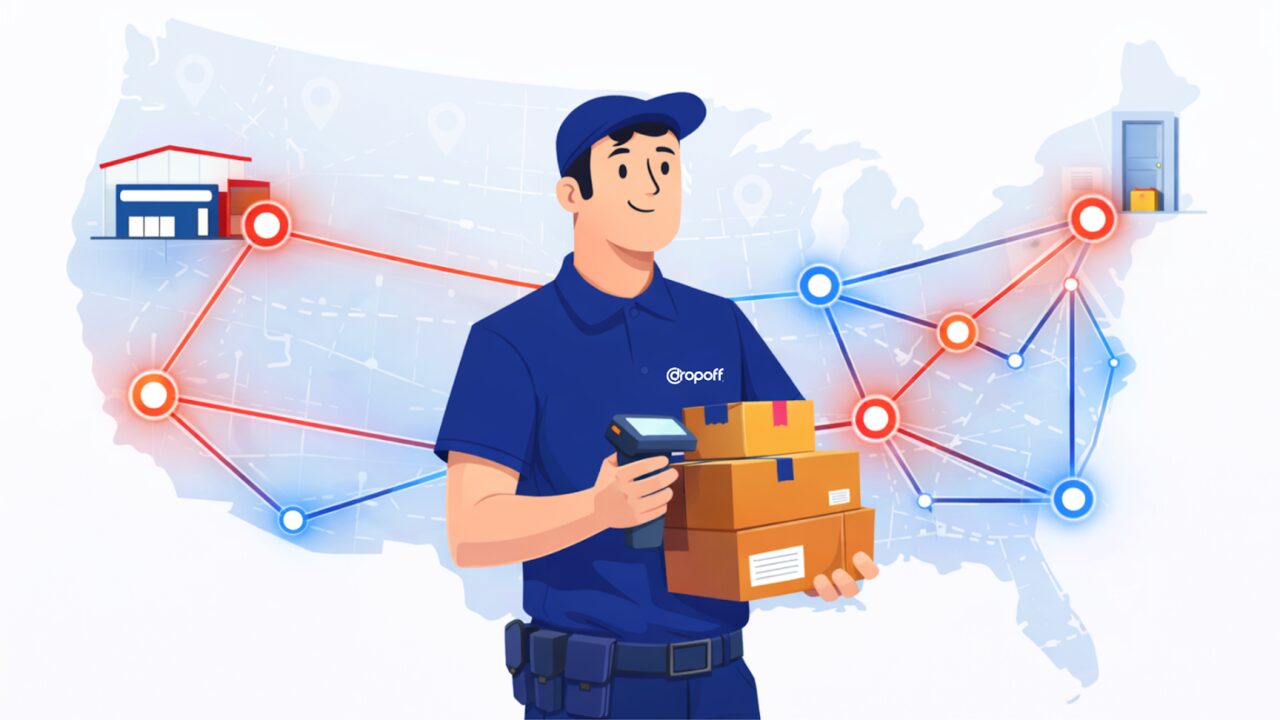
This article provides an in-depth analysis of the 2026 last-mile delivery market landscape, explores major delivery partner categories and evaluation criteria, examines the impact of technological innovation on delivery efficiency, and offers cost optimization strategies and successful enterprise case studies to guide e-commerce brands in developing effective last-mile delivery strategies.
Best Last-Mile Delivery Partners for E-Commerce Brands in 2026: A Comprehensive Guide
Introduction: The Strategic Importance of Last-Mile Delivery in E-Commerce Logistics
In today’s rapidly evolving e-commerce ecosystem, last-mile delivery has transformed from a mere logistics function into a core strategic element that determines brand competitiveness and customer loyalty. According to industry research data, last-mile delivery costs now account for over 50% of total logistics costs, a significant increase from approximately 41% in 2018, making it the most expensive and operationally complex aspect of e-commerce operations.
Industry experts note: “Last-mile delivery is no longer just about moving goods; it’s a critical touchpoint between brands and consumers.”
The importance of last-mile delivery extends beyond cost considerations—it directly shapes consumer brand perception and purchasing decisions. In the digital age, delivery speed, reliability, and transparency have become key metrics for consumers evaluating brand value.
2026 Last-Mile Delivery Market Landscape Analysis
The 2026 last-mile delivery market exhibits distinct characteristics of diversification, specialization, and technology-driven innovation. Traditional courier giants like UPS, FedEx, and DHL continue to hold market share but face intense competition from regional logistics companies, technology-driven new delivery platforms, and retail enterprise-owned logistics networks.
The rise of regional logistics companies represents a significant change in the 2026 market landscape. These companies leverage deep understanding of local markets, flexible operational models, and lower cost structures to provide e-commerce brands with viable alternatives to national courier networks.
Classification and Evaluation of Major Last-Mile Delivery Partners
Last-mile delivery partners can be categorized into four major types based on service models, technological capabilities, and market positioning: national comprehensive logistics providers, regional specialized delivery companies, technology-driven platforms, and retail-owned logistics.
National comprehensive logistics providers like UPS, FedEx, and USPS offer extensive, standardized delivery services suitable for e-commerce enterprises requiring nationwide delivery capabilities and prioritizing brand consistency and service reliability.
Impact of Technological Innovation on Last-Mile Delivery
Artificial intelligence, Internet of Things (IoT), autonomous vehicles, and drone technologies are profoundly transforming the operational models, efficiency standards, and cost structures of last-mile delivery. In 2026, the mature application of these technologies brings unprecedented optimization opportunities and innovation possibilities to last-mile delivery.
Artificial intelligence algorithms significantly enhance the efficiency and reliability of last-mile delivery through applications in route optimization, demand forecasting, and resource allocation.
Cost Structure and Efficiency Optimization Strategies
The cost structure of last-mile delivery is complex and variable, encompassing multiple dimensions including transportation costs, labor costs, technology investments, insurance expenses, and return processing. In 2026, e-commerce enterprises have achieved effective control of last-mile delivery costs and significant improvement in efficiency through refined cost analysis, process optimization, and technology application.
Transportation costs represent the largest expenditure item in last-mile delivery, including vehicle acquisition or leasing, fuel consumption, maintenance repairs, and road usage fees.
Case Studies: Successful Enterprise Last-Mile Delivery Practices
Amazon Logistics has built one of the world’s most efficient last-mile delivery systems through technology-driven approaches and scale effects. In 2026, Amazon continues expanding its logistics network, increasing the density of regional sortation centers and community delivery stations to shorten last-mile distances.
Walmart leverages its physical store network advantage to innovate last-mile delivery models. In 2026, most of Walmart’s over 4,700 stores function as micro-fulfillment centers, supporting in-store pickup, curbside pickup, and local delivery services.
Future Trends and Challenges
In 2026, the last-mile delivery industry faces multiple trends and challenges including technological convergence, sustainable development, regulatory evolution, and rising consumer expectations. Understanding these dynamics is crucial for e-commerce brands formulating long-term logistics strategies and selecting appropriate partners.
Technological convergence trends drive last-mile delivery toward intelligent, automated, and interconnected development. The combination of artificial intelligence, IoT, blockchain, and 5G technologies will create more transparent, efficient, and secure delivery ecosystems.
Conclusion and Recommendations
The strategic importance of last-mile delivery in 2026 e-commerce competition has reached unprecedented heights. It represents not only a significant component of logistics costs but also a key touchpoint for brand experience and an important determinant of customer loyalty.
Based on industry trends and best practices, we offer the following recommendations: First, conduct comprehensive delivery needs analysis to clarify business objectives, customer expectations, and cost constraints. Second, adopt hybrid partner models combining the advantages of national logistics providers, regional specialized companies, and technology platforms. Third, invest in key technology areas, particularly route optimization, real-time tracking, and data analytics tools. Fourth, focus on sustainable development through adoption of electric vehicles, packaging optimization, and mileage reduction. Fifth, establish continuous improvement mechanisms through data monitoring, customer feedback, and benchmark comparisons.
Source Reference: Best Last-Mile Delivery Partners for E-Commerce Brands in 2026
This article was AI-assisted and reviewed by our editorial team.


