

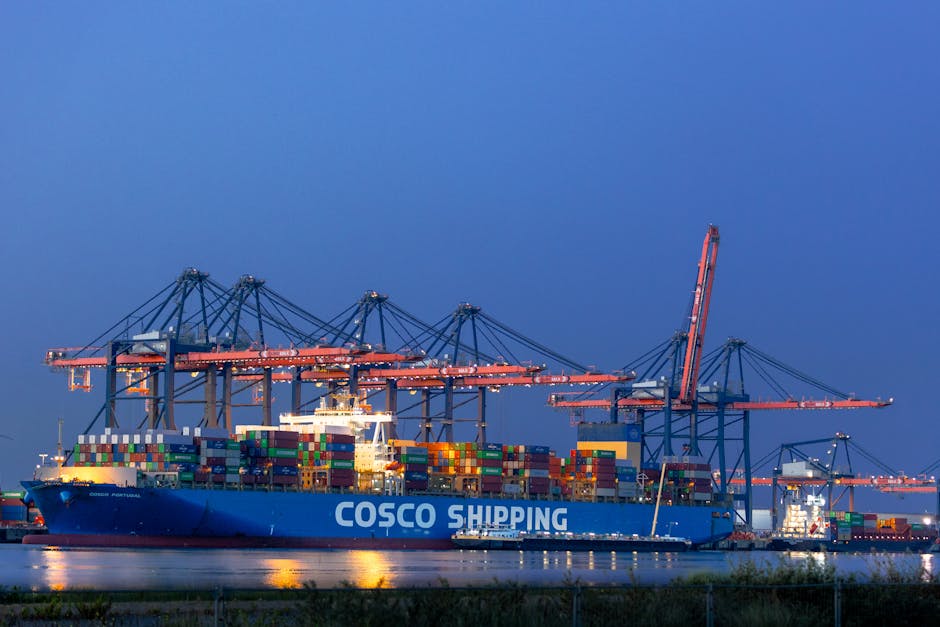
Africa's port transformation is redefining continental competitiveness in 2026. Tanger Med, Durban, Mombasa, and Lobito have evolved from transit nodes into integrated economic power centers anchoring industrial parks, logistics zones, and AfCFTA-aligned corridors. The 'attract ships, then attract factories' model is reshaping how landlocked nations access global markets via the Lobito and Northern Corridors, while Europe, Gulf states, and China compete for strategic port infrastructure influence across the continent.
The Port Imperative: Why Coastal Infrastructure Now Defines Continental Competitiveness
For decades, Africa’s economic narrative was anchored in extraction — copper from the DRC, oil from Nigeria, bauxite from Guinea. But as global supply chains recalibrate for resilience, speed, and predictability, a decisive shift has taken hold along the continent’s coastlines. According to furtherafrica.com, the true chokepoints of African competitiveness in 2026 are no longer mines or oil fields — they are ports. Modern trade advantage hinges less on what a country produces and more on how fast, cheaply, and reliably goods move across borders and through value chains. Ports serve as the physical interface between global maritime networks and inland economies — and when optimized, they compress lead times, reduce inventory costs, and eliminate uncertainty that once deterred investment. The source underscores that competitive differentiation now flows from infrastructure intelligence — digital customs clearance, bonded logistics zones, multimodal integration — rather than raw resource endowment alone.

This imperative is especially urgent for landlocked nations, which historically bore disproportionate trade costs. The source affirms that ports like Port of Lobito and Port of Mombasa are actively reshaping those dynamics by anchoring corridors that bypass traditional bottlenecks. The shift reflects a broader reordering: from commodity-centric development to logistics-led industrialization. As African governments align national strategies with the African Continental Free Trade Area (AfCFTA), ports have become the operational backbone of market integration — not just gateways, but governance platforms where regulatory harmonization, tariff simplification, and cross-border data exchange converge.
From Transit Nodes to Economic Power Centers: The Four Anchor Ports of 2026
The source identifies four leading African gateways whose evolution transcends conventional port functions: Tanger Med Port (Morocco), Port of Durban (South Africa), Port of Mombasa (Kenya), and Port of Lobito (Angola). Each serves as an anchor for integrated economic ecosystems — not merely moving containers, but hosting industrial parks, export-processing clusters, agribusiness hubs, and multimodal logistics zones. The model, as described in the source, is straightforward: attract ships, then attract factories. Efficient ports lower transport costs, shorten delivery times, and reduce supply chain uncertainty — drawing manufacturers, agribusiness processors, and distributors to locate nearby. Over time, trade activity spills inland, creating jobs and local value-add. Capital follows connectivity.

Port of Lobito, meanwhile, represents the most geopolitically charged transformation. Once underutilized, it is now central to the Lobito Corridor, a strategic artery connecting Angola’s deepwater port to Zambia’s copper belt and the DRC’s mineral-rich Katanga region. The source notes that these four ports share a common operational DNA: they combine customs reform, digital clearance systems, bonded zones, and multimodal connectivity — allowing goods to move from ship to warehouse to truck in hours, not days. This convergence of policy and infrastructure signals a continental leap in institutional capacity that cannot be replicated by hardware investment alone.
The ‘Attract Ships, Then Attract Factories’ Model in Action
The source articulates a powerful developmental logic: “attract ships, then attract factories.” This is an observable pattern unfolding across Africa’s coastlines. Efficient ports lower transport costs, shorten delivery times, and reduce supply chain uncertainty — all non-negotiable conditions for manufacturers seeking alternatives or regional production bases. In practice, food processors locate near Mombasa to export agricultural products to Europe; light manufacturers establish assembly operations in Lobito’s emerging industrial zones; automotive suppliers cluster around Tanger Med and Durban’s rail-served logistics parks. These are not isolated investments but clustered ecosystems — where warehousing, packaging, quality control, and distribution co-locate to create density-driven efficiencies.
“In modern Africa, power does not only lie underground. It lies at the waterfront. Ports are no longer passive infrastructure — they are strategic platforms.” — furtherafrica.com, February 2, 2026
The source emphasizes that revenue streams extend far beyond handling fees: industrial leases, value-added logistics services, and warehousing rentals constitute growing income pillars — transforming ports from cost centers into profit centers. For investors, the signal is unambiguous — proximity to a digitally enabled, corridor-integrated port is now a primary site-selection criterion. That shift has profound implications for regional inequality: coastal nations with strong port governance gain outsized advantages, while landlocked countries must negotiate corridor access terms that preserve sovereignty and ensure equitable revenue sharing.

Corridors as Geopolitical Infrastructure: Europe, Gulf States, and China Compete for Influence
The source explicitly identifies Europe, Gulf states, and China as the three principal external actors investing heavily in African port infrastructure — framing these projects not as commercial ventures alone, but as geopolitical assets comparable to energy pipelines or subsea data cables. Each power pursues distinct strategic objectives. European engagement prioritizes supply chain diversification, critical raw material access, and climate-resilient trade routes — often combining development finance with regulatory alignment initiatives. Gulf states leverage sovereign wealth funds and logistics operators to secure long-term footholds: controlling port concessions provides diversified revenue streams and supply-chain security for commodity-dependent GCC economies. China’s involvement advances connectivity goals while securing access to minerals essential for electric vehicle supply chains.

What unites these actors is recognition that ports are force multipliers — their influence radiates inland via corridors, amplifying economic leverage, shaping regulatory norms, and embedding technical standards. A port concession today, as the source notes, resembles an energy pipeline or data cable: strategic infrastructure with economic and diplomatic weight. For African governments, this creates both opportunity and complexity: diversified financing reduces dependency on any single partner, but demands sophisticated contract negotiation to preserve operational sovereignty. These dynamics are actively playing out in negotiations over corridor toll structures and port management contracts across Eastern, Southern, and Western Africa.
Supply Chain Path Analysis: How Corridors Reshape Landlocked Nations’ Export Competitiveness
The Lobito Corridor and Northern Corridor represent two of the most consequential supply chain reconfigurations underway in Africa — and their impact is most acutely felt by landlocked nations previously marginalized by distance and administrative friction. The source confirms that these corridors are actively reshaping regional trade flows, offering viable alternatives to congested or commercially unfavorable routes. For the Democratic Republic of Congo, the Lobito Corridor provides a direct, rail-served path to Atlantic markets — reducing reliance on longer overland routes. For Zambia, it connects copper exports to global shipping lanes through Angola rather than routing through multiple transit countries. The Northern Corridor — anchored by Mombasa — delivers structured multimodal connectivity to Uganda, Rwanda, South Sudan, and eastern DRC, enabling producers to access global buyers under predictable transit conditions.
These corridor improvements alter the fundamental economics of participation in global value chains. A landlocked producer gaining reliable, time-certain access to a major port can pursue consignment-based financing, reduce buffer inventory, and bid competitively on international tenders requiring guaranteed delivery windows. The source does not provide specific transit time reductions or cost-saving percentages — and this analysis does not fabricate them. What the source does establish is causal: port efficiency enables corridor reliability, which enables inland competitiveness. For landlocked countries, corridor access is no longer a logistical convenience but a sovereign necessity — one demanding institutional coordination through joint border posts, interoperable IT systems, and transparent fee structures. Without such alignment, corridor potential remains theoretical, underscoring the importance of the governance architecture surrounding physical infrastructure.
Scenario Projection: Implications of Port-Led Development for Africa’s Supply Chain Position
Port-led development implies three structural shifts in Africa’s global supply chain positioning through 2026 and beyond. First, Africa transitions from being a passive node in global logistics — defined by inbound FDI and outbound commodity shipments — to an active orchestrator of regional value chains. Ports like Tanger Med and Durban are no longer endpoints but launchpads for intra-African manufacturing: automotive components, processed foods, light manufactures, and agricultural products now flow between African nations through these port-anchored logistics networks. Second, the continent gains collective leverage in trade negotiations: AfCFTA implementation depends on seamless port-to-port movement, giving coastal states bargaining power to demand harmonized rules of origin, mutual recognition of standards, and shared logistics data protocols. Third, geopolitical competition over ports accelerates institutional upgrading — as external partners co-finance digital customs systems and train port authorities, they inadvertently strengthen Africa’s long-term capacity for autonomous infrastructure governance.
The source is unambiguous: ports are the physical backbone of AfCFTA market integration, and their success is measured in operational velocity, not just tonnage. Automotive assembly, food processing, light manufacturing, and distribution hubs are clustering around Africa’s leading ports — constituting a verifiable shift in continental supply chain identity. For global shippers, the implication is clear: supply chain strategy in Africa in 2026 begins not with a country risk assessment alone, but with a port performance audit — assessing digital readiness, corridor linkages, and industrial adjacency. The era of treating African ports as mere transit points is over. The era of treating them as strategic command centers has begun.
Source: furtherafrica.com
This article was AI-assisted and reviewed by our editorial team.


