

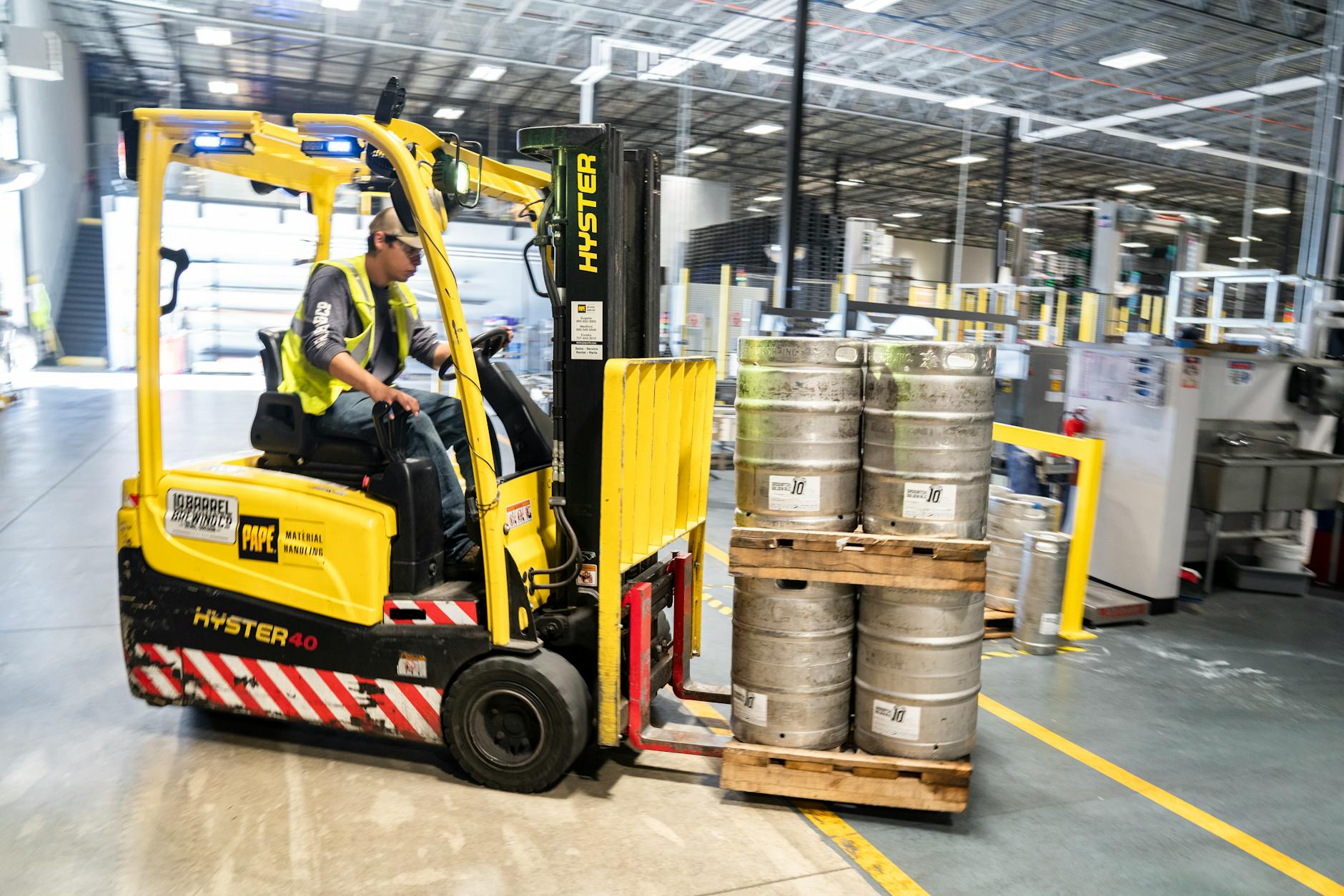
China has launched a fully automated logistics center operated by AI-powered robots with no human workers on site, marking a major milestone in smart supply chain infrastructure.
China has reportedly launched a fully automated logistics center operated by AI-powered robots with no human workers physically present on site, marking what industry observers describe as a major milestone in the evolution of smart supply chain infrastructure.
The development, first highlighted by Cointelegraph on X and later independently cited by multiple media outlets, underscores how rapidly AI-driven automation is transforming industrial operations in the world’s second-largest economy.
“If an unexpected surge in orders occurs, the system can autonomously adjust task allocation among robots without human direction.”
A Glimpse Into Next-Generation Logistics
The automated center represents the convergence of several advanced technologies: autonomous mobile robots, AI-based inventory systems, predictive analytics, and high-speed robotic arms capable of sorting thousands of parcels per hour.
Unlike traditional warehouses where human workers coordinate picking, packing, and shipping, this facility relies on machine-to-machine communication and AI decision-making systems to process orders dynamically.
Sensors and cameras track inventory movement in real time, feeding data into centralized AI software that continuously optimizes workflow efficiency. If an unexpected surge in orders occurs, the system can autonomously adjust task allocation among robots without human direction.
How the Technology Works
At the core of the logistics center is an AI control hub that acts as the facility’s “digital brain.” This system receives order data, analyzes storage patterns, and dispatches autonomous mobile robots to retrieve items from designated locations.
Robotic arms equipped with computer vision technology identify products using pattern recognition algorithms. Machine learning models allow the system to adapt to packaging variations and continuously refine its accuracy over time.
Automated guided vehicles transport goods across different sections of the warehouse. Once items reach the packaging station, AI algorithms determine the optimal box size and packing configuration to minimize material waste and shipping costs.
The entire workflow is reportedly synchronized via cloud-based infrastructure, allowing remote monitoring and system diagnostics without requiring on-site personnel.
Efficiency Gains and Economic Implications
Automation at this scale offers significant potential cost advantages. Labor expenses, which often account for a substantial portion of warehouse operating budgets, can be reduced dramatically when robots handle physical tasks.
Additionally, AI systems can reduce human error, improve delivery speed, and optimize space utilization within storage facilities.
Supporters of such technology argue that automation enhances overall supply chain resilience. During global disruptions—including pandemics or labor shortages—facilities that do not rely on physical staffing may maintain higher operational continuity.
China’s Smart Manufacturing Strategy
The autonomous logistics center aligns with China’s broader strategy to expand its leadership in artificial intelligence, robotics, and advanced manufacturing.
Over the past decade, the country has heavily invested in industrial automation as part of modernization initiatives aimed at increasing productivity and global competitiveness.
Smart factories, unmanned ports, and AI-powered production lines have already emerged in several provinces. The reported launch of a fully autonomous logistics hub further illustrates how AI deployment is extending beyond manufacturing into distribution and supply chain management.
Global Industry Reaction
The logistics and e-commerce sectors are closely monitoring developments in China’s automated facility. Major global companies have experimented with robotics in warehouses for years, but full autonomy without on-site workers represents a significant escalation.
If the model proves scalable and economically viable, other nations may accelerate investment in similar infrastructure.
Source: hokanews.com


