

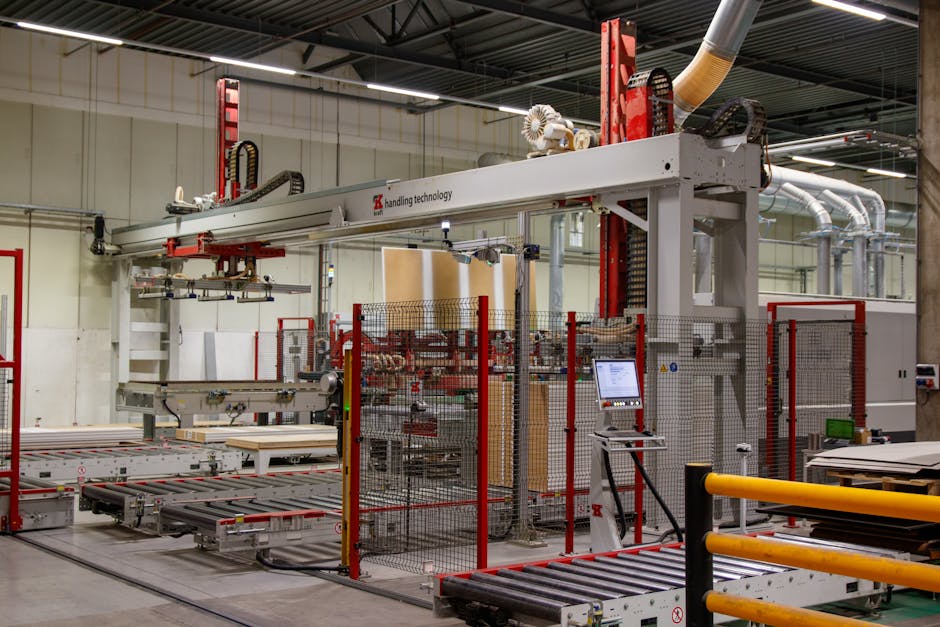
Warehouse automation orders rose 7% in 2025, driven by retail giant investments. EMEA region shows strongest growth forecast at 7% annually. Parcel sector expected to resume growth with 6% CAGR 2025-2030.
Warehouse Automation Market Grows Despite Economic Headwinds
Despite a weak overall macroeconomic backdrop, warehouse automation order intake rose by 7% in 2025, according to a report from London-based Interact Analysis. The increase was fueled in part by an inflation of project values due to rising steel and labor costs, causing order intakes to rise even without a boost in underlying demand.
In addition, slow momentum within the market was offset by large-scale facility investments from retail giants such as Amazon, Walmart, and Tesco. These industry leaders continue to invest in automation infrastructure to maintain competitive advantages and address rising labor costs.
Future Growth Drivers
Future growth in warehouse automation over the coming years will be driven by shifting investment priorities and changing production strategies. Strong industry sectors for growth are expected to be general merchandise, durable manufacturing, and food and beverage.
However, grocery automation is expected to slow in the Americas as we get closer to 2030, as major distribution center programs reach completion. Interact Analysis also predicts renewed growth for the parcel sector, with an average annual growth rate of approximately 6% forecast between 2025 and 2030, fueled by last-mile automation investment.
Regional Growth Forecast Comparison
Of the three key regions, EMEA has the strongest forecast for warehouse automation, with projected annual growth of approximately 7% between 2025 and 2030. This is slightly ahead of the Americas (6%) and APAC (5%), in part because the EMEA region has been less heavily impacted by inflated steel and labor costs.
“Looking further ahead, growth is expected to slow slightly, particularly in North America as steel prices normalize and major CapEx cycles reach maturity,” said Rowan Stott, Senior Analyst at Interact Analysis.
Factors Affecting Long-term Growth
Factors such as easing input costs and political uncertainty in the US ahead of the 2028 election are likely to weigh on longer-term growth in the warehouse automation market. Stott noted: “Overall, the sector is defined by contrast: short-term order intake growth built on rising project prices and a handful of large-scale investments, set against persistent structural headwinds and cautious investment sentiment.”
This results in an average annual growth rate of 6% between 2025 and 2030 globally. Enterprises need to carefully evaluate long-term returns when investing in automation, rather than simply chasing short-term trends.
Implications for Supply Chain Managers
For supply chain managers, this report offers several key insights. First, automation investments should be based on long-term strategy rather than short-term cost pressures. Second, growth differences across industries and regions mean enterprises need to develop differentiated automation strategies based on their specific situations.
Finally, as major retail giants continue to invest, SMEs may need to seek partnerships or adopt modular solutions to lower automation thresholds and achieve incremental upgrades.
Technology Trends and Investment Recommendations
The report also hints at several technology trends worth watching. As AI and machine learning technologies mature, adaptive warehouse management systems will become more prevalent. These systems can automatically optimize storage strategies, picking paths, and inventory allocation based on real-time data.
For enterprises planning to invest in automation, it is recommended to prioritize solutions that can seamlessly integrate with existing systems and reserve sufficient budget for employee training and process restructuring to ensure maximum return on investment.
Source: DC Velocity


