

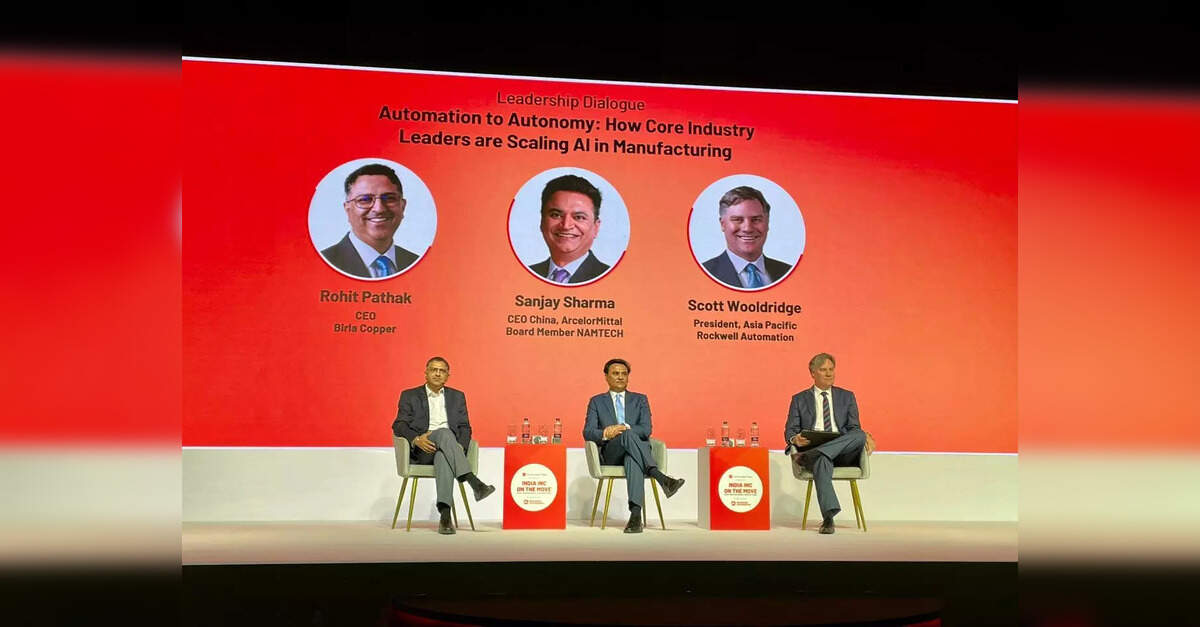
At IIOTM 2026, leaders from Rockwell Automation, Birla Copper, and ArcelorMittal discussed the transition from automation to AI-driven autonomy in manufacturing. Predictive maintenance, digital twins, and software-defined manufacturing are reshaping factory operations.
The Evolution from Automation to Autonomous Processes
In today’s rapidly evolving manufacturing landscape, companies are no longer content with merely automating their operations; they are pushing towards true autonomy. Scott Wooldridge, President of Rockwell Automation APAC, emphasized at the IIOTM 2026 summit in Mumbai that autonomy is more than just a technological tool—it represents a fundamental shift in business processes and philosophies. This transformation isn’t about replacing human labor with machines; rather, it’s about creating an ecosystem where decision-making is optimized through real-time data analysis and predictive modeling.
Autonomous systems are designed to learn from their environment and adapt accordingly without continuous human intervention. For instance, a manufacturing facility can monitor the wear and tear on machinery in real time and predict maintenance needs before failures occur. This proactive approach not only reduces downtime but also enhances overall operational efficiency. The transition to autonomous processes is driven by advancements in artificial intelligence (AI), machine learning (ML), and Internet of Things (IoT) technologies that enable these systems to operate with a high degree of autonomy.
Practical Applications: Predictive Maintenance and Beyond
Rohit Pathak, CEO of Birla Copper, noted at the summit that predictive maintenance has evolved from an ambitious goal to a critical necessity in heavy industries. By leveraging AI-driven analytics, companies can now anticipate equipment failures before they occur, significantly reducing unplanned downtime and associated costs. This approach not only saves money but also extends the lifespan of machinery by ensuring timely maintenance.
However, predictive maintenance is just one aspect of autonomous processes. Companies are increasingly integrating AI into broader operational contexts. For example, digital twins—virtual replicas of physical systems—are being used to simulate real-world scenarios and optimize operations without disrupting actual production lines. This technology allows for the testing and validation of new strategies in a risk-free environment before implementation.
The Role of AI in Supply Chain Optimization
Sanjay Sharma, CEO of ArcelorMittal China, highlighted another critical area where AI is transforming supply chains: decision-making. By integrating AI into supply chain management systems, companies can achieve real-time visibility and adapt to changing conditions more effectively than ever before. This capability is particularly valuable in industries with complex global networks and unpredictable market dynamics.
AI-driven insights enable predictive analytics that forecast demand fluctuations, optimize inventory levels, and streamline logistics operations. For instance, an AI system can analyze historical sales data combined with current economic indicators to predict future demand accurately. This level of precision helps companies maintain optimal stock levels, reducing the risk of overstocking or shortages.
Security Challenges and Collaborative Solutions
The integration of advanced technologies into supply chains also introduces new security challenges. As systems become more interconnected, they are increasingly vulnerable to cyber threats. To address these concerns, companies like Cisco and Rockwell Automation have collaborated on securing AI applications within manufacturing environments.
One of the key approaches to enhancing cybersecurity in autonomous systems is through encryption and secure data transmission protocols. Additionally, continuous monitoring and rapid response mechanisms are essential for identifying and mitigating potential vulnerabilities before they can be exploited. This collaborative effort not only strengthens individual company defenses but also sets industry standards that benefit all participants.
Technological Enablers: Digital Twins, Mobile Robotics, and Software-Defined Manufacturing
The path to autonomous supply chains is paved with a variety of technological enablers. Digital twins serve as virtual models of physical assets or processes, allowing for simulations that inform real-world decision-making. By testing different scenarios in a digital environment, manufacturers can optimize their operations without risking disruptions.
Mobile robotics is another critical component. Autonomous robots equipped with advanced sensors and AI algorithms can perform tasks such as material handling, quality inspection, and assembly line monitoring. These systems operate 24/7, enhancing productivity while reducing human error. Furthermore, software-defined manufacturing (SDM) allows for flexible production lines that can be easily reconfigured to meet changing demands or product specifications.
System-Wide Transformation: The Key to Successful Autonomy
To achieve true autonomy in supply chains, companies must undergo a comprehensive transformation rather than relying on isolated technology pilots. This involves not only the adoption of new technologies but also a cultural shift towards embracing data-driven decision-making and continuous improvement.
For example, while implementing AI-based predictive maintenance systems is crucial, it’s equally important to train staff on how to interpret and act upon the insights provided by these tools. Companies that foster a collaborative environment where humans and machines work together seamlessly are more likely to succeed in their autonomous journey. This holistic approach ensures that technological advancements are aligned with broader business goals and strategic objectives.
Source: ET Manufacturing


