Skip to content

Strategy & Planning · Supply Chain · Warehousing & Transport

How DSV Grew Into the World’s Largest Logistics Company

DSV to Become the World's Largest Logistics Company by Agreeing to Acquire Schenker for €14.3 Billion

Original source: Source information pending

How DSV Grew Into the World’s Largest Logistics Company
📋 本文要点

DSV to Become the World's Largest Logistics Company by Agreeing to Acquire Schenker for €14.3 Billion

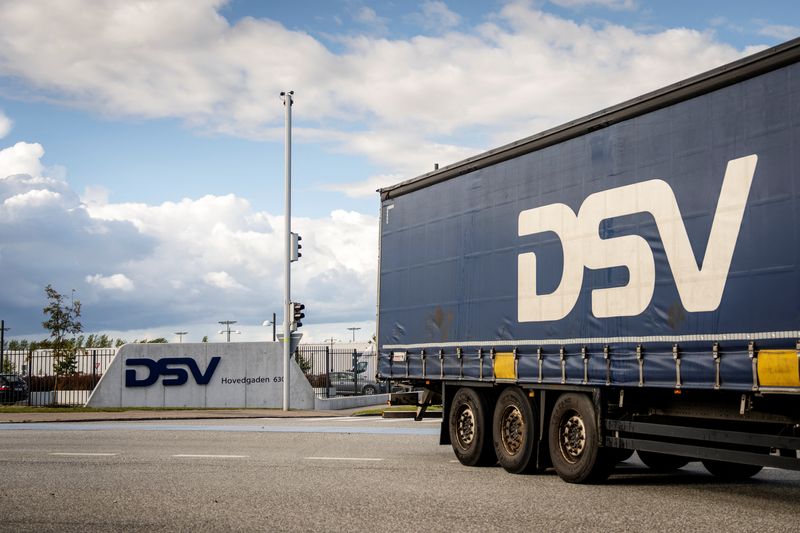
Copenhagen (Reuters) – DSV is set to become the world’s largest logistics company by acquiring Schenker, the logistics division of German state-owned railway operator Deutsche Bahn, for €14.3 billion ($15.85 billion).

DSV, a logistics firm that started as a small business founded in 1976 by ten truck drivers, has rapidly grown through a series of successful acquisitions in the competitive logistics market – some of which were even larger than the company itself.

What is DSV?

DSV began with ten truck drivers in 1976 and now employs over 75,000 people. Post-merger with Schenker, the company will have 147,000 employees and a revenue of 293 billion Danish Kroner (approximately $43.52 billion) based on 2023 performance, surpassing Danish pharmaceutical giant Novo Nordisk.

DSV handles everything from transporting single pallets to managing entire supply chains for multinational corporations.

The company was founded by Leif Tullberg and nine other independent truck drivers who saw a market opportunity as intermediaries in the shipping industry, helping businesses transport goods worldwide with minimal commission. The business operates on a light asset model without owning ships, planes, or trucks itself.

What Market Share Will the Expanded Company Have?

DSV states that its acquisition of Schenker will create the world’s largest logistics company, surpassing Germany’s DHL and Switzerland’s Kuehne + Nagel in size and revenue. However, the group only holds a 6% to 7% market share in the highly fragmented global logistics market.

It is estimated that the top 20 global logistics companies account for 30-40% of the global market share, with the rest held by local and regional firms.

Research firm Technavio predicts that the global third-party logistics (3PL) market will grow by over $500 billion from 2023 to 2027, driven primarily by e-commerce and integrated transport services.

How Has DSV Grown?

In recent years, DSV has expanded through several acquisitions, including the purchase of US company UTi for $1.35 billion in 2016, Swiss Panalpina for $4.6 billion in 2019, and Kuwait’s Global Integrated Logistics (GIL) for $4.2 billion in 2021.

(Reporting by Jacob Gronholt-Pedersen; Editing by Matt Scuffham and Tomasz Janowski)


Source: Yahoo Finance

Ask SCI.AI Finished reading? Continue with SCI.AI. Explore the related policy, route, company and historical context. Continue asking
NRF: Early peak shipping season to subside in September
Supply Chain

NRF: Early peak shipping season to subside in September

The National Retail Federation (NRF) and Hackett Associates report that the early peak shipping season is ending, with U.S. port imports expected to decline for the rest of 2026. May was the busiest month at 2.24 million TEU. Tariff changes and supply chain disruptions drove retailers to pull forward orders. Consumer spending remains resilient. Full-year 2026 imports are projected at 25.5 million TEU, up 0.1% from 2025.

China’s exports rise 14%, imports up 22% amid trade war resilience
Supply Chain

China’s exports rise 14%, imports up 22% amid trade war resilience

China’s foreign trade rose 17.3% to ¥30.13 trillion in the first seven months of 2026, with exports up 14% and imports surging 22%. High-tech exports jumped over 50% in July, accounting for nearly 60% of monthly export growth. U.S.-China trade fell 1.6%, while ties with over 180 countries—including ASEAN and the EU—expanded. Green exports like EVs and lithium batteries posted double-digit growth for the 17th straight month. China also applies zero tariffs to imports from 63 countries.

TSMC revenue up 33.7%, ASML ships 86 lithography machines
Manufacturing

TSMC revenue up 33.7%, ASML ships 86 lithography machines

TSMC reported $40.2 billion in Q2 2026 revenue — up 33.7% year-on-year — with 2-nm process contributing 3% of sales. ASML shipped 86 new lithography machines in the same quarter, boosting revenue to €9.32 billion ($10.69 billion). TSMC holds 73% of the global foundry market, while ASML’s EUV tools remain essential for sub-3-nm chip production. Both companies’ five-year net income grew over 90% (ASML) and 251% (TSMC). TSMC’s $100 billion Arizona expansion will support 2-nm manufacturing and advanced packaging.

Welcome Back!

Login to your account below

Create New Account!

Fill the forms below to register

Retrieve your password

Please enter your username or email address to reset your password.

Scan to share via WeChat

Open WeChat and scan the QR code to share

QR Code

Add New Playlist

