

New Shipping Networks by 2025: Read Vespucci Maritime's Lars Jensen's Analysis on Global Ocean Freight in September 2024
# New Shipping Network for 2025
Author: Lars Jensen, CEO of Vespucci Maritime
The new shipping network set to launch in February 2025 has been unveiled. Concurrently, new alliances and partnerships among carriers have also formed. This will result in a slight increase in the number of weekly services, offering shippers more options.
The newly announced alliance is called Premier Alliance. In fact, this is a rebranding of THE Alliance, now comprising ONE, HMM, and Yang Ming, as Hapag-Lloyd has exited this alliance to join Gemini Alliance with Maersk.
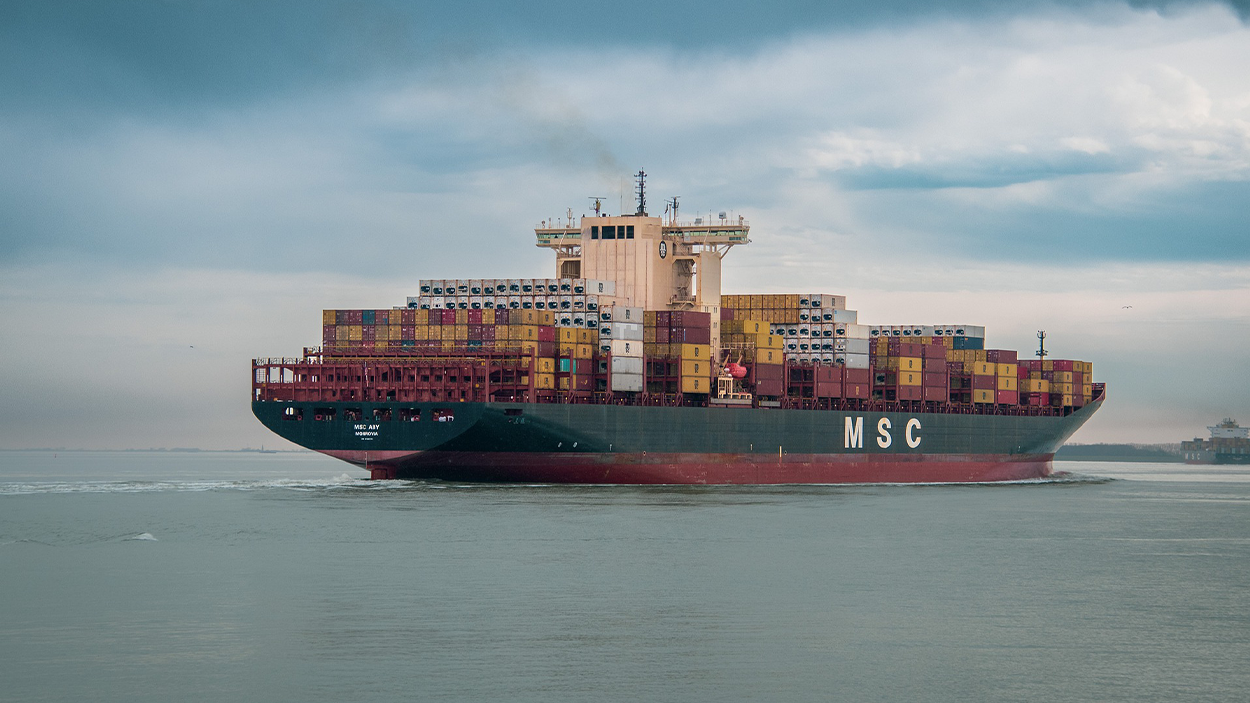
MSC has clearly stated it will operate independently from any alliances. However, as expected, this does not preclude flexible collaborations with other carriers. On the Asia-Europe route, they collaborate through what is known as space chartering with Premier Alliance, exchanging cabin spaces on nine routes. Additionally, MSC provides four independent services on this route, while Premier Alliance operates one service that is not shared with MSC.
Further nuances emerge upon detailed examination of the network. Premier Alliance directly operates its FP1 service from Japan to Europe without sharing with MSC. Moreover, Premier Alliance has an FN2 service, which MSC refers to as the “Griffin” service. This service also connects Japan and Europe directly, but MSC only owns cabin space from Chinese ports rather than Japanese ones. This means that despite collaboration, Premier Alliance retains a unique advantage on the Japan-Europe route.
## Leading New Directions with Targeted Routes and Strategic Collaborations
The “Swan” service by MSC, known as FE6 in Premier Alliance, can also be studied. This route connects Asia to Northern Europe, calling directly at Aarhus and Gothenburg. Despite collaboration, only MSC has cabin space for these Scandinavian destinations, excluding Premier Alliance. Therefore, MSC enjoys a unique advantage within this partnership.
MSC and Zim have collaborated on six services between Asia and the U.S. East Coast. However, on the route from Asia to the U.S. West Coast, both companies operate their own networks without sharing cabin spaces.
MSC has announced two versions of its network. The first version is for scenarios requiring a detour around Africa, while the second will take effect after the reopening of the Suez Canal. The Suez Canal route offers greater vessel capacity, forming more direct port connections and thus making the network more efficient.
Maersk and Hapag-Lloyd have announced their 2025 networks within Gemini Alliance. Based on the assumption that the Suez Canal will be open, minor adjustments were made to the original network proposed in 2024. Additionally, both companies prepared an alternative network for a potential detour around Africa in February 2025. This demonstrates their flexibility and ability to predict route changes.
Gemini Alliance continues with its concept of fewer direct port calls combined with regional feeder services managed autonomously. Their African route network has two fewer services compared to the Suez route network. According to the alliance, this is a deliberate decision aimed at creating sufficient buffer for the Africa network to meet their 90% on-time arrival target.
When navigating around Africa, Maersk’s presented network uses 40 more vessels than the Suez route. This difference clearly highlights the Red Sea crisis’s impact on market absorption of additional capacity and how disruptions affect vessel capacity, as well as carriers’ responses through additional resources.
## Future Strategies Bring Challenges and New Opportunities
Ocean Alliance will continue to operate in its current form temporarily without announcing a 2025 network. If they maintain their existing network, this would result in an increase in available services on the market. From Asia to Europe, it is expected that two to three additional weekly services will be added, depending on the Red Sea crisis situation. Similar increases are anticipated on routes between Asia and North America.
Overall, the new networks introduce more diversity in carrier service concepts. Additionally, the increase in service numbers indicates intensified competition from 2025 onwards. With shippers having more options and carriers adopting different strategies, the market will become more dynamic and competitive.
—
Source website:


