Skip to content

Ocean · Supply Chain · Warehousing & Transport

Maersk and Hamburg Süd Confirm “Cape” Route, Launching a New Chapter of Twin Star Collaboration

Maersk and Hapag-Lloyd Announce Gemini Collaboration Launch on February 1, 2025, to Leverage Cape Network

Original source: Source information pending

Maersk and Hamburg Süd Confirm “Cape” Route, Launching a New Chapter of Twin Star Collaboration
📋 本文要点

Maersk and Hapag-Lloyd Announce Gemini Collaboration Launch on February 1, 2025, to Leverage Cape Network

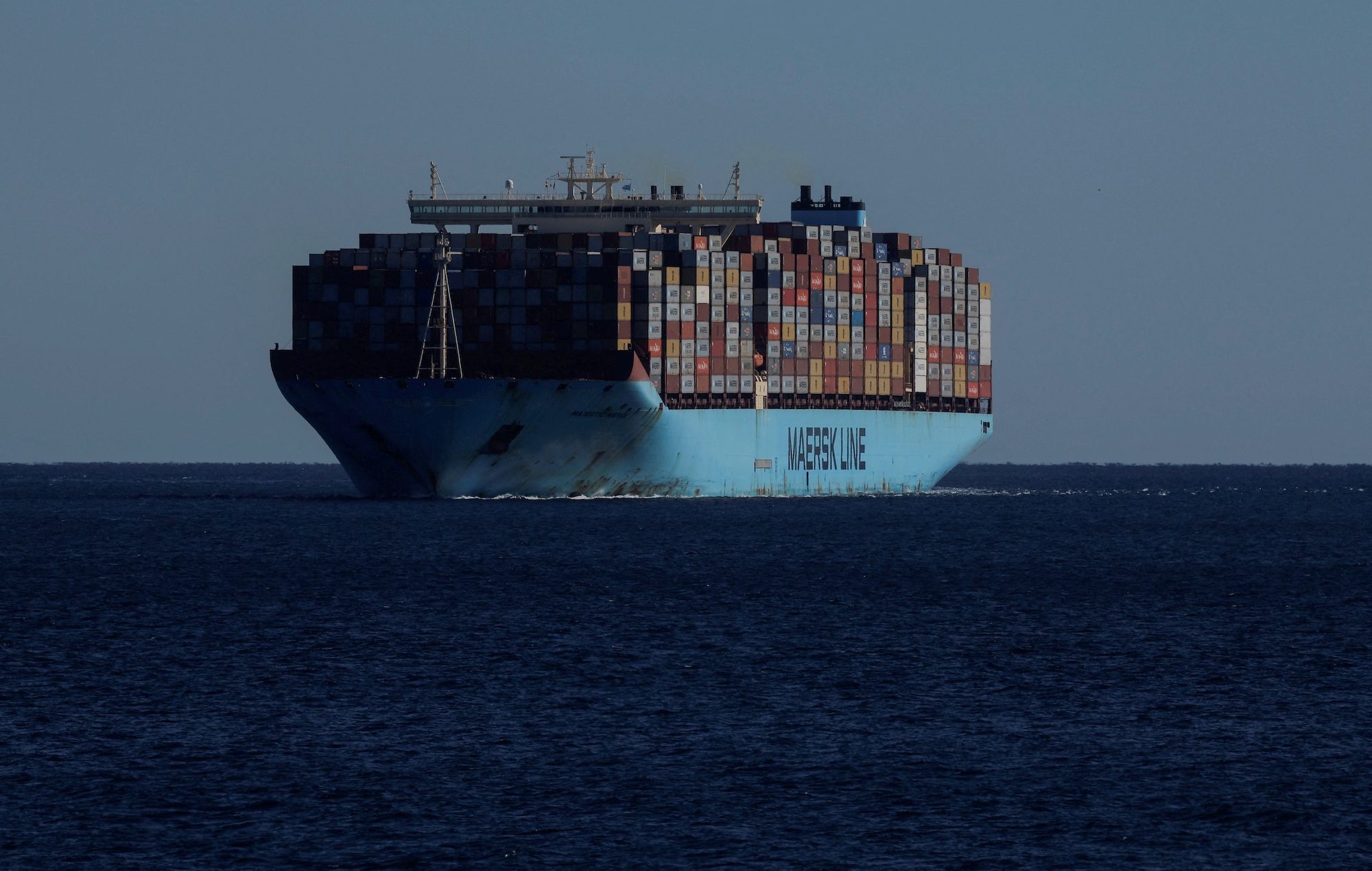
Shipping giants Maersk and Hapag-Lloyd announced that they will utilize the Cape route when launching the “Gemini Collaboration Project” on February 1, 2025, highlighting the ongoing threat to vessels and crews in the Red Sea region.

This decision is the latest indication of the unresolved crisis in the Red Sea, with Iran-backed Houthi forces having launched a campaign against shipping since almost a year ago, in solidarity with Palestinians during the Gaza conflict between Israel and Hamas.

In early September, Maersk and Hapag-Lloyd outlined two potential scenarios for the launch of the Gemini project based on conditions in the Red Sea: either resuming Red Sea routes or continuing to use the Cape route as an alternative.

“In a joint statement, following thorough consideration and given ongoing security concerns in the Red Sea region, Hapag-Lloyd AG and Maersk A/S confirm that they expect to gradually introduce the Cape network when launching the Gemini collaboration on February 1, 2025,” the companies said.

“Due to the highly dynamic situation, Hapag-Lloyd and Maersk will return to the Red Sea as soon as it is safe to do so.” The statement added.

The Cape network will include 29 mainline services supported by 28 feeder connections. It will deploy approximately 340 vessels with a total capacity of 3.7 million TEUs.

The collaboration aims to achieve industry-leading on-time performance exceeding 90%, ensuring efficient and flexible service once fully implemented, along the East-West trade lanes. This is planned through a hub-and-spoke model centered around strategic “hub” ports—many owned or operated by Hapag-Lloyd/HGT or APM Terminals—with feeder services connecting these hubs to “spoke” ports.

The decision to opt for the longer Cape route underscores the emphasis on safety. “Following thorough consideration, the implementation of the Cape network is due to ongoing security concerns in the Red Sea region. Given the current geopolitical situation and the need to ensure the safety of our personnel, we have determined that this route is the only viable option at present,” the companies stated.

As part of their participation in the Gemini collaboration, Hapag-Lloyd will exit THE Alliance by late January 2025, aligning with Maersk and MSC Mediterranean Shipping Company’s termination of the 2M Alliance.

—

Source: gCaptain

Ask SCI.AI Finished reading? Continue with SCI.AI. Explore the related policy, route, company and historical context. Continue asking
NRF: Early peak shipping season to subside in September
Supply Chain

NRF: Early peak shipping season to subside in September

The National Retail Federation (NRF) and Hackett Associates report that the early peak shipping season is ending, with U.S. port imports expected to decline for the rest of 2026. May was the busiest month at 2.24 million TEU. Tariff changes and supply chain disruptions drove retailers to pull forward orders. Consumer spending remains resilient. Full-year 2026 imports are projected at 25.5 million TEU, up 0.1% from 2025.

China’s exports rise 14%, imports up 22% amid trade war resilience
Supply Chain

China’s exports rise 14%, imports up 22% amid trade war resilience

China’s foreign trade rose 17.3% to ¥30.13 trillion in the first seven months of 2026, with exports up 14% and imports surging 22%. High-tech exports jumped over 50% in July, accounting for nearly 60% of monthly export growth. U.S.-China trade fell 1.6%, while ties with over 180 countries—including ASEAN and the EU—expanded. Green exports like EVs and lithium batteries posted double-digit growth for the 17th straight month. China also applies zero tariffs to imports from 63 countries.

TSMC revenue up 33.7%, ASML ships 86 lithography machines
Manufacturing

TSMC revenue up 33.7%, ASML ships 86 lithography machines

TSMC reported $40.2 billion in Q2 2026 revenue — up 33.7% year-on-year — with 2-nm process contributing 3% of sales. ASML shipped 86 new lithography machines in the same quarter, boosting revenue to €9.32 billion ($10.69 billion). TSMC holds 73% of the global foundry market, while ASML’s EUV tools remain essential for sub-3-nm chip production. Both companies’ five-year net income grew over 90% (ASML) and 251% (TSMC). TSMC’s $100 billion Arizona expansion will support 2-nm manufacturing and advanced packaging.

Welcome Back!

Login to your account below

Create New Account!

Fill the forms below to register

Retrieve your password

Please enter your username or email address to reset your password.

Scan to share via WeChat

Open WeChat and scan the QR code to share

QR Code

Add New Playlist

