

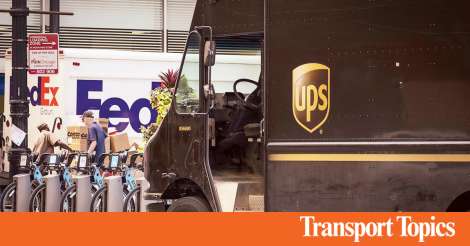
More People Opting for Slower Delivery Options to Save Costs, Squeezing FedEx and UPS Profits
Consumers are shifting to slower shipping options, hitting UPS and FedEx hard.
=========================================================
The carriers have downgraded their forecasts, attributing it to this trend.

Packages no longer need to be delivered overnight at all costs.
More people are opting for slower delivery options to save money, squeezing the profits of FedEx Corp. and UPS Inc.
The two largest U.S. carriers recently downgraded their forecasts partly due to customers switching to cheaper alternatives like ground shipping instead of air freight. This trend could serve as a warning signal for the upcoming holiday season and earnings reports.
Sean Lesczynski stopped using expedited shipping two years ago to obtain parts for custom bicycles he assembles in Brooklyn. It was too expensive for his clients, who didn’t mind waiting several more weeks for their new bikes.
“It sounds counterintuitive that someone would spend $5,000 on a bike but balk at an extra $500,” Lesczynski said. “But for many people, it’s actually a key factor in rationalizing or conceptualizing the purchase decision.”
Demand for expedited shipping has declined annually since 2021. At UPS, domestic overnight air service volume fell by 7.1% year-over-year in the most recent quarter. At FedEx, Priority Overnight shipments dropped by 5% in the previous quarter. Meanwhile, both companies noted that cheaper shipping options are growing across many markets.
This shift has shaken investors. This year, UPS stock has fallen by 14%, while FedEx is up 7%, compared to a 22% rise in the S&P 500 index.
Early signs indicate this holiday gift-buying season—the busiest time of the year for shippers—will not bring any changes.
According to a recent survey by supply chain software company Project44, shoppers are buying gifts earlier than usual this year, partly to save on shipping costs. Two-thirds of more than 1,300 consumers surveyed in North America and the UK said they plan to spend less on gifts this year, with a quarter citing shipping costs as their main concern.
“Consumers are under pressure,” said Gordon Glazer, a senior advisor at logistics company Shipware. “Families are doing everything possible to cut expenses, and they’re willing to wait longer for products.”
There are only 17 delivery days from Black Friday to Christmas Eve this year, so UPS has been advising budget-conscious shoppers to plan ahead to save money. Both UPS and FedEx impose peak-season surcharges.
Amanda Peleman runs an Etsy store in the Detroit area that sells calligraphy stationery items like gift tags and wedding place cards. This year, she had to increase her shipping costs by up to 20% due to USPS price hikes.
“Now many people are choosing slower delivery options even for orders that need timely arrival,” Peleman said. “This puts a lot of pressure on me.”
Price is not the only reason people are shying away from expedited shipping. Faster deliveries can make consolidation more difficult, leading to increased greenhouse gas emissions and air pollution.
At Grove Collaborative Holdings, an online marketplace for eco-friendly home goods and personal care products, customers increasingly ask about free shipping, but they’re mainly concerned with sustainability issues, according to Terrance Underwood, vice president of fulfillment operations.
“Grove’s customers are more concerned with sustainability than delivery times,” he said.
The reduction in fast shipping is causing an identity crisis for FedEx. Founded by Fred Smith in 1971 with the revolutionary idea that overnight deliveries could be achieved through air transport at central hubs, Federal Express became famous for its TV ad slogan: “When it absolutely, positively has to be there overnight.”
As a more established company, UPS gradually built up its air freight business throughout the 20th century and launched its own airline in the late ’80s to compete with FedEx. The two companies have been rivals, partnering with carriers to offer faster but pricier shipping options.
The demand for fast delivery has continued to grow as consumers got used to Amazon’s two-day delivery, or even next-day or same-day service. This trend persisted early in the pandemic when Americans stockpiled cleaning supplies and home improvement items.
But as supply chain disruptions and shortages of everything from bicycles to delivery vans set in, people no longer expect orders to arrive the next day; they’re satisfied just receiving them. This acceptance of longer lead times has continued, with Glazer calling it a “post-pandemic hangover.”
For its part, Amazon is training consumers to get used to slower shipping by offering incentives to those who don’t choose two-day or one-day delivery. Recently, Chinese e-commerce brands Shein and Temu have risen quickly in the U.S., offering extremely cheap clothing, electronics, and home goods (though with longer delivery times, potentially a week or more).
Shein and Temu are driving demand for low-cost shipping services like UPS’s SurePost, which it advertises as “non-urgent, lower-value B2C needs.”
UPS discussed the growth of SurePost during an earnings call in July. CEO Carol Tomé noted that service volume is growing rapidly due to “two new e-commerce customers joining our network—you can imagine who they are.”
—
Source: Transport Topics


