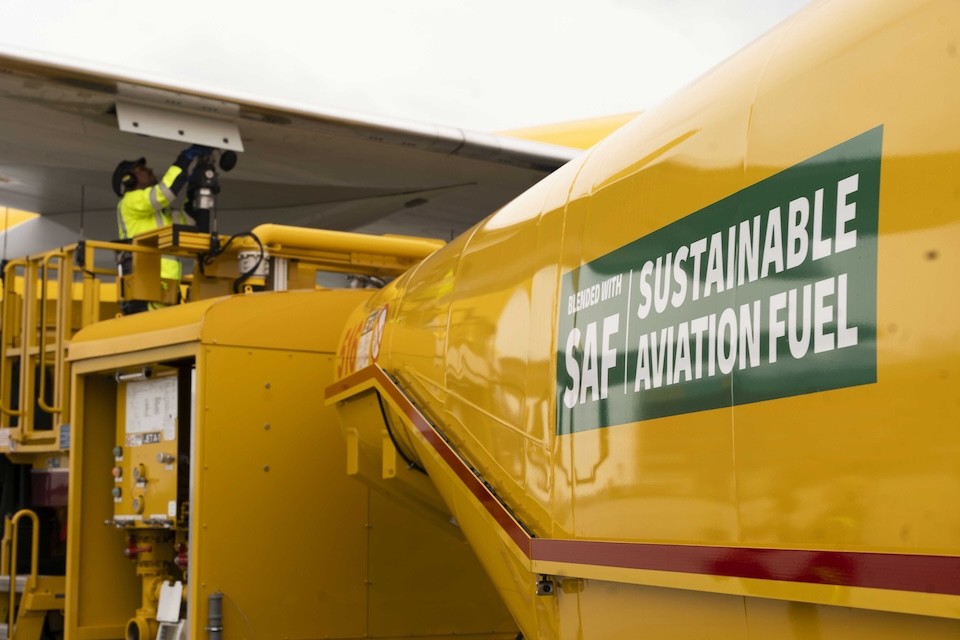
According to www.aircargonews.net, DHL has welcomed the Science Based Targets initiative’s (SBTi) formal adoption of the ‘book and claim’ mechanism as a credible method for tracking and allocating transport-related emissions reductions — a key development in Version 2.0 of SBTi’s Corporate Net Zero Standard, published in June 2026.
SBTi’s Updated Framework Enables Credible Attribution
The Science Based Targets initiative, established in 2015 as a collaboration among the Carbon Disclosure Project, the United Nations Global Compact, the World Resources Institute, and the World Wide Fund for Nature, released its updated Corporate Net Zero Standard in June 2026. This version explicitly recognizes ‘book and claim’ as a scientifically sound approach for attributing emissions reductions across complex logistics networks — particularly where physical fuel use cannot be directly tied to a specific shipment.
The mechanism operates through an independently verified registry system. When a sustainable fuel supplier produces Sustainable Aviation Fuel (SAF), it generates a certificate per metric ton produced from approved sustainable feedstock. Customers purchasing SAF attributes — or low-emission transport services powered by those fuels — receive these certificates, enabling them to claim corresponding emissions reductions even if their freight wasn’t physically carried on a SAF-powered aircraft. As DHL explained:
“When a sustainable fuel supplier produces the product, they generate a certificate based on a certain quantity of sustainable fuel (e.g., one metric ton) they make from sustainable feedstock. You receive that independently verified certificate when you purchase sustainable fuel attributes through a book and claim system or when you purchase a low-emission transport service powered by those fuels (or an electric vehicle). So, even though your package or freight might not have been shipped in a truck, plane or ship powered by sustainable fuel, somewhere in the network someone else’s shipment did. Your purchase has replaced fossil-based fuel and reduced overall transport emissions – and you get the credit for that.”
DHL’s Operational Integration and Progress
DHL Group stated the new SBTi framework will allow it to formally transfer the environmental benefits generated by low-carbon fuels used across its global network to customers whose shipments move through that infrastructure. This supports DHL’s GoGreen Plus offering, which enables clients to reduce Scope 3 emissions associated with their transportation activities.
Tobias Meyer, chief executive of the DHL Group, emphasized the strategic alignment:
“For years, DHL has championed practical, high-integrity solutions to decarbonise logistics at scale. Through the use of alternative, low-carbon fuels and GoGreen Plus, we have enabled thousands of customers across industries and geographies to reduce the emissions associated with their transportation activities. The continued evolution of industry standards and frameworks is an important step in helping accelerate the transition to lower-emission logistics worldwide.”
This announcement follows DHL’s achievement of a 10% Sustainable Aviation Fuel (SAF) blending ratio in its own aircraft fleet in 2025, as reported by Air Cargo News on 23 April 2026. That milestone reflects ongoing investment in scalable decarbonization levers — now reinforced by standardized, auditable accounting methods.
Industry Context and Peer Adoption
The SBTi’s endorsement arrives amid accelerating corporate demand for verifiable emissions reduction instruments. Google Cloud signed up to Kuehne+Nagel’s SAF programme in June 2026, while Nippon Express and Nikon entered an SAF agreement on 16 April 2026 to reduce the Japanese manufacturer’s Scope 3 CO2 emissions. These moves signal broadening participation beyond carriers into tech, manufacturing, and logistics service providers — all relying on consistent, third-party validated mechanisms like book and claim.
Unlike ad hoc bilateral agreements, the SBTi’s inclusion of book and claim provides interoperability across sectors and geographies. It addresses two persistent challenges: first, when one party reduces emissions on behalf of another; and second, when emissions reductions occur elsewhere in the network but are attributable to a customer’s procurement decision — such as requesting SAF for a route where direct physical supply remains logistically constrained.
Source: Air Cargo News
Compiled from international media by the SCI.AI editorial team.