Skip to content

North America Supply Chain

U.S. Linehaul Rates Rise 0.4% in June; Volume Inflection Delayed to Q3

FreightWaves reports U.S. linehaul truckload rates rose 0.4% in June 2024 to $3.55/mi, marking three straight months of increases. However, total freight volume remained flat at 11,736.66, pushing the expected demand inflection to Q3 2024. Diesel prices climbed to $4.80/gal, while carrier revenue per mile varied widely — SAIA at $3.69/mi, JBHT at $2.65/mi, and INTRM.USA (intermodal) at $1.64/mi. Public transport stocks gained broadly: UPS +3.7%, FDX +2.1%, UNP +1.7%. Housing starts jumped 19.0% to 1,427 thousand units, signaling potential future freight tailwinds.

Original source: freightwaves.com

U.S. Linehaul Rates Rise 0.4% in June; Volume Inflection Delayed to Q3
📋 本文要点

FreightWaves reports U.S. linehaul truckload rates rose 0.4% in June 2024 to $3.55/mi, marking three straight months of increases. However, total freight volume remained flat at 11,736.66, pushing the expected demand inflection to Q3 2024. Diesel prices climbed to $4.80/gal, while carrier revenue per mile varied widely — SAIA at $3.69/mi, JBHT at $2.65/mi, and INTRM.USA (intermodal) at $1.64/mi. Public transport stocks gained broadly: UPS +3.7%, FDX +2.1%, UNP +1.7%. Housing starts jumped 19.0% to 1,427 thousand units, signaling potential future freight tailwinds.

According to FreightWaves, the Cass Freight Index for linehaul truckload (TL) rates advanced 0.4% in June 2024, reaching $3.55 per mile, while freight volume growth remained muted — delaying the anticipated inflection point to Q3 2024.

Rate Momentum Continues Amid Soft Demand

The Cass TL Linehaul Rate Index rose to $3.55/mi in June — unchanged from May but up 0.4% month-over-month. This marks the third consecutive monthly increase, following gains of 0.0% in May and 0.6% in April. Meanwhile, the Cass Freight Index for total shipment volume showed no growth in June, remaining flat at 11,736.66, after a 0.4% dip in May. Analysts attribute the delayed volume rebound to persistent inventory normalization, reduced retail restocking, and cautious procurement behavior across industrial sectors.

Fuel Costs and Carrier Economics

Diesel fuel prices edged up to $4.80 per gallon in June — a 0.2% increase — adding marginal pressure on operating costs. At the same time, carrier revenue per mile held steady: JBHT reported $2.65/mi, ODFL recorded $2.31/mi, and SAIA posted $3.69/mi. These figures reflect divergent pricing power across asset-based carriers, with regional players like SAIA maintaining stronger rate discipline than national fleets. The $1.64/mi average for INTRM.USA (intermodal rail-truck) underscores continued cost competitiveness versus over-the-road TL.

Public Market Signals and Freight Sentiment

Publicly traded transportation stocks registered broad gains in June. UPS rose 3.7%, FDX gained 2.1%, and XPO increased 1.8%. Rail operators also strengthened: UNP climbed 1.7%, CSX rose 1.6%, and NSC gained 1.5%. Concurrently, the FreightWaves National Truckload Index (NTI.USA) stood at $3.55/mi, matching the Cass linehaul figure. The 19.07% reading for STRIR.USA (spot market capacity tightness indicator) and 27.20% for STRIF.USA (freight availability) suggest tightening capacity in key lanes — consistent with rising rates despite flat volumes.

Broader Economic and Input Cost Context

Input cost indices showed modest inflationary pressure. The Producer Price Index for all commodities (PPI.ALLCOM) rose 1.3% to 286.8, while the Consumer Price Index (CPI.ALL) increased 0.4% to 332.57. Housing starts (HOUS.USA) surged 19.0% to 1,427 thousand units — a positive signal for construction-related freight demand later this year. Industrial production indicators, including ORAILL.USA (railcar loadings), rose 1.1% to 34,923.71, suggesting underlying manufacturing activity remains stable despite soft consumer goods movement.

Source: FreightWaves

Compiled from international media by the SCI.AI editorial team.

Ask SCI.AI Finished reading? Continue with SCI.AI. Explore the related policy, route, company and historical context. Continue asking
Dachser acquires 10% stake in Synergie Canada to expand airfreight
North America Supply Chain

Dachser acquires 10% stake in Synergie Canada to expand airfreight

German logistics firm Dachser has acquired a 10% minority stake in Synergie Canada, a Montreal-based air and sea freight forwarder founded in 2008. The investment strengthens Dachser’s North American presence and supports expansion beyond Europe. Synergie Canada generated €60 million in revenue in 2025 and employs around 100 people. CEO Tobias Burger called Canada 'a highly attractive market' due to its economic links across the Americas and Europe. President Marc-André Guindon noted the partnership will improve customer access to European markets. The deal follows similar moves by Atlas Air Worldwide and Air Charter Service in 2026.

Toyota opens $100M Indiana forklift plant, targets 80% electric by 2035
North America Supply Chain

Toyota opens $100M Indiana forklift plant, targets 80% electric by 2035

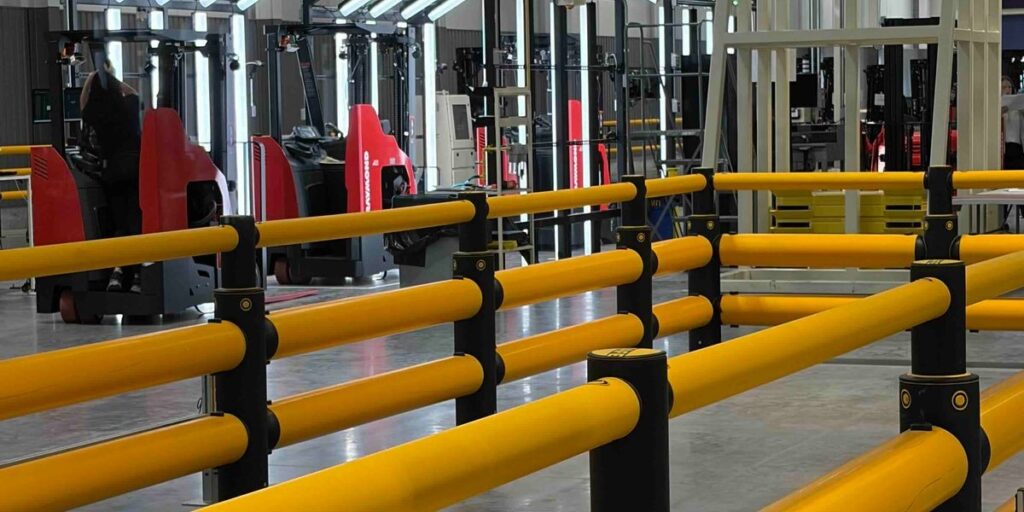
Toyota Material Handling North America (TMHNA) opened a $100 million electric forklift plant in Columbus, Indiana, on August 6, 2026. The 295,000-square-foot facility will produce Class 1 stand-up counterbalanced forklifts for Toyota and Raymond brands, enabling its Greene, N.Y., factory to pivot to reach trucks and automation. Production starts at eight units daily, scaling to 24 by September. TMHNA reports 70% of North American lift truck sales are now electric — projected to hit 80% by 2035. Seventy-five percent of output is custom-built, with 14 seat options available. Sixty percent of parts are sourced in North America, while Japan supplies key components; a new foreign trade zone helps bypass customs bottlenecks.

US lifts Mexico cattle ban Aug. 24 to curb beef prices
North America Supply Chain

US lifts Mexico cattle ban Aug. 24 to curb beef prices

The U.S. Department of Agriculture will lift its ban on Mexican cattle imports starting Aug. 24, 2026 — a restriction in place since November 2024 — to help curb record-high beef prices. The phased reopening affects three southern border ports and responds to a 22.7% year-over-year retail beef price surge. The move follows White House pressure on grocers and an antitrust probe into top beef processors ahead of the November 2026 elections. U.S. cattle inventories have fallen 12.3% since 2022, intensifying reliance on Mexican feeder cattle, which could supply up to 8% of domestic needs within a year.

Welcome Back!

Login to your account below

Create New Account!

Fill the forms below to register

Retrieve your password

Please enter your username or email address to reset your password.

Scan to share via WeChat

Open WeChat and scan the QR code to share

QR Code

Add New Playlist