CMA CGM has acquired FedEx Supply Chain for $1.4 billion as part of a $5 billion multimodal partnership with FedEx. The move advances CEO Rodolphe Saadé’s logistics-first strategy, aiming to shift group turnover from 60% maritime to greater logistics share. The deal integrates 74,000 annual container volumes, enables air cargo capacity exchange, and supports eight A350 freighter deliveries starting late 2027. It follows CMA CGM’s 2019 Ceva Logistics acquisition and a 2026 terminal investment pact with Stonepeak in North America — where the U.S. accounts for roughly 25% of group turnover. Saadé calls maritime chokepoint risk 'chronic', not episodic.
According to www.marketscale.com, CMA CGM has agreed to acquire FedEx Supply Chain for $1.4 billion, marking a decisive strategic pivot toward integrated logistics amid persistent maritime volatility.
A $5 billion logistics-first partnership
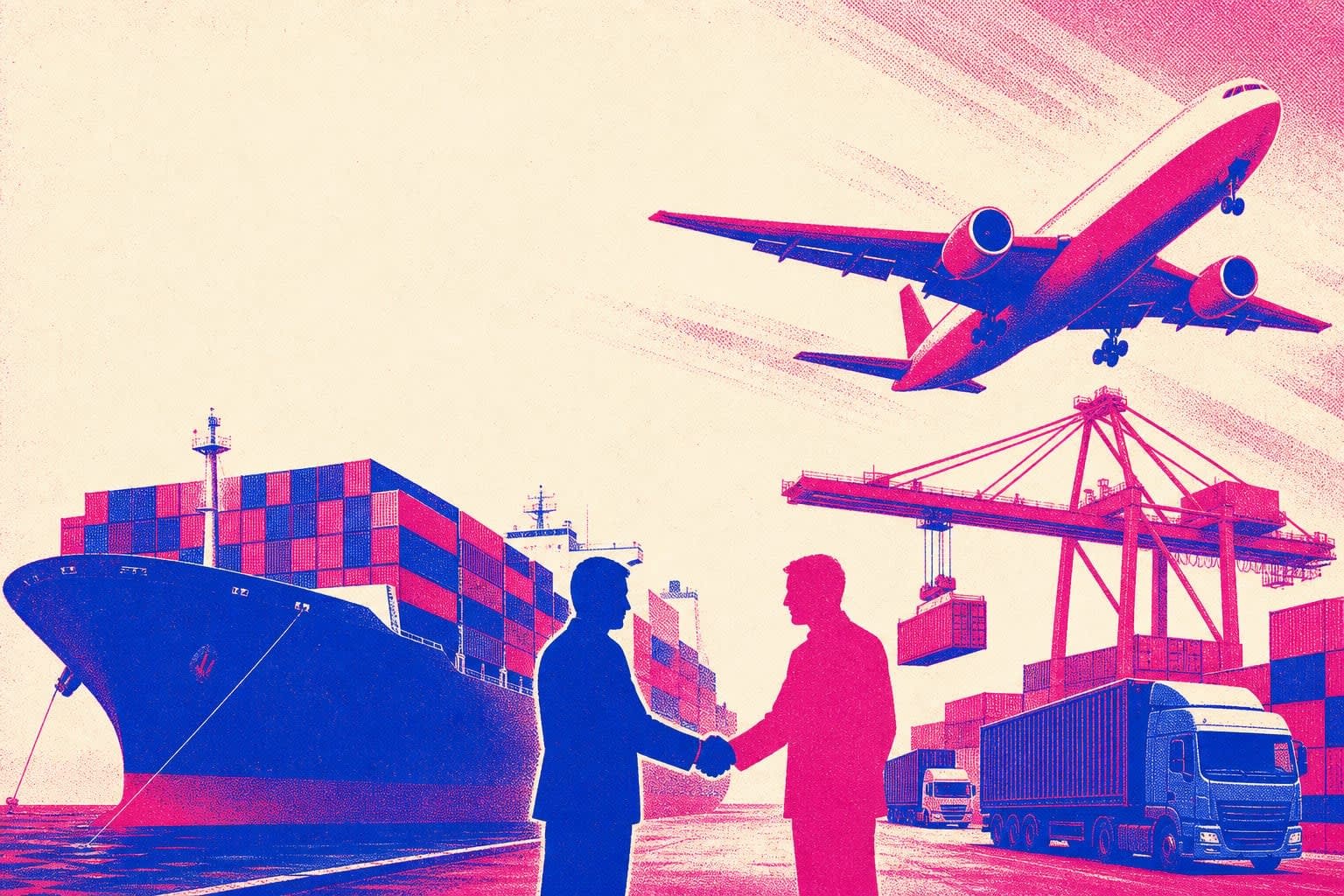
The acquisition is the centerpiece of a broader commercial and capital alliance valued at approximately $5 billion between CMA CGM and FedEx, spanning ocean freight, air cargo, and contract logistics. Rodolphe Saadé, Chairman and CEO of CMA CGM, is leading this structural reorientation — one that explicitly prioritizes end-to-end supply chain capabilities over pure vessel capacity. According to The Loadstar, Saadé stated that logistics now accounts for roughly 40% of CMA CGM’s total group turnover, while maritime transport contributes 60%. His stated objective is to continue shifting that balance.
Multimodal integration beyond warehousing
This is not a simple asset purchase: CMA CGM gains a long-term commercial partner managing approximately 74,000 containers annually on behalf of its own clients. Under the agreement, CMA CGM will become FedEx’s preferred ocean carrier for that volume — converting third-party spend into captive business. On the air side, the two firms are establishing a capacity-exchange arrangement. CMA CGM launched its dedicated air cargo division in 2022 and has ordered eight Airbus A350 freighters, with deliveries scheduled to begin from late 2027. Integrating FedEx’s established air freight network accelerates CMA CGM’s scale-up timeline significantly.
North American terminal expansion and chokepoint resilience
The logistics push is reinforced by parallel infrastructure investments. Earlier in 2026, CMA CGM struck a partnership with US investment fund Stonepeak to deepen terminal investments in North America. The US market represents roughly a quarter of CMA CGM’s total turnover, and the carrier views enhanced terminal presence there as critical to shortening supply lines and reducing exposure to maritime chokepoints. Saadé, in an interview with French business newspaper Les Echos reported by The Loadstar, framed this strategy against chronic geopolitical disruption:
“Chokepoint risk is now chronic, not episodic.” — Rodolphe Saadé, Chairman and CEO, CMA CGM
He cited the Red Sea crisis and near-closure of the Strait of Hormuz as evidence that vulnerability to route disruption must be priced into long-term procurement — not treated as temporary.
No carrier consolidation — only logistics acquisitions
When asked directly about potential industry consolidation — including speculation around MSC and Hapag-Lloyd — Saadé gave an unambiguous answer, as reported by The Loadstar: CMA CGM is satisfied with its current shipping scale and will grow organically. All future acquisitions will target logistics assets only — consistent with its 2019 acquisition of Ceva Logistics. Over the past six years, that division has expanded substantially, and the FedEx Supply Chain deal represents the next logical step. The group now offers shippers a vertically integrated solution covering movement from factory floor to consumer doorstep — all within the CMA CGM ecosystem.
Source: marketscale.com
Compiled from international media by the SCI.AI editorial team.