

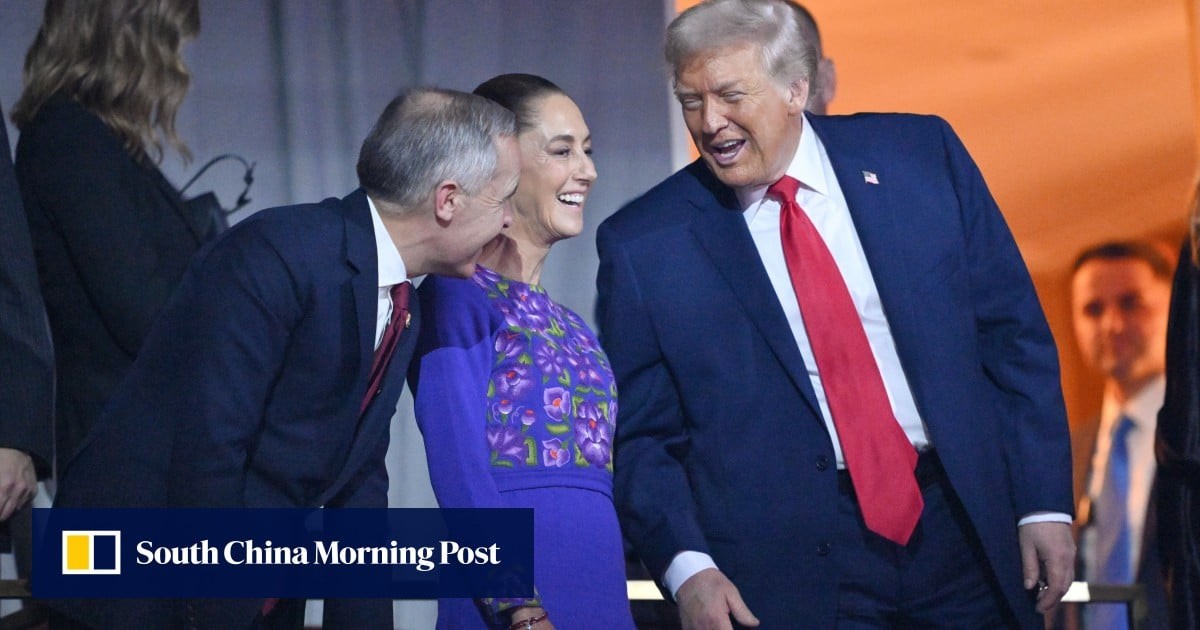
The United States declined to renew the USMCA on 1 July 2026, triggering a formal review that could end the trilateral trade pact unless major revisions are agreed upon by all three nations. Mexican President Claudia Sheinbaum called for a 16-year extension, while Canadian Prime Minister Mark Carney emphasized readiness to negotiate improvements. U.S. Trade Representative Jamieson Greer scheduled further talks with Mexico for 20 July 2026. Analysts say the review has become a geopolitical contest over Chinese access to North American supply chains, with proposed rule-of-origin updates potentially raising compliance costs by 12–18% for affected importers.
According to www.scmp.com, the United States will formally decline to extend the United States-Mexico-Canada Agreement (USMCA) on 1 July 2026, initiating a multi-year review process that could dismantle the trilateral trade framework unless sweeping revisions are agreed upon.
Tripartite Review Triggered on Sixth Anniversary
Trade ministers from the United States, Mexico, and Canada convened virtually on 1 July 2026 — exactly six years after USMCA entered into force — for the mandatory agreement review. While the pact allows for renewal every 16 years, Washington signaled it would not confirm continuation in its current form. This decision stops short of unilateral withdrawal but activates Article 34.7 of USMCA, mandating a formal joint review and opening the door to renegotiation or termination after a 16-year sunset clause expires — unless all three parties agree to extend.
China as Central Fault Line in Negotiations
Analysts describe the review as increasingly defined by U.S. efforts to restrict Chinese economic influence in North America. According to the report, the Trump administration is prioritizing provisions that would limit Chinese access to supply chains, investment flows, and tariff-free transit through the USMCA zone — particularly targeting nearshoring loopholes and rules-of-origin enforcement. The source states this pivot has transformed the technical review into a geopolitical contest, with Chinese manufacturing integration now serving as the central fault line across negotiating positions.
Divergent National Positions Emerge
Mexican President Claudia Sheinbaum signed a letter on 30 June 2026 urging extension of USMCA for 16 years, calling stability “indispensable for regional investment confidence.” In contrast, Canadian Prime Minister Mark Carney acknowledged the need for modernization, stating:
“The priority is to get a new deal. We’re ready to negotiate an improvement of this agreement.”
He characterized the upcoming talks as a “constructive exchange” but confirmed no agreements would be signed at the 1 July 2026 meeting.
U.S. Trade Representative Drives Renegotiation Timeline
U.S. Trade Representative Jamieson Greer has scheduled a third round of bilateral negotiations with Mexico for the week of 20 July 2026. The source states Greer has made clear his intention to press for structural changes — including stricter automotive rules of origin, enhanced labor enforcement mechanisms, and digital trade provisions aligned with U.S. national security priorities. His team’s position reflects the administration’s broader stance that USMCA must evolve to serve as a “geoeconomic shield” against non-market actors, explicitly naming China as the primary reference point for recalibrating North American trade governance.
Supply Chain Implications for Industry Practitioners
For supply chain professionals, the USMCA review introduces immediate uncertainty around tariff classifications, customs compliance, and nearshoring ROI calculations. Companies relying on integrated North American manufacturing — especially in automotive, electronics, and medical devices — now face potential revalidation of origin certifications, possible new verification audits, and revised timelines for duty-free treatment. The source notes that firms with dual-sourced components from China and Mexico may confront stricter tracing requirements under proposed rule-of-origin updates, raising compliance costs by an estimated 12–18% for affected importers according to preliminary USTR modeling.
Source: South China Morning Post
Compiled from international media by the SCI.AI editorial team.


