Skip to content

Middle East Supply Chain

USDOT launches American Supply Chain Sovereignty Initiative

U.S. Transportation Secretary Sean Duffy announced the American Supply Chain Sovereignty Initiative on June 15, 2026, to enhance freight visibility and cut cargo delays nationwide. The program will link ports—including the Port of Los Angeles—with ocean carriers, trucking firms, railroads, and retailers via a centralized dashboard. It targets bottleneck identification and faster cargo processing, backed by $475 million from the $1.2 trillion Infrastructure Investment and Jobs Act. Implementation begins with five pilot hubs and follows NIST cybersecurity standards issued in May 2024.

Original source: logisticsmgmt.com

USDOT launches American Supply Chain Sovereignty Initiative

U.S. Transportation Secretary Sean Duffy on Friday announced a new federal supply chain initiative designed to improve freight visibility and reduce cargo delays across the country.

American Supply Chain Sovereignty Initiative

Called the American Supply Chain Sovereignty Initiative, the proposed program would connect ports, ocean carriers, trucking companies, railroads, and major retailers through a centralized freight visibility platform to help move goods faster and more efficiently.

Centralized Dashboard Links Major Freight Hubs

U.S. Department of Transportation, the initiative would launch a high-visibility dashboard that links major freight hubs, including the Port of Los Angeles, with supply chain partners to help identify bottlenecks more quickly and speed cargo processing.

Secretary Duffy: Time Is Money

“When it comes to our supply chains, time is money. Fewer delays mean lower costs throughout the entire supply chain,” Duffy said. “The American Supply Chain Sovereignty Initiative will prevent bottlenecks, move freight faster, and deliver goods more affordably for the American people.”

The announcement was made on June 15, 2026, and forms part of the Biden-Harris Administration’s broader Supply Chain Resilience agenda launched in 2021. The initiative explicitly targets systemic latency at intermodal nodes — particularly at the Port of Los Angeles, which handled 9.3 million TEUs in 2025, Port of Los Angeles Annual Statistics Report.

Implementation will be phased over three years, beginning with integration pilots at five designated hubs: the Port of Los Angeles, the Port of Long Beach, the Port of New York and New Jersey, the Chicago Rail Intermodal Terminal, and the Dallas-Fort Worth Logistics Corridor. Each hub will deploy standardized API protocols compliant with the NIST Transportation Cybersecurity Framework, released in May 2024.

Funding will draw from the $1.2 trillion Infrastructure Investment and Jobs Act signed into law in November 2021, with an initial allocation of $475 million dedicated to platform development, interoperability certification, and workforce training for data stewards across participating entities.

Source: Logistics Management

Compiled from international media by the SCI.AI editorial team.
Ask SCI.AI Finished reading? Continue with SCI.AI. Explore the related policy, route, company and historical context. Continue asking
Iran pushes alternative transport corridors to boost supply chain resilience
Middle East Supply Chain

Iran pushes alternative transport corridors to boost supply chain resilience

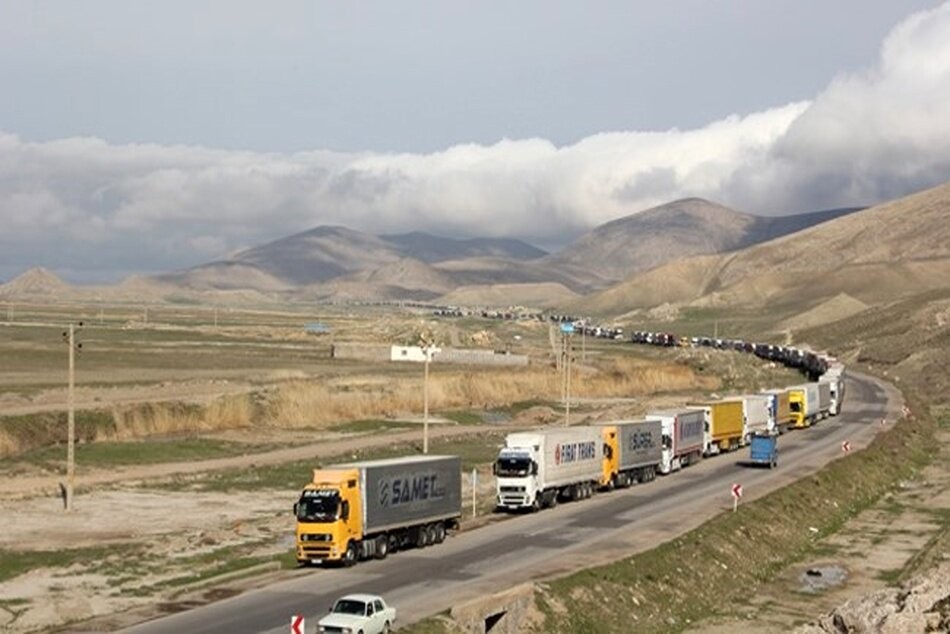
Iran is accelerating development of alternative land transport corridors to bolster supply chain resilience amid geopolitical volatility and maritime vulnerabilities. Seyed Ali Emami, Director General of the Readiness and Support Office at Iran’s Trade Promotion Organization, stated that ensuring uninterrupted goods movement — not just market competitiveness — is now the core trade priority. With maritime routes dominating global cargo but facing growing risks at chokepoints like the Strait of Hormuz and Red Sea, Iran is piloting new land corridors as of August 2026. While exports show strong growth, transit volumes have declined — prompting infrastructure upgrades, cost-reduction measures, and policy reforms targeted for completion in 2026.

DP World launches 15,250-sq-m multi-client warehouse in Riyadh
Middle East Supply Chain

DP World launches 15,250-sq-m multi-client warehouse in Riyadh

DP World has opened its first multi-client 3PL warehouse in Saudi Arabia — a 15,250-square-metre facility in Riyadh’s Al Mashael Logistics Hub offering over 17,000 pallet positions. The non-bonded warehouse supports consumer goods, automotive, retail, industrial, and technology sectors, and integrates with DP World’s broader Saudi network, including the $250 million Jeddah Logistics Park. Launched on 30 July 2026, the project advances Vision 2030’s logistics goals amid rising demand from e-commerce and manufacturing. It follows strong regional growth, exemplified by stc Group’s SAR 40.1 billion H1 2026 revenue and 30.3 million mobile subscribers.

Hormuz Ship Backlog Spurs Bioinvasion Risk Alert
Middle East Supply Chain

Hormuz Ship Backlog Spurs Bioinvasion Risk Alert

Scientists warn that over 1,500 ships stranded in the Strait of Hormuz since late February 2026 have accumulated dangerous levels of marine biofouling — including algae, mussels, and barnacles — raising high risks of global 'bioinvasion.' With vessels idle for at least 40 times longer than typical port stays, invasive species may spread to ports worldwide upon departure. A July 22, 2026 report urges mandatory hull inspections and cleaning before resuming voyages, and calls for coordinated early detection at receiving ports. The Strait of Hormuz, handling ~20% of global oil shipments, is now an ecological flashpoint with cascading supply chain and regulatory implications.

Welcome Back!

Login to your account below

Create New Account!

Fill the forms below to register

Retrieve your password

Please enter your username or email address to reset your password.

Scan to share via WeChat

Open WeChat and scan the QR code to share

QR Code

Add New Playlist