Intra-Asia container freight rates are rising sharply amid persistent port congestion and early peak-season demand. The Shanghai–Southeast Asia rate climbed 5% week-on-week to $682 per TEU on 12 June — nearly 50% higher year-on-year. Shanghai–Singapore rates reached $1,094 per FEU, up from $922 on 29 May. Drewry cites critical port utilisation in Singapore and disrupted empty container repositioning into South Asia. Cargo owners are accelerating Christmas shipments, increasing flows of semi-finished goods between China and Southeast Asia. A US–Iran MoU could release over 50 vessels (>300,000 TEU) from the Persian Gulf, though analysts caution impact will take months. HMM expands its intra-Asia network via slot-sharing with Pan Ocean on the Vietnam–Thailand Express service.
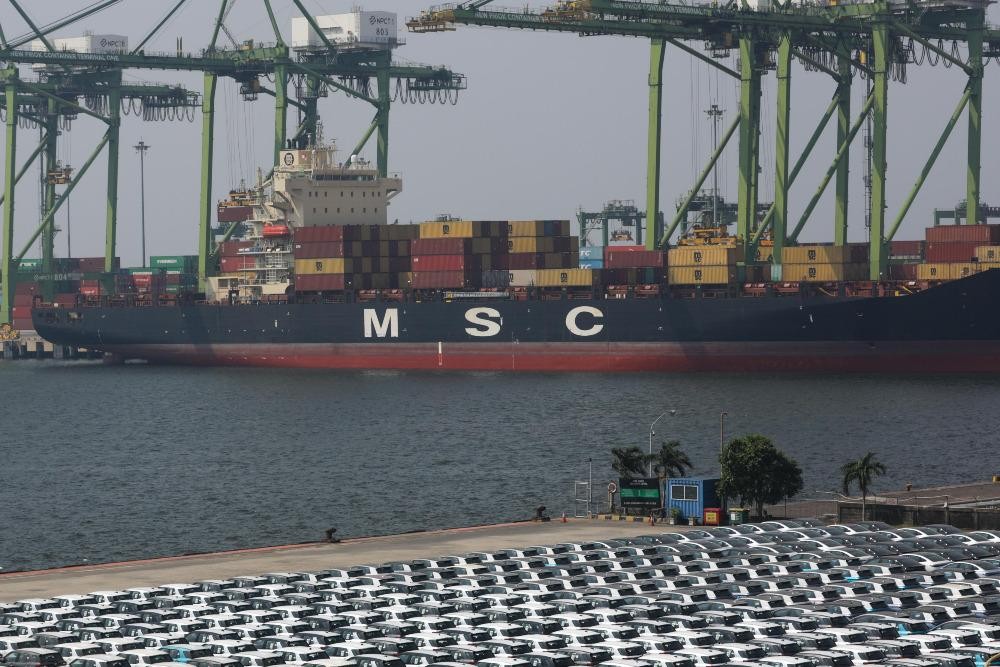
Intra-Asia rates continue to rise year-on-year, as major ports are congested amid the early peak season, and there is a slow return of empty containers.
Shanghai-Southeast Asia rates surge
On 12 June, the Shanghai Containerised Freight Index showed the Shanghai-Southeast Asia rate went up by 5% from 5 June, to $682 . This was also nearly 50% higher year-on-year.
Xeneta and Drewry data confirm upward pressure
Xeneta’s chief analyst Peter Sand told The Loadstar: “Congestion still seems to be sticky and average rates keep on rising steadily.”
Drewry’s Intra-Asia Container Index showed that on 12 June, Shanghai-Singapore rates averaged $1,094 , excluding terminal handling charges. This was up from $922 on 29 May.
Drewry said that port utilisation at major transhipment hubs such as Singapore remained critical, with large volumes of displaced containers disrupting network flows and limiting the repositioning of empty equipment into South Asian markets.
Early peak season drives cargo acceleration
The consultancy said: “At the same time, concerns over rising costs and potential supply chain disruptions are encouraging cargo owners to bring forward shipments of Christmas goods. The early peak season has led to an increased volume of semi-finished goods and components transported across Asia, especially between China and Southeast Asia.”
Geopolitical shift could ease capacity constraints
There are concerns that with the US and Iran agreement to sign a memorandum of understanding to end their ongoing conflict, it could trigger an increase in shipping capacity, as more than 50 vessels of more than 300,000 teu stranded in the Persian Gulf could be released. Peace could also see more operators resuming Red Sea transits.
Peter Sand however said it is still early to tell if there will be an impact.
He said: “If more transits will come about after Friday – it’ll be very positive – but it will take months before the ‘next normal’ is here.”
HMM expands intra-Asia footprint via slot sharing
Meanwhile, HMM is making good on its plan to widen its intra-Asia portfolio. South Korea’s flagship carrier will take slots on compatriot Pan Ocean’s Vietnam-Thailand Express (VTX) service to offer more services to Thailand and Vietnam, while the latter operator will take slots on HMM’s Korea-Indonesia Service to increase its presence in Southeast Asia.
VTX calls at Gwangyang, Busan, Shanghai, Ho Chi Minh City, Bangkok, and Laem Chabang, using three 1,700–1,900 teu ships. This means HMM will now have three services connecting Vietnam and Thailand, besides its Vietnam-Thailand and China-Vietnam-Thailand services.
Source: The Loadstar
Compiled from international media by the SCI.AI editorial team.