Skip to content

Strategy & Planning · Supply Chain

Chinese Port Fog Causes 3–7-Day Ship Delays — The Loadstar

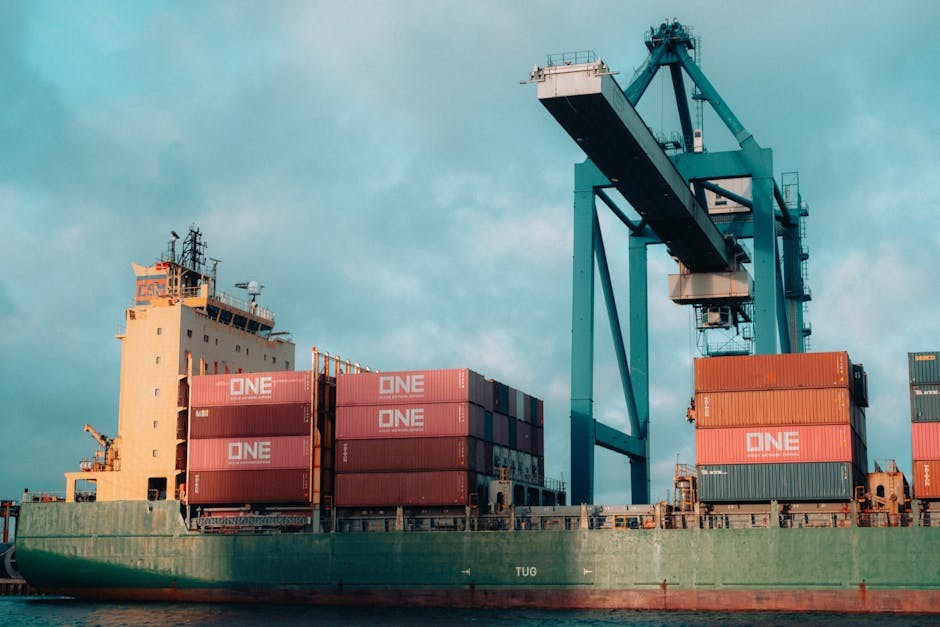
Foggy weather at China’s key container ports of Shanghai and Ningbo has worsened port congestion, pushing ship waiting times to three–seven days at Waigaoqiao and two–three days at Yangshan terminals. Linerlytica estimates 1.5 million teu of capacity is held up in North Asian ports. The Shanghai Containerised Freight Index (SCFI) to North Europe surged 30.8% to $4,175 per 40ft — an 18-month high. Transpacific rates also jumped, with Shanghai–US West Coast up nearly 32% to $4,149. A looming 24 July expiry of US Section 122 tariffs is accelerating pre-peak export volumes.

Original source: theloadstar.com

Chinese Port Fog Causes 3–7-Day Ship Delays — The Loadstar

Foggy weather at China’s key container ports of Shanghai and Ningbo has worsened the congestion, pushing up waiting times for ships just as exporters are rushing to send their goods to Europe and the US.

1.5 Million TEU Held Up in North Asian Ports

Linerlytica’s report this week estimates 1.5 million teu of shipping capacity is being held up in North Asian ports.

Dense Fog Reduces Visibility Below 1km

China’s National Meteorological Centre claimed dense fog gave visibility of less than 1km in the Bohai Sea, most of the Yellow Sea, north-western East China Sea, Yangtze river estuary, Hangzhou Bay and the Zhoushan.

Shanghai and Yangtze River Delta Blanketed Since 27 March

Supply chain consultant PSA BDP, part of terminal operator PSA International, confirmed that since 27 March, heavy fog had blanketed Shanghai and the Yangtze River Delta area.

“Ocean-going sailing schedules have been affected, with vessel arrivals and departures occurring off-schedule. It has been reported that the average delays for ships arriving at the Waigaoqiao terminal is three to seven days, and two to three days at the Yangshan terminal.”

SCFI Rates Surge to 18-Month Highs

And Linerlytica noted: “These delays coincided with a surge in demand for European cargo, with shippers bringing forward their usual peak season shipments, causing a sharp spike in freight rates. The Shanghai Containerised Freight Index (SCFI) rates to North Europe surged 30.8% to reach a new 18-month high.”

On Friday, the SCFI showed a 30% gain (from 22 May) in the Shanghai-North Europe rate, to $2,475 per teu. Per 40ft, the rise was 30.8%, to $4,175.

Encouraged by successful peak season surcharges last month, mainline operators are pushing for a further mid-June rate hike, with announced FAK prices lifted to $6,000 per 40ft.

Transpacific Rates Jump Sharply

  • The Shanghai-US West Coast rate increased nearly 32%, to $4,149 per 40ft
  • The Shanghai-US East Coast rate rose 24%, to $5,333 per 40ft

Tariff Shift Drives Pre-July Export Rush

Transpacific demand remains very firm, with Chinese exports to the US rebounding strongly due to the removal of the International Emergency Economic Powers Act tariffs that have been replaced by the lower Section 122 blanket tariffs.

US president Donald Trump initially imposed tariffs on all imports, under the IEEPA, which had no cap. In February, the US Supreme Court struck down the IEEPA tariffs as unlawful. The Trump administration then imposed tariffs under Section 122 of the US Trade Act of 1974 that capped tariffs at 15% and could only be enforced for 150 days.

Under Section 122, these tariffs expire on 24 July, prompting Asian exporters to ship out their goods before the regime changes again.

Source: The Loadstar

Compiled from international media by the SCI.AI editorial team.

Ask SCI.AI Finished reading? Continue with SCI.AI. Explore the related policy, route, company and historical context. Continue asking
NRF: Early peak shipping season to subside in September
Supply Chain

NRF: Early peak shipping season to subside in September

The National Retail Federation (NRF) and Hackett Associates report that the early peak shipping season is ending, with U.S. port imports expected to decline for the rest of 2026. May was the busiest month at 2.24 million TEU. Tariff changes and supply chain disruptions drove retailers to pull forward orders. Consumer spending remains resilient. Full-year 2026 imports are projected at 25.5 million TEU, up 0.1% from 2025.

China’s exports rise 14%, imports up 22% amid trade war resilience
Supply Chain

China’s exports rise 14%, imports up 22% amid trade war resilience

China’s foreign trade rose 17.3% to ¥30.13 trillion in the first seven months of 2026, with exports up 14% and imports surging 22%. High-tech exports jumped over 50% in July, accounting for nearly 60% of monthly export growth. U.S.-China trade fell 1.6%, while ties with over 180 countries—including ASEAN and the EU—expanded. Green exports like EVs and lithium batteries posted double-digit growth for the 17th straight month. China also applies zero tariffs to imports from 63 countries.

TSMC revenue up 33.7%, ASML ships 86 lithography machines
Manufacturing

TSMC revenue up 33.7%, ASML ships 86 lithography machines

TSMC reported $40.2 billion in Q2 2026 revenue — up 33.7% year-on-year — with 2-nm process contributing 3% of sales. ASML shipped 86 new lithography machines in the same quarter, boosting revenue to €9.32 billion ($10.69 billion). TSMC holds 73% of the global foundry market, while ASML’s EUV tools remain essential for sub-3-nm chip production. Both companies’ five-year net income grew over 90% (ASML) and 251% (TSMC). TSMC’s $100 billion Arizona expansion will support 2-nm manufacturing and advanced packaging.

Welcome Back!

Login to your account below

Create New Account!

Fill the forms below to register

Retrieve your password

Please enter your username or email address to reset your password.

Scan to share via WeChat

Open WeChat and scan the QR code to share

QR Code

Add New Playlist

