Skip to content

North America Supply Chain

Sheinbaum Expands Birmex Control Over 4 Public Health Systems

Mexico’s federal government has expanded Birmex’s authority to manage medicine procurement, storage, and distribution across IMSS, ISSSTE, IMSS-Bienestar, and federal hospitals. Enacted in May 2026, the reform transforms Birmex from a coordinator into the operational backbone of the public pharmaceutical system. It mandates digital tools for order processing and warehouse standardization, targeting chronic delays exceeding 90 days. The move ties procurement to industrial policy, aiming to raise domestic medicine production from 22% (2024) to 35% by 2030. Birmex faces intensified scrutiny after 2025–2026 purchase-cycle anomalies, even as Boehringer Ingelheim increases Mexican investment by 22% in 2026.

Original source: mexicobusiness.news

Sheinbaum Expands Birmex Control Over 4 Public Health Systems

According to mexicobusiness.news, Mexico’s federal government has expanded Birmex’s authority to directly manage procurement, storage, and logistical distribution of medicines across four major public healthcare institutions: IMSS, ISSSTE, IMSS-Bienestar, and federal hospitals.

Operational Shift from Coordinator to Controller

Under a new reform enacted in May 2026, President Claudia Sheinbaum modified the consolidated medicine purchase agreement to transform Birmex from a procurement coordinator into the operational backbone of Mexico’s public pharmaceutical system. Previously, Birmex’s mandate was limited to aggregating orders; now it holds direct contractual authority with pharmaceutical laboratories and suppliers. The updated framework empowers Birmex to administer procurement agreements and enforce compliance across all participating institutions — a structural shift formalized in the 2025–2026 consolidated purchase cycle.

Expanded Responsibilities and Digital Integration

Birmex will now oversee end-to-end supply chain functions including inventory management, warehouse reception standardization, and nationwide medicine distribution for public institutions under the consolidated model. To support this, the company is required to implement technological tools that improve supply-order efficiency and enhance visibility across the distribution process. These measures respond directly to documented systemic flaws: chronic medicine scarcity, fragmented logistics networks, and procurement cycles that routinely exceed 90 days — a delay cited in multiple federal health audits over the past five years.

Industrial Policy and Nearshoring Alignment

The reform embeds pharmaceutical procurement within a broader industrial strategy. As noted in the source, the Sheinbaum administration aims to reinforce domestic manufacturing and capitalize on nearshoring trends to ensure long-term supply-chain stability. This aligns with Mexico’s national pharmaceutical production target: increasing local output to cover 35% of essential medicine demand by 2030, up from an estimated 22% in 2024. That objective mirrors parallel efforts by other North American governments — for example, Canada’s $1.2 billion Biomanufacturing Strategy launched in Q3 2023, and the U.S. FDA’s 2025 Critical Medicines List prioritizing onshoring of 27 high-risk APIs.

Market Implications and Execution Risks

A centralized procurement model reshapes market access for pharmaceutical companies operating in Mexico. Suppliers must now meet standardized compliance requirements set by Birmex — including digital documentation protocols and warehouse certification aligned with WHO-GDP standards. This intensifies operational pressure on Birmex itself, which underwent institutional restructuring earlier in 2026 following investigations into anomalies in its 2025–2026 purchase cycle. Meanwhile, Boehringer Ingelheim announced in 2026 it would boost investment in Mexico by 22%, signaling continued private-sector engagement despite heightened regulatory centralization.

Source: mexicobusiness.news

Compiled from international media by the SCI.AI editorial team.

Ask SCI.AI Finished reading? Continue with SCI.AI. Explore the related policy, route, company and historical context. Continue asking
Dachser acquires 10% stake in Synergie Canada to expand airfreight
North America Supply Chain

Dachser acquires 10% stake in Synergie Canada to expand airfreight

German logistics firm Dachser has acquired a 10% minority stake in Synergie Canada, a Montreal-based air and sea freight forwarder founded in 2008. The investment strengthens Dachser’s North American presence and supports expansion beyond Europe. Synergie Canada generated €60 million in revenue in 2025 and employs around 100 people. CEO Tobias Burger called Canada 'a highly attractive market' due to its economic links across the Americas and Europe. President Marc-André Guindon noted the partnership will improve customer access to European markets. The deal follows similar moves by Atlas Air Worldwide and Air Charter Service in 2026.

Toyota opens $100M Indiana forklift plant, targets 80% electric by 2035
North America Supply Chain

Toyota opens $100M Indiana forklift plant, targets 80% electric by 2035

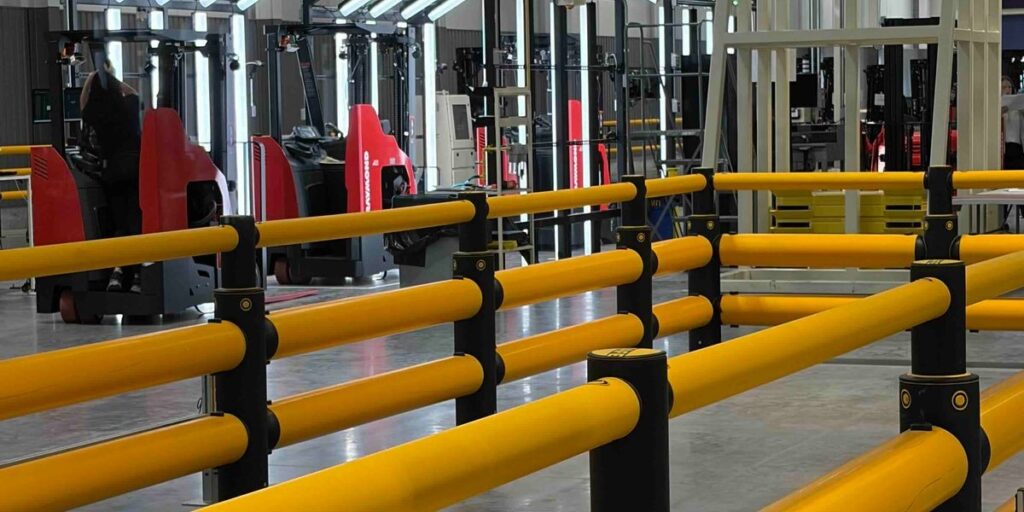
Toyota Material Handling North America (TMHNA) opened a $100 million electric forklift plant in Columbus, Indiana, on August 6, 2026. The 295,000-square-foot facility will produce Class 1 stand-up counterbalanced forklifts for Toyota and Raymond brands, enabling its Greene, N.Y., factory to pivot to reach trucks and automation. Production starts at eight units daily, scaling to 24 by September. TMHNA reports 70% of North American lift truck sales are now electric — projected to hit 80% by 2035. Seventy-five percent of output is custom-built, with 14 seat options available. Sixty percent of parts are sourced in North America, while Japan supplies key components; a new foreign trade zone helps bypass customs bottlenecks.

US lifts Mexico cattle ban Aug. 24 to curb beef prices
North America Supply Chain

US lifts Mexico cattle ban Aug. 24 to curb beef prices

The U.S. Department of Agriculture will lift its ban on Mexican cattle imports starting Aug. 24, 2026 — a restriction in place since November 2024 — to help curb record-high beef prices. The phased reopening affects three southern border ports and responds to a 22.7% year-over-year retail beef price surge. The move follows White House pressure on grocers and an antitrust probe into top beef processors ahead of the November 2026 elections. U.S. cattle inventories have fallen 12.3% since 2022, intensifying reliance on Mexican feeder cattle, which could supply up to 8% of domestic needs within a year.

Welcome Back!

Login to your account below

Create New Account!

Fill the forms below to register

Retrieve your password

Please enter your username or email address to reset your password.

Scan to share via WeChat

Open WeChat and scan the QR code to share

QR Code

Add New Playlist