

Port Houston handled 353,319 TEUs in April, down 10% from March and 9% year over year, marking the port’s first quarterly container decline since early 2025 as global trade volatility and softer steel imports weighed on volumes. However, port executives said cargo activity is already recovering in May, with imports once again driving growth.
Strong vessel activity amid container dip
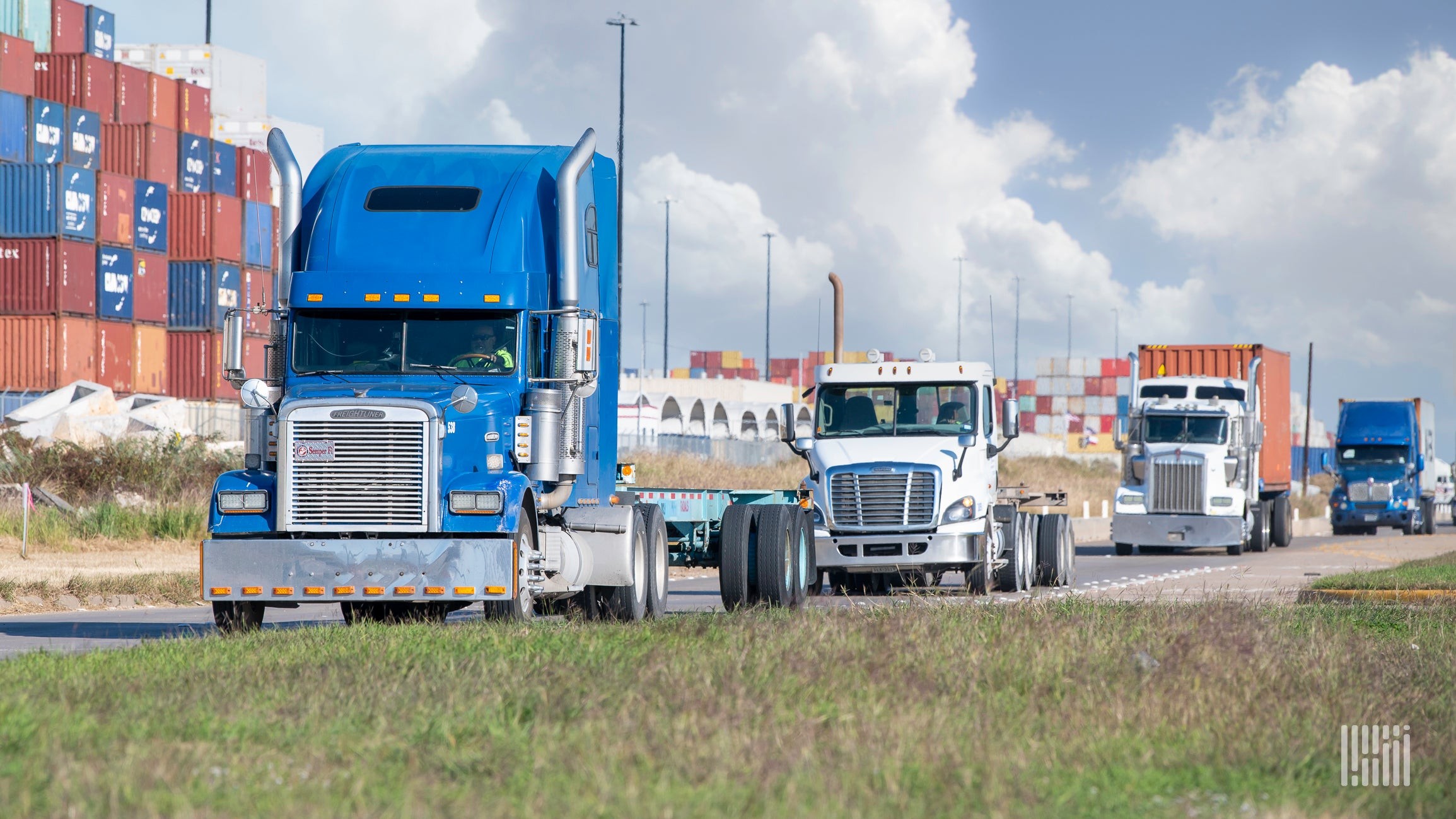
Port Houston officials said softer April container and steel volumes were offset by strong export growth and rising ship traffic through the Houston Ship Channel. (Photo: Jim Allen/FreightWaves)
“In April, we had 754 vessel visits in the port, which is 6% more than last April,” Jenkins said during the Port Commission meeting Wednesday. “But we’re seeing this volume increase every single month.”
Port Houston CEO Charlie Jenkins said the port is still seeing strong vessel activity despite the temporary slowdown in containers. Jenkins said larger vessels moving through the Houston Ship Channel are helping drive export growth, particularly energy-related commodities.
“Export tonnage is up 19% this year,” Jenkins said. “Crude oil, refined products, petroleum gases are driving a lot of this growth.”
Port Houston remained the world’s top export gateway for liquefied petroleum gases such as propane, butane and methane, according to Jenkins.
“Exports of petroleum gases are up 33%, and we remain the number one port in the world for gases like butane, propane and methane,” Jenkins said.
Container volumes soften in April
According to Port Houston’s monthly statistics report, total container throughput reached 353,319 TEUs in April, down 10% compared to March and down 9% year over year.
- Year-to-date container volumes totaled 1.44 million TEUs, down 1% compared to the same period in 2025.
- Loaded import containers totaled 162,798 TEUs in April, down 8% year over year.
- Loaded export containers fell 5% to 132,339 TEUs.
- Empty export containers declined 18% year over year.
Port Houston Chief Port Operations Officer Ryan Mariacher said April’s decline followed a strong first quarter and should not be viewed as a long-term trend.
“April presented a decline or normalization in volume after a strong March and first quarter,” Mariacher said. “But despite the decline, total tonnage remains up 3%, as we’ve handled over 18.5 million tons through April.”
Mariacher said import cargo is already showing signs of recovery in May.
“The good news again in May is if you look at our volumes through yesterday, total TEU is actually up 1% with imports driving that growth once again,” Mariacher said.
Combined loaded container volumes at Bayport and Barbours Cut terminals declined nearly 7% year over year in April, though Mariacher said overall performance remains stable relative to recent quarters.
“Combined volumes through April at the container terminals Bayport and Barber’s Cut resulted in a decrease in loaded units of nearly 7% versus last April,” Mariacher said. “But the good news is the month remained on average for the preceding three quarters.”
Steel imports remain weak while bulk cargo rises
Steel imports through April totaled 1.05 million tons, down 29% year over year, continuing a trend port officials have been tracking for months.
“The steel decline continued as we expected, dropping another percent, now down 28% year to date,” Mariacher said.
However, Mariacher noted May could provide a turnaround for steel cargoes.
“The good news here is May is forecasted to be the largest month for steel volumes since last July,” he said.
- Dry bulk tonnage increased 44% year to date to 2.25 million tons.
- Liquid bulk cargo volumes climbed 20% year over year to 1.13 million tons.
- Total revenue tonnage for the port reached 18.56 million tons through April, up 3% year over year.
Source: FreightWaves
Compiled from international media by the SCI.AI editorial team.


