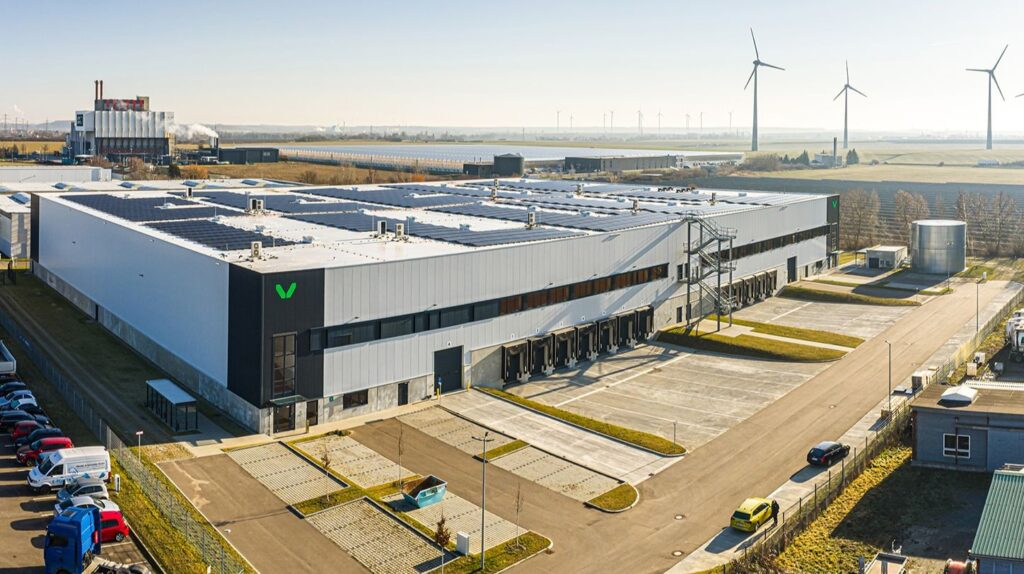
Walmart has deployed ambient IoT sensors across 4,600 stores and 40 distribution centers, tracking 90 million pallets in real time by the end of 2026. The system, built with Wiliot’s battery-free Pixel tags, eliminates manual inventory counts and enables AI-driven alerts for idle or perishable goods. Meanwhile, GenLogs raised $60 million to expand a roadside sensor network tracking trucking activity to combat $35 billion in annual cargo theft. The global sensor market in logistics is projected to grow from $10.5 billion in 2024 to $25.8 billion by 2033.
Walmart Deploys Ambient IoT to Monitor 90 Million Pallets
According to www.thescxchange.com, Walmart has launched a nationwide deployment of ambient Internet of Things (IoT) sensor technology, tracking 90 million pallets through its supply chain by the end of 2026. The initiative, powered by Wiliot’s battery-free Pixel sensing tags, spans 4,600 Walmart Supercenters, Neighborhood Markets, and over 40 distribution centers across the United States.
With Walmart, we are advancing supply chain performance at an unprecedented scale. This nationwide deployment adds a new layer of digitization to Walmart’s supply chain, empowering associates with real-time insights and automation that drive greater efficiency, accuracy, and responsiveness.
— Tal Tamir, CEO, Wiliot
The Pixel tags, postage stamp-sized devices that harvest energy from ambient radio waves, are applied to the exterior of each pallet. These sensors continuously transmit data on location, movement, and environmental conditions such as temperature and humidity. The information is processed by AI systems to provide real-time, item-level visibility. Since the project began rolling out in 2025, Walmart has eliminated the need for manual cycle counts in stores, warehouses, and distribution centers.
Real-Time Insights Prevent Inventory Loss and Improve Response Times
Wiliot’s AI-enabled platform analyzes pallet movement patterns and flags anomalies. For example, if a pallet with perishable goods remains idle for more than 12 hours, the system alerts staff to redirect it to cold storage. This capability reduces spoilage and improves inventory accuracy. According to Amir Khoshniyati, Wiliot’s vice president, the real-time data allows Walmart to resolve inventory discrepancies within minutes instead of days.
If a pallet is sitting idle too long, [our system] can flag that the items [on the pallet] may [include] perishables and should be sent to a cold storage [area].
— Amir Khoshniyati, Wiliot Vice President
Greg Cathey, Walmart’s senior vice president of transformation and innovation, emphasized that the technology is designed to serve people—both associates and customers. He stated that knowing exactly what inventory is available and where it is located is one of the most persistent challenges in retail. The enhanced visibility enables faster replenishment, reduces overstock, and supports consistent product availability.
GenLogs Expands Roadside Sensor Network to Combat Cargo Theft
In a separate development, logistics technology startup GenLogs raised $60 million in February 2026 to expand its network of roadside sensors. The company’s Trucking Intelligence platform uses trillions of data points collected from millions of commercial vehicle movements across the U.S. to track fleet activity in real time.
GenLogs serves a client base that includes J.B. Hunt, Werner Enterprises, AIPSO, and the Jacksonville Port Authority. The company’s CEO, Ryan Joyce, a former CIA officer, said the technology applies intelligence community methodologies to the fragmented trucking industry. He cited $35 billion in annual cargo theft as a key problem the platform aims to address.
The trillion-dollar trucking industry links every sector of our economy, but it is highly fragmented in its composition and still analog in its operations. GenLogs is applying many aspects of the U.S. intelligence community’s playbook to drive total visibility in the trucking industry, resulting in more efficiency, better pricing, and protection against fraud and $35 billion in annual cargo theft.
— Ryan Joyce, CEO, GenLogs
The funding will support the expansion of GenLogs’ real-time tracking infrastructure, enabling shippers and logistics providers to verify shipment status and detect suspicious behavior, such as unexpected route deviations or prolonged stops. The platform also helps insurers assess risk and optimize underwriting, and allows ports to improve throughput and security.
Market Growth and Industry Trends in Sensor Technology
The global market for sensors in logistics was valued at $10.5 billion in 2024 and is projected to reach $25.8 billion by 2033, according to Verified Market Reports. The growth is driven by rising demand for real-time tracking, condition monitoring, and fraud prevention across supply chains.
- Market value in 2024: $10.5 billion
- Projected market value by 2033: $25.8 billion
- Number of Walmart locations in rollout: 500 (initial), expanding to 4,600
- Number of pallets tracked by end of 2026: 90 million
- GenLogs funding round: $60 million
These developments highlight a broader shift toward digital visibility and automation in supply chain operations. Companies are increasingly relying on low-power, embedded sensors and AI analytics to reduce operational risk and improve responsiveness. The integration of ambient IoT and real-time tracking is becoming a standard feature in large-scale retail and logistics networks.
Source: www.thescxchange.com
Compiled from international media by the SCI.AI editorial team.