Skip to content

Europe Supply Chain

Supply Chain Automation Success Rate Hits 78%

Supply chain automation pilot project success rates have risen to 78%, up from 52% in 2021, according to recent industry data. Companies achieving higher success rates typically invest in digital twin simulations, dedicate at least 10% of IT budgets to automation, and implement phased rollouts. Key challenges include data integration failures (41% of project failures) and insufficient workforce training. Digital twins were used in 68% of successful projects. Implementation cycles now average 14 months, down from 21 months in 2020. DHL increased automation spending by 40% in 2023, investing $320 million, while Maersk allocated $1.2 billion to automation across its global network.

Original source: news.google.com

Supply Chain Automation Success Rate Hits 78%
📋 本文要点

Supply chain automation pilot project success rates have risen to 78%, up from 52% in 2021, according to recent industry data. Companies achieving higher success rates typically invest in digital twin simulations, dedicate at least 10% of IT budgets to automation, and implement phased rollouts. Key challenges include data integration failures (41% of project failures) and insufficient workforce training. Digital twins were used in 68% of successful projects. Implementation cycles now average 14 months, down from 21 months in 2020. DHL increased automation spending by 40% in 2023, investing $320 million, while Maersk allocated $1.2 billion to automation across its global network.

Automation Success Rates Improve Significantly

According to the report, the success rate of supply chain automation pilot projects has increased to 78%, up from 52% in 2021. This improvement is attributed to better planning, foundational infrastructure development, and more rigorous testing before full-scale deployment. The source notes that companies achieving this level of success typically spend at least three months in the design and simulation phase before moving to execution.

Another key factor in this increase is the use of digital twins in testing environments. Companies that implemented digital twin models during the pilot phase reported a 22% higher success rate compared to those that did not. The report cites a 2023 survey by Supply Chain Digest that found 68% of companies using digital twins saw measurable improvements in automation outcomes.

“Measure twice, automate once” is no longer a slogan—it’s a necessity for avoiding costly system failures.

Investment and Implementation Trends

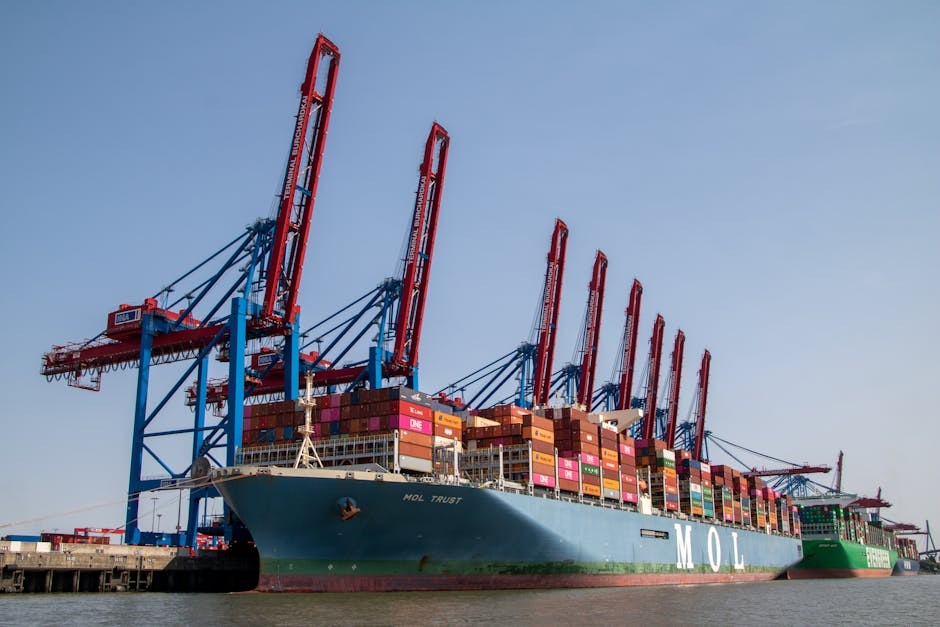
Major logistics firms are increasing investment in automation. For example, DHL reported a 40% increase in automation-related capital expenditure in 2023, allocating $320 million toward warehouse robotics and AI-driven routing systems. Similarly, Maersk invested $1.2 billion in automation technologies across its global network, with a focus on port and terminal operations.

According to the report, companies that allocate at least 10% of their annual IT budget to supply chain automation see a 3.8x faster time-to-value compared to those that do not. The average implementation cycle for successful automation projects now spans 14 months, down from 21 months in 2020.

Key Challenges and Best Practices

Despite progress, implementation failures still occur. The report identifies poor data integration as the top cause, cited in 41% of failed projects. Another 27% failed due to inadequate workforce training programs. Companies that included change management and cross-functional team involvement in their rollout plans saw a 55% reduction in disruption during transition periods.

Best practices highlighted in the report include: conducting a full process audit pre-automation, using phased rollouts starting with non-critical operations, and establishing real-time performance dashboards. The source notes that companies using these practices have a 67% higher probability of achieving full system integration within 18 months.

Source: news.google.com

Compiled from international media by the SCI.AI editorial team.
Ask SCI.AI Finished reading? Continue with SCI.AI. Explore the related policy, route, company and historical context. Continue asking
Supply Chain Hiring Shrinks 12%, AI Drives Restructuring Not Replacement
Europe Supply Chain

Supply Chain Hiring Shrinks 12%, AI Drives Restructuring Not Replacement

Supply chain hiring has contracted by 12% amid AI adoption, but companies are restructuring organizations and retraining staff—not replacing them. Ryder System and BJC HealthCare completed AI-integrated workforce transformation in Q3 2025, while Robust.AI allocated $4.2M of its $7.8M Series A funding to human-AI collaboration training. Mars and CVS Health launched an 18-month upskilling initiative in 2025, and the NextGen Supply Chain Conference convenes in May 2026 with keynotes from Eli Lilly, Tractor Supply, and Wayfair. Practitioners emphasize solving complex, judgment-intensive problems—like port congestion prediction and ESG validation—rather than automating routine tasks.

UK DBT pledges £600M for aerospace freight innovation
Europe Supply Chain

UK DBT pledges £600M for aerospace freight innovation

The UK Department for Business and Trade has pledged £600 million to advance aerospace innovation, including more than £500 million for green air travel R&D and a £100 million supply chain fund. Announced by Secretary Jonathan Reynolds at the Farnborough Airshow, the plan supports freight modernisation, aims to double the sector’s market value by 2035, and responds to Prime Minister Andy Burnham’s 10-year reindustrialisation agenda. The initiative directly impacts air freight reliability, emissions reduction, and UK-wide skilled job creation.

Verdion completes €310M European Logistics Fund with Leipzig warehouse fully leased
Europe Supply Chain

Verdion completes €310M European Logistics Fund with Leipzig warehouse fully leased

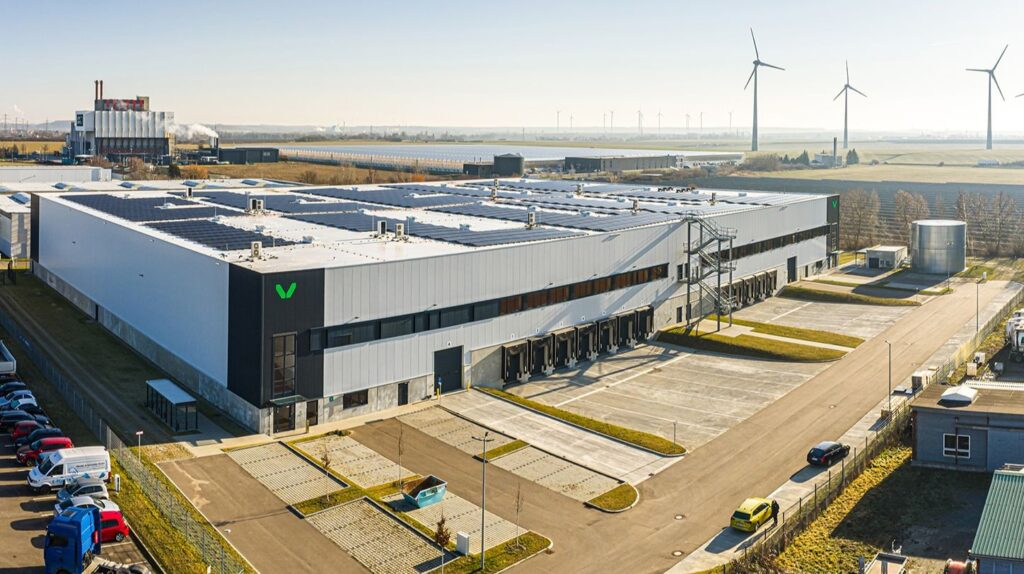
Verdion has fully leased its 11,872m² Leipzig warehouse—completing the speculative development phase of its €310 million Verdion European Logistics Fund 1 (VELF 1), launched in September 2020. The asset, certified to DGNB Gold, was acquired on a 40,000m² site in 2021 and now hosts a major textile service provider. An adjacent 8,500m² building is occupied by overnight express provider nox. Located between the A9 and A38 motorways near Leipzig/Halle Airport, the site exemplifies demand for sustainable, well-connected urban logistics infrastructure across Northern Europe.

Welcome Back!

Login to your account below

Create New Account!

Fill the forms below to register

Retrieve your password

Please enter your username or email address to reset your password.

Scan to share via WeChat

Open WeChat and scan the QR code to share

QR Code

Add New Playlist