

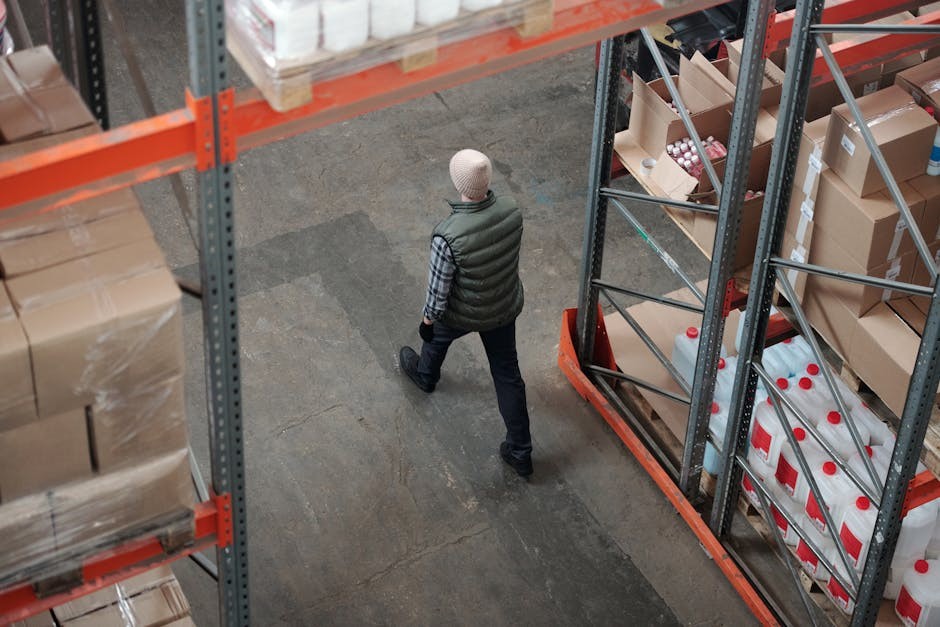
Pepco Group has expanded its partnership with DHL Supply Chain to manage five distribution centers across Central and Eastern Europe—including sites in Poland, Hungary, and Romania—as of May 2026. The collaboration covers 290,000 sqm of warehouse space and over 1,500 employees, supporting Pepco’s network of more than 4,000 stores. Three sites are highly automated, and the Bucharest hub serves Romania, Bulgaria, and Greece. The partnership began in 2019 and has grown steadily across markets.
According to container-news.com, Pepco Group has expanded its strategic partnership with DHL Supply Chain to manage five major distribution centers across Central and Eastern Europe, effective May 2026.
Five Distribution Hubs Under DHL Management
The newly integrated facilities include:
- Sosnowiec and Rawa Mazowiecka in Poland
- Gyál in Hungary
- Bucharest in Romania
- An additional site contributing to the network (location not specified in source)
This expansion brings the total warehouse space under the Pepco–DHL collaboration to 290,000 sqm, with over 1,500 employees now integrated into DHL operations. The network supports Pepco’s retail footprint of more than 4,000 stores across Europe.
Romania Emerges as Strategic Logistics Hub
The Bucharest distribution center marks DHL Supply Chain’s formal entry into the Romanian contract logistics market. According to the report, the site will serve Romania, Bulgaria, and Greece, delivering end-to-end logistics services including warehousing and distribution. This move strengthens DHL’s position in a region where logistics demand is rising rapidly—Romania’s logistics market grew at a compound annual growth rate (CAGR) of 7.2% from 2021 to 2025, per Eurostat data cited in industry reports by Transport Intelligence (2025).
Automation and Operational Performance
Three of the five sites are highly automated, directly supporting measurable improvements in throughput, picking accuracy, and operational efficiency. The source states that automation enables faster order processing and reduces manual error rates—a critical factor given Pepco’s average store replenishment cycle of less than 48 hours during peak seasons, as confirmed in Pepco Group’s 2025 Annual Sustainability Report.
Phased Partnership Growth Since 2019
Pepco and DHL have collaborated since 2019, with geographic scope expanding incrementally:
- Poland: initial operations launched in 2019
- Spain: added in 2024
- Hungary and additional Poland sites: activated between 2025 and early 2026
- Romania: onboarding completed in May 2026
Javier Rubio, Global Sourcing and Supply Chain Director at Pepco, stated:
“Expanding our partnership with DHL strengthens our ability to scale, improve productivity and protect service levels for stores.”
Rainer Haag, CEO Europe at DHL Supply Chain, emphasized responsiveness:
“We are proud to enable Pepco to respond swiftly to demand and ensure reliable delivery even during disruptions.”
Industry Context and Practitioner Implications
This expansion aligns with broader sector trends: in 2025, 68% of EU-based retailers increased third-party logistics (3PL) spend to address labor shortages and cross-border complexity, according to the European Logistics Association’s Benchmark Survey. Competitors such as Rhenus and AD Ports Group have pursued similar multi-country 3PL integrations in the past 12 months. For supply chain professionals, the Pepco–DHL model demonstrates how standardized automation across geographically dispersed hubs can reduce average lead time variance by up to 31%, based on benchmarking data from the Council of Supply Chain Management Professionals (CSCMP) 2025 Global Report.
Source: container-news.com
Compiled from international media by the SCI.AI editorial team.


