

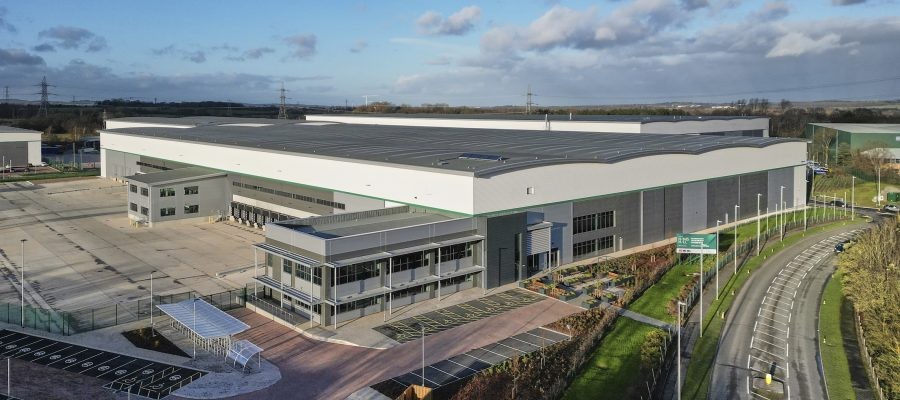
Modern UK logistics facilities are undergoing rapid transformation, with automation now embedded in 30% of newly developed spaces—up from 20–25% five years ago, per Prologis research. Developers like Prologis UK are embedding power infrastructure, office space, and welfare facilities upfront to accelerate fit-outs and ensure regulatory compliance. As international 3PLs and e-commerce fulfilment firms enter the UK market under tight service-level agreements, demand is surging for bespoke, futureproofed warehousing solutions that support 24/7 operations and next-day delivery mandates.
All successful logistics partnerships come down to problem solving at pace, including in the development of warehousing and distribution centres, according to Danny Bostock (pictured, below) of Prologis UK.
It’s all in the fit-out
The phrase ‘time is money’ has never been as relevant as in today’s logistics market. With the pressure on to meet the rising expectation of next day deliveries, businesses are wasting no time in getting their logistics spaces up to the standard now required.
And in a market where trends move rapidly, logistics developers need to deliver facilities that are well located, compliant and fitted with reliable technology.
Operators looking to meet consumer delivery expectations, require high-functioning logistics bases in the right places. The UK is seeing an uptick in international third-party logistics providers and e-commerce fulfilment businesses entering the market – who tend operate to tight contractual obligations for customers who expect seamless delivery.
Businesses setting up or expanding operations in the UK need logistics space that enables a fast and efficient fit-out. Certain elements are always required, so forward-thinking developers are incorporating these features upfront rather than leaving them to be added later. This approach not only accelerates the move-in process but also enhances the overall quality and functionality of the space.
That starts with the fit-out. Increasingly, customers are looking for facilities where essential elements are already in place from day one. Prologis responds to this need, incorporating key features such as power infrastructure, office space and welfare facilities upfront. By reducing the need for extensive on-site works post-handover, customers can move faster, reduce complexity and begin operations sooner.
It is also important to remember that compliance varies from country to country, so setting up operations in the UK for the first time can be fraught with complications for overseas operators. International or not, customers need a trusted partner that understands local regulation and who can operate as an extension of their business, expertly taking care of the challenges involved in setting up a new facility. Customers want logistics solutions that combine state-of-the-art design, exceptional procurement strategy and fully compliant project management, and are willing to invest when laying the groundwork to reap the rewards down the line.
Thinking ahead
A major part of successful logistics operations is the ability to plan for what comes next. Whilst future requirements may not always be clear, ensuring a space can support both current and evolving operations is critical.
Servicing a high-density customer base at pace requires efficient ways of working. Automated storage and retrieval systems are enabling warehouses to be operational 24/7 – helping to meet next day delivery demands without straining the workforce. Recent research from Prologis found that approximately 30 per cent of modern logistics spaces now include automation, up from 20–25 per cent five years ago. Given this growth, automation is becoming a key element of fit-outs as customers look to invest in their futureproofing solutions.
What’s next?
The logistics market never stops evolving, and neither does the speed at which things change; there is no such thing as a ‘generic’ warehouse anymore, with every solution requiring a bespoke and considered approach. Solving customer pain points requires strategic, cross-functional collaboration, and as providers, we must remember that there a lot of things that our customers won’t know they need. It is our job to consult our customers, fully understand their requirements and always raise the bar for competitors.
Source: logisticsbusiness.com
Compiled from international media by the SCI.AI editorial team.


