

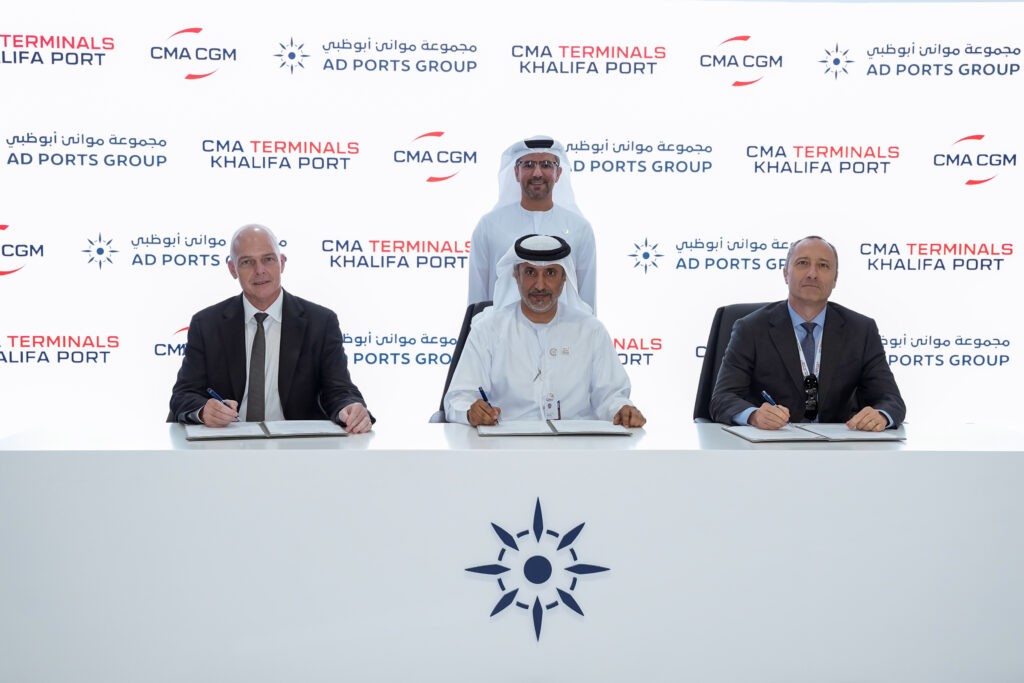
AD Ports Group and CMA CGM Group signed a Memorandum of Understanding on May 6, 2026, to expand inland logistics connectivity across the UAE via rail-linked intermodal infrastructure—including inland container depots, dry ports, and cargo distribution hubs. CMA Terminals Khalifa Port, opened in 2024 and jointly owned (70% CMA CGM, 30% AD Ports), will serve as an inland-enabled gateway terminal. The initiative supports UAE’s National Export Strategy targeting $230 billion in non-oil exports by 2031 and aims to reduce inland dwell time by 35% through rail integration. Executives cited consolidation of the UAE’s intermodal logistics backbone and enhanced connectivity to Saudi Arabia and Oman.
According to container-news.com, AD Ports Group has signed a Memorandum of Understanding (MoU) with CMA CGM Group and CMA Terminals Khalifa Port to expand inland logistics connectivity across the UAE as of May 6, 2026.
Integrated Intermodal Infrastructure
The agreement centers on integrating maritime and inland logistics through AD Ports’ rail-linked intermodal network, which includes inland container depots, dry ports, and cargo distribution hubs. This infrastructure extends Khalifa Port’s operational reach beyond the quay—connecting cargo directly to industrial zones in Abu Dhabi, consumer markets in Dubai and the Northern Emirates, and regional trade corridors including those linking to Saudi Arabia and Oman.
Ownership and Terminal Operations
CMA Terminals Khalifa Port is a joint venture established in 2024, with 70% ownership held by CMA CGM and 30% by AD Ports Group. It serves as one of the key container terminals supporting Abu Dhabi’s strategic objective to become a regional logistics hub. The terminal’s inland integration initiative aligns with national goals to improve inbound cargo access, strengthen export corridors, and enhance long-term supply chain competitiveness.
Executive Statements and Strategic Goals
According to Mohamed Juma Al Shamisi, CEO of AD Ports Group:
“This MoU marks an important step in consolidating the UAE’s inland intermodal logistics backbone under one integrated platform.”
Jesper Stenbak, representing CMA CGM, stated:
“This collaboration strengthens CMA Terminals Khalifa Port’s role as an inland-enabled gateway terminal.”
The partnership aims to deliver faster cargo movement, improved service reach, and greater operational efficiency by linking ocean services directly with inland networks. It also targets improved cargo flows across the UAE and Northern Emirates, enhanced rail-based connectivity to Saudi Arabia and Oman, and greater routing flexibility for both import and export cargo.
Industry Context and Supply Chain Implications
This expansion reflects a broader industry shift toward integrated port-to-inland logistics models—where rail connectivity, inland distribution hubs, and multimodal transport are central to improving supply chain resilience. Globally, similar initiatives include DP World’s $1.5 billion investment in inland rail terminals across Saudi Arabia (2025), and MSC’s launch of dedicated rail services linking Jebel Ali Port to Riyadh (Q1 2026). For supply chain professionals operating in the Middle East, the AD Ports–CMA CGM collaboration means shorter inland transit times: current average trucking time from Khalifa Port to Al Ain is 2.5 hours, while rail-enabled transfers to Fujairah or Khor Fakkan are projected to reduce dwell time by 35% post-implementation. The MoU also supports UAE’s National Export Strategy, which targets $230 billion in non-oil exports by 2031—a goal requiring scalable, low-friction inland logistics capacity.
Source: container-news.com
Compiled from international media by the SCI.AI editorial team.


