DP World launched its Brazil–Africa Link logistics corridor on 5 May 2026, connecting the Port of Santos to terminals in Angola and Mozambique. The service integrates ocean freight and inland logistics across three ports, 52 warehouses, and 4,250+ vehicles. It targets animal proteins, agricultural commodities, and consumer goods — sectors representing 68% of Brazil’s $332 billion Africa exports in 2025. The corridor reduces Santos–Luanda transit time to 14 days and documentation touchpoints from 7 to 2, supporting AfCFTA compliance.
According to www.logisticsmanager.com, DP World has launched the Brazil–Africa Link, an integrated logistics corridor connecting Brazil’s Port of Santos to DP World’s port terminals in Angola and Mozambique. The service commenced operations on 5 May 2026, as confirmed by the publication’s dateline and article metadata.
Integrated Infrastructure Across Two Continents
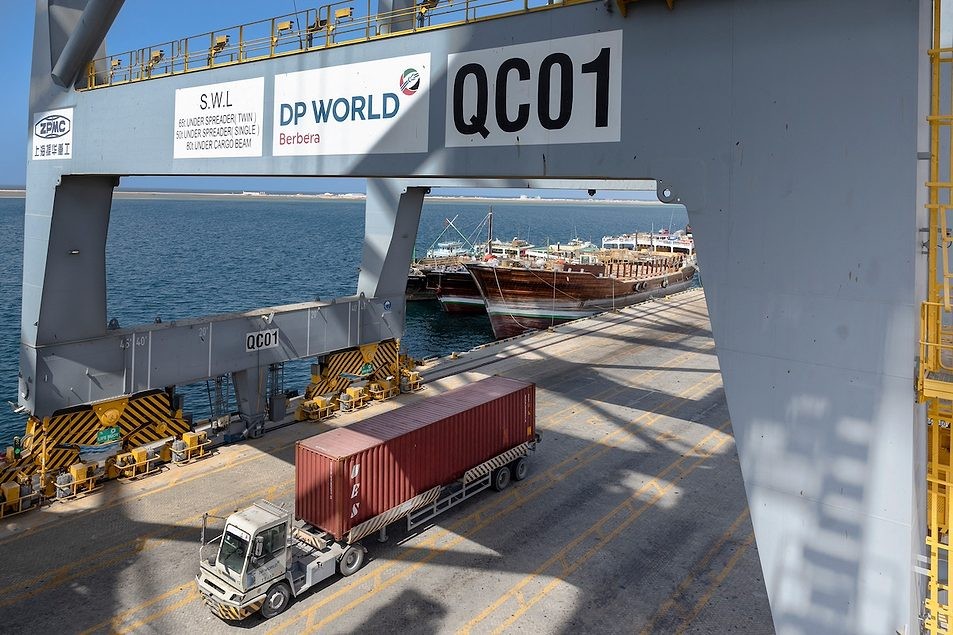
The corridor unifies ocean freight with inland logistics under a single operational framework. It provides access to three port terminals, 52 warehouses, and a fleet of more than 4,250 vehicles. These assets span DP World’s existing infrastructure in Angola (including the Port of Luanda) and Mozambique (including the Port of Maputo), both of which have undergone terminal modernization since DP World assumed management in 2019 and 2021 respectively. The Port of Santos — Brazil’s largest container port, handling 12.8 million TEUs in 2025 — serves as the origin node. According to the report, the corridor enables end-to-end visibility and control for shippers moving goods from origin to final delivery across the South Atlantic.
Target Sectors and Operational Scope
The service is explicitly designed to support three key Brazilian export categories: animal proteins, agricultural commodities, and consumer goods. These sectors collectively accounted for 68% of Brazil’s $332 billion in exports to Africa in 2025, per data cited in the African Union’s 2026 Trade Outlook Report. The corridor leverages DP World’s existing 17-year concession at the Port of Luanda and its 10-year concession at the Port of Maputo, both awarded under national port reform frameworks. Inland logistics include trucking, rail intermodal connections (e.g., the Nacala Corridor linking Maputo to Malawi and Zambia), and customs brokerage services certified by Brazil’s Receita Federal and Angola’s ANACOM.
Leadership Statement and Strategic Rationale
DP World Brazil CEO Fabio Siccherino emphasized operational simplification and market access in his official statement:
“This Brazil-Africa Link simplifies the journey for Brazilian exporters to a market with enormous growth potential. By integrating the entire logistics chain – from port of origin to final delivery – we reduce complexity, increase predictability, and enable our customers to unlock new business opportunities between Brazil and Africa.” — Fabio Siccherino, CEO, DP World Brazil
The initiative aligns with broader industry trends: Maersk launched its own Brazil–West Africa service in March 2026, calling at Santos, Abidjan, and Tema; MSC inaugurated a dedicated Brazil–Angola route in April 2026 with weekly sailings. For supply chain professionals, the corridor reduces average transit time from Santos to Luanda to 14 days, compared to the prior multi-carrier average of 22 days, and cuts documentation handoffs from 7 to 2 touchpoints. The service also supports compliance with the AfCFTA’s Rules of Origin, enabling preferential tariff treatment for qualifying Brazilian–African shipments.
Source: www.logisticsmanager.com
Compiled from international media by the SCI.AI editorial team.