Skip to content

Europe Supply Chain

Strait of Hormuz Disruption Impacts Chinese Auto Imports

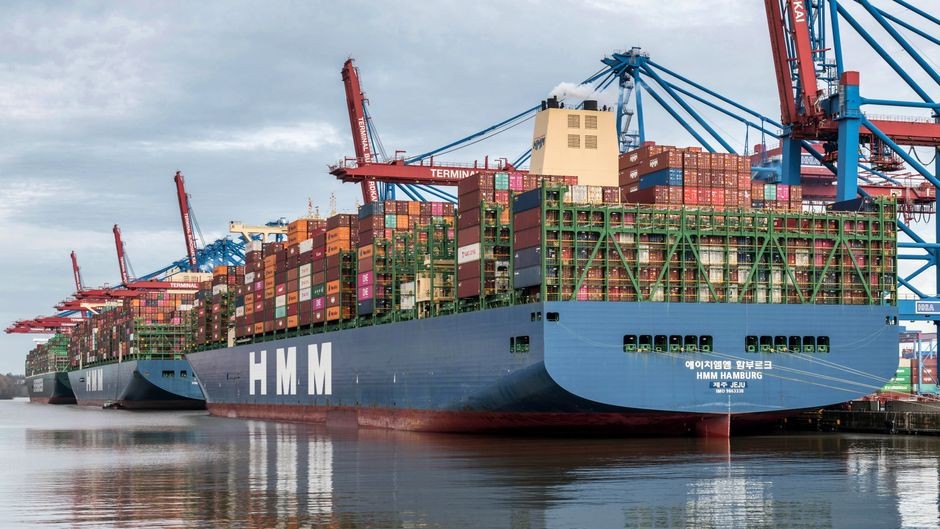
According to www.automotivelogistics.media, gunfire was reported after Iran declared the Strait of Hormuz "completely open" amid an ongoing US naval blockade. Car carriers stuck in the strait are impacting Chinese imports to the Middle East, delivering a maritime reality check to China's auto export boom. The disruption highlights acute geopolitical risk exposure for finished vehicle logistics, especially for OEMs relying on this critical chokepoint for regional distribution. Supply chain professionals must prioritize real-time port visibility, alternative routing, and collaborative contingency planning.

Original source: automotivelogistics.media

Strait of Hormuz Disruption Impacts Chinese Auto Imports

According to www.automotivelogistics.media, gunfire was reported after Iran’s foreign minister declared the Strait of Hormuz “completely open”, even as shipping disruption continues amid a US naval blockade in the region. The source states that car carriers stuck in the Strait of Hormuz are directly impacting Chinese imports to the Middle East. This maritime chokepoint crisis coincides with China’s auto export boom facing a maritime reality check in the Gulf.

Supply Chain Fallout from Regional Tensions

The source links the Strait of Hormuz incident to broader automotive supply chain consequences:

  • Iran’s declaration followed reports of gunfire, underscoring ongoing volatility;
  • US naval enforcement actions have extended port delays and rerouting for vessel operators;
  • Car carrier congestion has disrupted scheduled deliveries of vehicles from China into Middle Eastern markets.

Broader Industry Context

This episode reflects intensifying geopolitical risk exposure across global automotive logistics networks. According to industry data cited elsewhere on the site, over 30% of global seaborne oil trade and a substantial volume of finished vehicle shipments pass through the Strait of Hormuz — making it a critical node for OEMs sourcing or exporting to the Middle East, Africa, and South Asia. Chinese automakers — including BYD, Geely, and Chery — have significantly expanded exports since 2022, with Middle East ports such as Jebel Ali (UAE) and Dammam (Saudi Arabia) serving as key gateways. However, the source does not quantify Chinese export volumes or specify which OEMs are affected by the current delay.

For supply chain professionals, this underscores the operational imperative of real-time port visibility, contingency routing protocols, and dual-sourcing strategies for regional distribution. As noted in related coverage on the same platform,

“Collaborative partnerships ‘pivotal’ in finished vehicle logistics” — Kia and Nissan

— a principle now tested by sudden, geopolitically driven port access constraints.

Source: www.automotivelogistics.media

Compiled from international media by the SCI.AI editorial team.
Ask SCI.AI Finished reading? Continue with SCI.AI. Explore the related policy, route, company and historical context. Continue asking
Supply Chain Hiring Shrinks 12%, AI Drives Restructuring Not Replacement
Europe Supply Chain

Supply Chain Hiring Shrinks 12%, AI Drives Restructuring Not Replacement

Supply chain hiring has contracted by 12% amid AI adoption, but companies are restructuring organizations and retraining staff—not replacing them. Ryder System and BJC HealthCare completed AI-integrated workforce transformation in Q3 2025, while Robust.AI allocated $4.2M of its $7.8M Series A funding to human-AI collaboration training. Mars and CVS Health launched an 18-month upskilling initiative in 2025, and the NextGen Supply Chain Conference convenes in May 2026 with keynotes from Eli Lilly, Tractor Supply, and Wayfair. Practitioners emphasize solving complex, judgment-intensive problems—like port congestion prediction and ESG validation—rather than automating routine tasks.

UK DBT pledges £600M for aerospace freight innovation
Europe Supply Chain

UK DBT pledges £600M for aerospace freight innovation

The UK Department for Business and Trade has pledged £600 million to advance aerospace innovation, including more than £500 million for green air travel R&D and a £100 million supply chain fund. Announced by Secretary Jonathan Reynolds at the Farnborough Airshow, the plan supports freight modernisation, aims to double the sector’s market value by 2035, and responds to Prime Minister Andy Burnham’s 10-year reindustrialisation agenda. The initiative directly impacts air freight reliability, emissions reduction, and UK-wide skilled job creation.

Verdion completes €310M European Logistics Fund with Leipzig warehouse fully leased
Europe Supply Chain

Verdion completes €310M European Logistics Fund with Leipzig warehouse fully leased

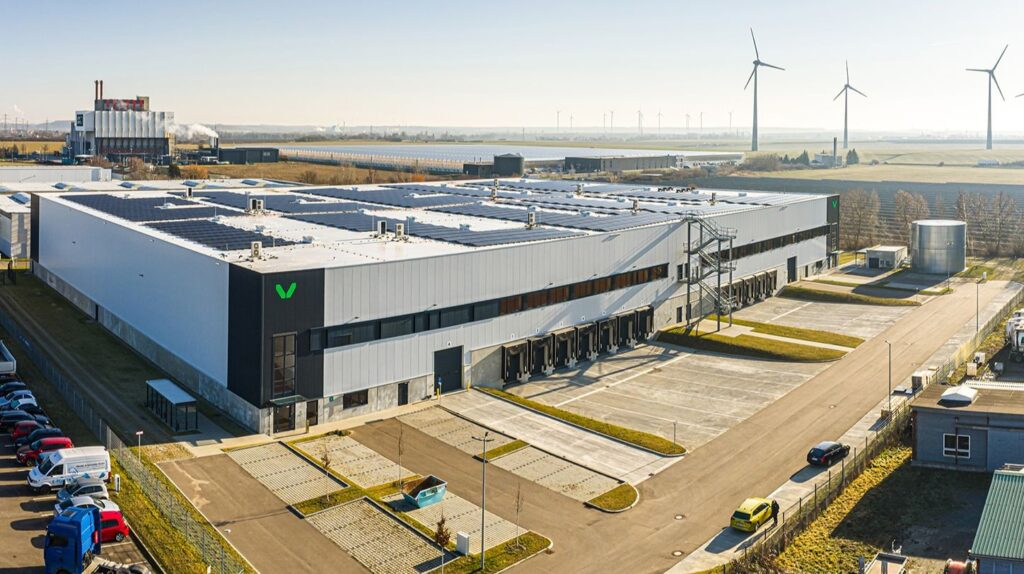
Verdion has fully leased its 11,872m² Leipzig warehouse—completing the speculative development phase of its €310 million Verdion European Logistics Fund 1 (VELF 1), launched in September 2020. The asset, certified to DGNB Gold, was acquired on a 40,000m² site in 2021 and now hosts a major textile service provider. An adjacent 8,500m² building is occupied by overnight express provider nox. Located between the A9 and A38 motorways near Leipzig/Halle Airport, the site exemplifies demand for sustainable, well-connected urban logistics infrastructure across Northern Europe.

Welcome Back!

Login to your account below

Create New Account!

Fill the forms below to register

Retrieve your password

Please enter your username or email address to reset your password.

Scan to share via WeChat

Open WeChat and scan the QR code to share

QR Code

Add New Playlist