Skip to content

Geopolitics · Risk & Resilience · Trade & Tariffs

US to Impose 25% Tariffs on EU Cars and Trucks

According to www.ttnews.com, former U.S. President Donald Trump announced on May 1, 2026, that the U.S. will raise tariffs on EU-sourced cars and trucks to 25%, citing EU noncompliance with a transatlantic trade agreement. The levy excludes vehicles built in U.S. plants. The original deal had set a 15% tariff ceiling on most EU goods in exchange for EU elimination of tariffs on U.S. industrial goods — a pact the source states has faced challenges since inception. Supply chain professionals must now assess cost impacts, origin verification, and potential nearshoring acceleration.

Original source: ttnews.com

US to Impose 25% Tariffs on EU Cars and Trucks

According to www.ttnews.com, former U.S. President Donald Trump announced on May 1, 2026, that the United States will raise tariffs on automobiles and trucks imported from the European Union to 25%, citing noncompliance with a previously negotiated transatlantic trade agreement.

Tariff Announcement and Conditions

In a social media post, Trump stated:

“I am pleased to announce that, based on the fact the European Union is not complying with our fully agreed to Trade Deal, next week I will be increasing Tariffs charged to the European Union for Cars and Trucks coming into the United States. The Tariff will be increased to 25%.” — Donald Trump, former U.S. President

The announcement specifies that the new tariff rate will apply only to vehicles manufactured in the EU. Trump emphasized an exemption for EU-based automakers producing cars and trucks in U.S. facilities:

“It is fully understood and agreed that, if they produce Cars and Trucks in U.S.A. Plants, there will be NO TARIFF.” — Donald Trump, former U.S. President

Background of the Trade Agreement

Under the referenced transatlantic trade deal, the EU had committed to eliminating tariffs on U.S. industrial goods in return for a 15% tariff ceiling on most EU products entering the U.S. However, the source states that this pact has faced challenges since its initial agreement — though no details about the nature or timeline of those challenges are provided in the article.

Implications for Global Supply Chain Professionals

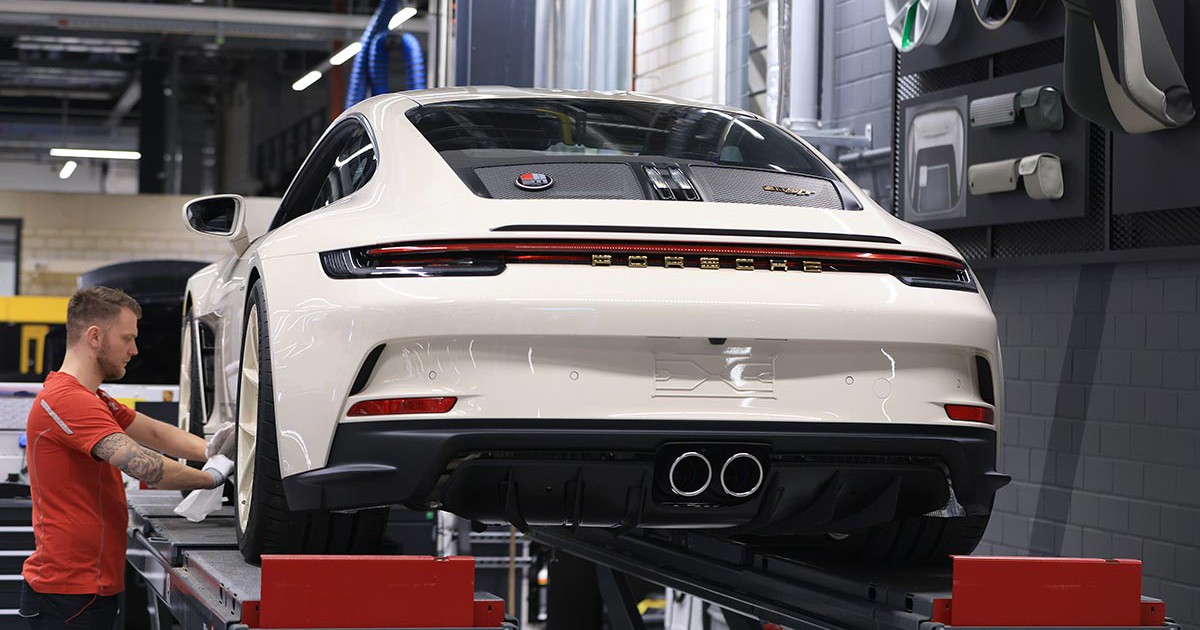
For supply chain professionals managing cross-border automotive logistics between the EU and U.S., the proposed tariff shift introduces immediate cost and compliance considerations. Vehicles sourced from EU assembly plants — including those of major manufacturers such as BMW, Mercedes-Benz, and Porsche (as illustrated by the article’s accompanying photo of the Porsche AG Zuffenhausen plant in Stuttgart) — would face significantly higher landed costs unless re-routed through U.S.-based production or alternative trade regimes. This mirrors recent patterns observed during the 2018–2019 U.S.–EU steel and aluminum tariff disputes, where companies accelerated investment in U.S. manufacturing capacity to preserve duty-free access. According to established industry data, over 35% of EU vehicle exports to the U.S. in 2025 were passenger cars and light trucks — categories directly affected by the announced measure. While the article does not specify effective date or legal mechanism, practitioners should anticipate rapid operational adjustments, including revised landed-cost modeling, potential shifts in regional sourcing strategies, and heightened scrutiny of country-of-origin documentation.

Source: Transport Topics

Compiled from international media by the SCI.AI editorial team.

Ask SCI.AI Finished reading? Continue with SCI.AI. Explore the related policy, route, company and historical context. Continue asking
Singapore climate envoy: climate is ‘mother’ of supply chain disruption
Disruptions

Singapore climate envoy: climate is ‘mother’ of supply chain disruption

Singapore's climate action ambassador Ravi Menon called climate change the "mother of all" supply chain disruptions at the Bloomberg Sustainable Business Summit 2026. Using El Niño as an example, he explained how climate events cascade through food systems, hydroelectric power, and energy supply chains. Menon also highlighted grid infrastructure and battery storage as key investment opportunities, arguing that private capital must complement public and philanthropic funding to drive climate action.

BHP faces A$120M/day loss as 48-hour Port Hedland strike looms
Disruptions

BHP faces A$120M/day loss as 48-hour Port Hedland strike looms

BHP faces a A$120 million per day revenue loss as a 48-hour strike at Port Hedland, the world's largest iron ore export terminal, begins August 8, 2026. The two-phase action by the Combined Ports Unions involves ~150 workers, targeting ship-loading and full operations. With 256.9 million tonnes exported in FY2026, the disruption tests supply chain resilience.

China’s exports rise 14%, imports up 22% amid trade war resilience
Supply Chain

China’s exports rise 14%, imports up 22% amid trade war resilience

China’s foreign trade rose 17.3% to ¥30.13 trillion in the first seven months of 2026, with exports up 14% and imports surging 22%. High-tech exports jumped over 50% in July, accounting for nearly 60% of monthly export growth. U.S.-China trade fell 1.6%, while ties with over 180 countries—including ASEAN and the EU—expanded. Green exports like EVs and lithium batteries posted double-digit growth for the 17th straight month. China also applies zero tariffs to imports from 63 countries.

Welcome Back!

Login to your account below

Create New Account!

Fill the forms below to register

Retrieve your password

Please enter your username or email address to reset your password.

Scan to share via WeChat

Open WeChat and scan the QR code to share

QR Code

Add New Playlist

