
Skip to content

Middle East Supply Chain

Saudi Last Mile Delivery Surges 49% to 118M Orders in Q1 2026

Saudi Arabia’s delivery market surged 49% year-on-year to exceed 118 million orders in Q1 2026, according to the Transport General Authority (TGA). Riyadh led regional volumes with 44% share, followed by Makkah (22.21%) and the Eastern Province (16.23%). The growth reflects deepening digital commerce adoption, broader geographic reach into 13 regions, and advances in operational efficiency. For global supply chain professionals, this signals heightened demand for scalable last-mile infrastructure, integrated route planning, and regionally adaptive service models across the Middle East.

Original source: logisticsmiddleeast.com

Saudi Last Mile Delivery Surges 49% to 118M Orders in Q1 2026
📋 本文要点

Saudi Arabia’s delivery market surged 49% year-on-year to exceed 118 million orders in Q1 2026, according to the Transport General Authority (TGA). Riyadh led regional volumes with 44% share, followed by Makkah (22.21%) and the Eastern Province (16.23%). The growth reflects deepening digital commerce adoption, broader geographic reach into 13 regions, and advances in operational efficiency. For global supply chain professionals, this signals heightened demand for scalable last-mile infrastructure, integrated route planning, and regionally adaptive service models across the Middle East.

According to www.logisticsmiddleeast.com, Saudi Arabia’s delivery market exceeded 118 million orders in the first quarter of 2026 — a 49% increase compared with Q1 2025, per the latest statistical report issued by the Transport General Authority (TGA).

Rapid Expansion Driven by Digital Commerce and Operational Maturity

The surge reflects stronger digital commerce trends and more efficient operating models across the Kingdom. As noted by the source, the sector has moved “well beyond convenience-led demand” and is now an established component of Saudi Arabia’s wider commerce and logistics ecosystem. This evolution signals not just growth in volume, but also maturation in service design, customer expectations, and infrastructure integration.

Regional Concentration and Expanding Reach

Regional data from the TGA shows pronounced concentration in major urban and commercial hubs:

  • Riyadh: 44% of total orders
  • Makkah: 22.21%
  • Eastern Province: 16.23%
  • Madinah: 4.97%
  • Asir: 3.34%
  • Qassim: 2.77%
  • Tabuk: 1.74%
  • Hail: 1.66%
  • Jazan: 1.14%

The remaining regions — Najran (0.65%), Al-Jouf (0.64%), Northern Borders (0.51%), and Al-Baha (0.18%) — collectively represent less than 2% of total orders. Though modest in share, their inclusion in official reporting underscores the ongoing geographic expansion of delivery services into secondary and tertiary urban centres.

Operational and Regulatory Implications

The TGA attributed growth to “the continued development of the delivery market, greater use of technological solutions, the expansion of e-commerce activity, and the adoption of more efficient operating models.” These drivers are enabling operators to improve service quality and strengthen the customer experience amid intensifying competition. For supply chain professionals, this means increasing pressure to deploy route optimisation tools, integrate real-time tracking, standardise last-mile SLAs, and align regional fulfilment capacity with shifting demand density — especially as Riyadh, Makkah, and the Eastern Province continue to absorb nearly 83% of all orders.

The latest quarterly figures suggest that delivery operators are benefiting from both scale and reach as the market develops. With demand continuing to rise across multiple regions, the delivery market is reinforcing its position as an important component of Saudi Arabia’s evolving consumer economy.

Source: www.logisticsmiddleeast.com

Compiled from international media by the SCI.AI editorial team.
Ask SCI.AI Finished reading? Continue with SCI.AI. Explore the related policy, route, company and historical context. Continue asking
Iran pushes alternative transport corridors to boost supply chain resilience
Middle East Supply Chain

Iran pushes alternative transport corridors to boost supply chain resilience

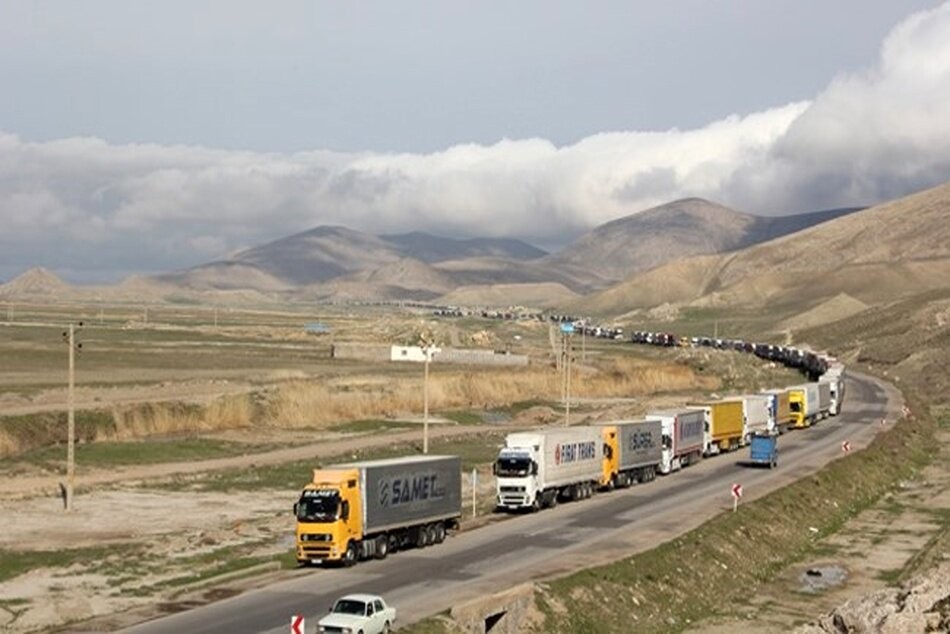
Iran is accelerating development of alternative land transport corridors to bolster supply chain resilience amid geopolitical volatility and maritime vulnerabilities. Seyed Ali Emami, Director General of the Readiness and Support Office at Iran’s Trade Promotion Organization, stated that ensuring uninterrupted goods movement — not just market competitiveness — is now the core trade priority. With maritime routes dominating global cargo but facing growing risks at chokepoints like the Strait of Hormuz and Red Sea, Iran is piloting new land corridors as of August 2026. While exports show strong growth, transit volumes have declined — prompting infrastructure upgrades, cost-reduction measures, and policy reforms targeted for completion in 2026.

DP World launches 15,250-sq-m multi-client warehouse in Riyadh
Middle East Supply Chain

DP World launches 15,250-sq-m multi-client warehouse in Riyadh

DP World has opened its first multi-client 3PL warehouse in Saudi Arabia — a 15,250-square-metre facility in Riyadh’s Al Mashael Logistics Hub offering over 17,000 pallet positions. The non-bonded warehouse supports consumer goods, automotive, retail, industrial, and technology sectors, and integrates with DP World’s broader Saudi network, including the $250 million Jeddah Logistics Park. Launched on 30 July 2026, the project advances Vision 2030’s logistics goals amid rising demand from e-commerce and manufacturing. It follows strong regional growth, exemplified by stc Group’s SAR 40.1 billion H1 2026 revenue and 30.3 million mobile subscribers.

Hormuz Ship Backlog Spurs Bioinvasion Risk Alert
Middle East Supply Chain

Hormuz Ship Backlog Spurs Bioinvasion Risk Alert

Scientists warn that over 1,500 ships stranded in the Strait of Hormuz since late February 2026 have accumulated dangerous levels of marine biofouling — including algae, mussels, and barnacles — raising high risks of global 'bioinvasion.' With vessels idle for at least 40 times longer than typical port stays, invasive species may spread to ports worldwide upon departure. A July 22, 2026 report urges mandatory hull inspections and cleaning before resuming voyages, and calls for coordinated early detection at receiving ports. The Strait of Hormuz, handling ~20% of global oil shipments, is now an ecological flashpoint with cascading supply chain and regulatory implications.

Welcome Back!

Login to your account below

Create New Account!

Fill the forms below to register

Retrieve your password

Please enter your username or email address to reset your password.

Scan to share via WeChat

Open WeChat and scan the QR code to share

QR Code

Add New Playlist