Skip to content

Middle East Supply Chain

UAE Boosts Supply Chain Resilience with 5 Key Customs & Corridor Initiatives

According to economymiddleeast.com, the UAE is advancing five key initiatives—including ACI system activation for green corridor cargo, expansion of the green corridor to Saudi Arabia, a new India-linked maritime feeder service, Customs Notice No. (6) for Omani transit, and acceptance of undertaking letters as guarantees—to strengthen regional supply chain resilience. Led by the Ministry of Foreign Trade and Dubai Customs, these efforts aim to ensure uninterrupted movement of essential goods amid rising costs and operational complexity. The initiatives are part of a broader strategy to reinforce the UAE’s role as a trusted global trade and logistics hub.

Original source: economymiddleeast.com

UAE Boosts Supply Chain Resilience with 5 Key Customs & Corridor Initiatives

According to economymiddleeast.com, the United Arab Emirates is advancing a coordinated set of customs modernization and trade corridor initiatives to strengthen regional supply chain resilience amid ongoing operational and geopolitical challenges.

High-Level Coordination Targets Trade Continuity

Dr. Thani bin Ahmed Al Zeyoudi, Minister of Foreign Trade, reaffirmed the UAE’s commitment to safeguarding trade continuity and enhancing regional supply chain resilience through close collaboration with partners and forward-looking solutions. He made the statement during a high-level coordination meeting chaired by him and hosted by the Ports, Customs and Free Zone Corporation (PCFC) in Dubai. The meeting convened senior executives from global shipping lines and maritime associations to address current regional supply chain challenges.

“The UAE will continue to play a pivotal role in supporting regional and international trade stability through targeted initiatives and adaptive policies that enhance supply chain performance and sustainability. The UAE stands ready to deepen its engagement with regional and international partners to build a more connected, resilient and future-ready trade ecosystem.” — Dr. Thani bin Ahmed Al Zeyoudi, Minister of Foreign Trade

Strengthening Alternative Trade Corridors

Abdulla bin Damithan, Chairman of the PCFC, highlighted progress in improving efficiency across alternative corridors—including Fujairah and Khorfakkan ports—and strengthening regional maritime connectivity. He emphasized sustained public-private collaboration to ensure seamless cargo movement, particularly amid rising costs and operational complexities. Ensuring the uninterrupted flow of essential goods remains a top priority, he noted, alongside reinforcing the UAE’s position as a trusted regional and global logistics hub.

Dubai Customs Rolls Out Operational Initiatives

Dr. Abdulla Busenad, Director General of Dubai Customs, outlined several implemented and pilot initiatives designed to support trade flows and enhance operational efficiency. These include:

  • The issuance of Customs Notice No. (6), enabling transit cargo movement through the green corridor with the Sultanate of Oman
  • Acceptance of undertaking letters as valid guarantees
  • Workshops with traders to explain green corridor mechanisms and address inquiries
  • Activation of the Advance Cargo Information (ACI) system through shipping companies for all green corridor cargo
  • Launch of a new maritime feeder service linking the region with India

Additional ongoing efforts include extending the grace period for re-export cargo, developing a framework to allow more land transport companies to join secured corridors, expanding the green corridor to include Saudi Arabia, and offering multiple clearance options within the corridor.

“Over the past period, we have successfully implemented a number of high-impact initiatives that facilitated cargo movement and enhanced supply chain efficiency.” — Dr. Abdulla Busenad, Director General of Dubai Customs

These measures reflect an integrated vision to enhance supply chain resilience and sustainability while reinforcing the UAE’s standing as a highly efficient and globally competitive logistics hub.

Source: economymiddleeast.com

Compiled from international media by the SCI.AI editorial team.
Ask SCI.AI Finished reading? Continue with SCI.AI. Explore the related policy, route, company and historical context. Continue asking
Iran pushes alternative transport corridors to boost supply chain resilience
Middle East Supply Chain

Iran pushes alternative transport corridors to boost supply chain resilience

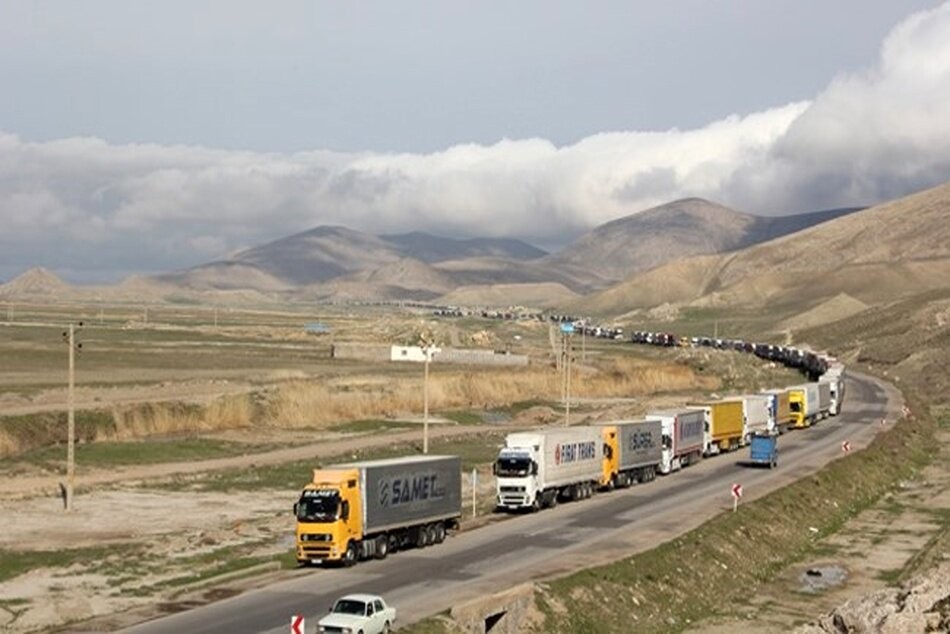
Iran is accelerating development of alternative land transport corridors to bolster supply chain resilience amid geopolitical volatility and maritime vulnerabilities. Seyed Ali Emami, Director General of the Readiness and Support Office at Iran’s Trade Promotion Organization, stated that ensuring uninterrupted goods movement — not just market competitiveness — is now the core trade priority. With maritime routes dominating global cargo but facing growing risks at chokepoints like the Strait of Hormuz and Red Sea, Iran is piloting new land corridors as of August 2026. While exports show strong growth, transit volumes have declined — prompting infrastructure upgrades, cost-reduction measures, and policy reforms targeted for completion in 2026.

DP World launches 15,250-sq-m multi-client warehouse in Riyadh
Middle East Supply Chain

DP World launches 15,250-sq-m multi-client warehouse in Riyadh

DP World has opened its first multi-client 3PL warehouse in Saudi Arabia — a 15,250-square-metre facility in Riyadh’s Al Mashael Logistics Hub offering over 17,000 pallet positions. The non-bonded warehouse supports consumer goods, automotive, retail, industrial, and technology sectors, and integrates with DP World’s broader Saudi network, including the $250 million Jeddah Logistics Park. Launched on 30 July 2026, the project advances Vision 2030’s logistics goals amid rising demand from e-commerce and manufacturing. It follows strong regional growth, exemplified by stc Group’s SAR 40.1 billion H1 2026 revenue and 30.3 million mobile subscribers.

Hormuz Ship Backlog Spurs Bioinvasion Risk Alert
Middle East Supply Chain

Hormuz Ship Backlog Spurs Bioinvasion Risk Alert

Scientists warn that over 1,500 ships stranded in the Strait of Hormuz since late February 2026 have accumulated dangerous levels of marine biofouling — including algae, mussels, and barnacles — raising high risks of global 'bioinvasion.' With vessels idle for at least 40 times longer than typical port stays, invasive species may spread to ports worldwide upon departure. A July 22, 2026 report urges mandatory hull inspections and cleaning before resuming voyages, and calls for coordinated early detection at receiving ports. The Strait of Hormuz, handling ~20% of global oil shipments, is now an ecological flashpoint with cascading supply chain and regulatory implications.

Welcome Back!

Login to your account below

Create New Account!

Fill the forms below to register

Retrieve your password

Please enter your username or email address to reset your password.

Scan to share via WeChat

Open WeChat and scan the QR code to share

QR Code

Add New Playlist