

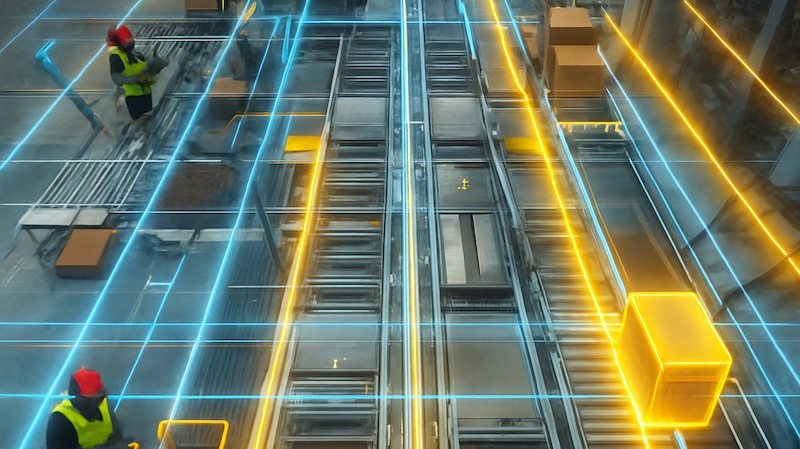
According to roboticsandautomationnews.com, robotics-as-a-service (RaaS) and warehouse-as-a-service (WaaS) models offer short-term flexibility for supply chain operators but do not deliver long-term automation success on their own.
Temporary Flexibility vs. Long-Term Strategy
A subscription-based RaaS model allows businesses to lease robots rather than purchase them outright — avoiding large upfront capital expenditure (CapEx) and enabling scaling up or down with demand. However, the source states this should be considered a temporary solution, not a long-term business strategy. Subscription fees can quickly exceed the total cost of comparable owned systems, especially in stable, high-volume environments. The model also limits opportunities for customisation. A further concern highlighted across the industry is vendor or finance provider insolvency risk.
Diverging Paths by Organisation Size
Larger organisations with stronger capital capacity are taking a more cautious route: buying automation outright while outsourcing operations to reduce risk exposure. Meanwhile, third-party logistics providers (3PLs) are increasingly awarded longer-term contracts to justify infrastructure investments in futureproof solutions. For SMEs, the landscape is shifting toward affordable, scalable automation — enabling service levels once reserved for major retailers. According to the report, around 80 per cent of the projects supported by Dematic focus on incremental, modular automation rather than entry-level solutions — reflecting dual demand for flexibility and control.
WaaS: Risk-Sharing Through Outsourced Infrastructure
Warehouse-as-a-service (WaaS) offers an alternative to owning facilities or equipment: companies rent capacity and fulfilment services from specialist 3PLs. This model provides access to modern automation infrastructure without upfront costs, spreads risk between the 3PL and client, and supports confident planning via flexible contract durations. Shared-user facilities run by 3PLs help organisations justify pay-as-you-go (PAYG) options and lower barriers to automation adoption — enabling strategic transitions from manual to sophisticated systems.
The Balanced Approach Delivers Sustainable ROI
A blended strategy — combining fixed automation with newer, flexible solutions — delivers the best long-term return on investment. For example, instead of deploying a full shuttle system (which may be cost-prohibitive), a business might use a core fleet of owned or rented AMRs, add fixed automation where predictable, and lease additional shuttles or AMRs for peak periods. As the source explains:
“For larger organisations with established infrastructure and strong capital investment capacity a blended approach is more effective, spreading risk across a mix of automation models within the distribution network rather than relying on a single solution.” — Kevin Price, logistics consultant, Dematic
Practical Implications for Supply Chain Professionals
- Leasing robots remains useful for testing automation and managing short-term demand spikes — but must not define the entire automation roadmap.
- SMEs benefit from WaaS-enabled capability building: smoother integration, phased investment, and financial risk mitigation — provided cost implications and integration requirements are fully understood.
- All organisations must prioritise developing long-term operational capability, not just renting technology.
Source: Robotics & Automation News
Compiled from international media by the SCI.AI editorial team.


