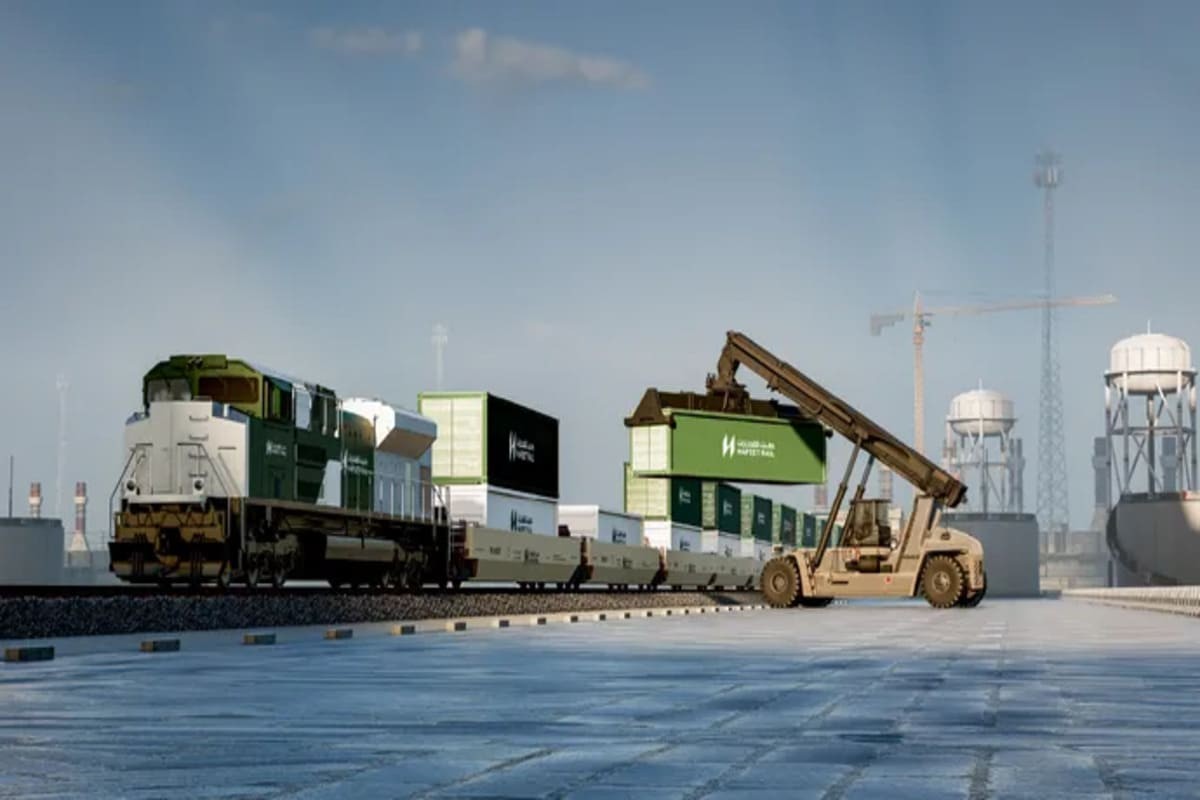
Hafeet Rail — a joint venture of Etihad Rail, Oman Rail, and Mubadala — has completed 40 percent of the 238km UAE-Oman logistics corridor, per economymiddleeast.com. Key milestones include 27 million cubic metres of earthworks, 100,000+ cubic metres of concrete, and ten million safe man-hours. The project enhances cross-border freight, supports Oman Vision 2040 and UAE development goals, and integrates advanced signalling and interoperable systems. It reduces road dependency, cuts emissions, and strengthens GCC supply chain resilience.
According to economymiddleeast.com, Hafeet Rail has achieved 40 percent completion on the 238-kilometre UAE-Oman logistics corridor — a flagship cross-border rail infrastructure project jointly developed by Etihad Rail, Oman Rail, and Mubadala Investment Company.
Project Scope and Engineering Complexity
The corridor traverses diverse terrain — from urban and industrial zones in the Al Ain Region and Al Buraimi, to mountainous areas and deep wadis including Wadi Al Jizzi and the port-industrial hub of Sohar. To ensure long-term operational safety and sustainability, the project requires specialised engineering solutions: large-scale excavation, construction of major bridges and tunnels, and integrated flood protection systems.
Construction Progress Metrics
As reported, more than 27 million cubic metres of earthworks have been completed. Concrete works exceed 100,000 cubic metres. Tunnel excavation has reached a key milestone. Structural work includes 80 structures under construction at varying stages, alongside 900 concrete piles and 130 box culverts.
Strategic and Operational Goals
The rail link is designed to strengthen supply chain resilience, support trade flows between the UAE and Oman, and enable efficient cross-border freight movement across ports, industrial zones, and logistics hubs. It aligns with Oman Vision 2040 and the UAE’s national development goals, supporting economic diversification and reducing reliance on road transport — thereby lowering emissions and advancing regional integration.
Railway systems, signalling, control, and communications technologies meet the highest internationally recognised standards, ensuring interoperability between UAE and Omani networks. These systems allow for reduced train headways, greater operational capacity, and improved automation — delivering reliable performance across all operating and weather conditions.
Health, Safety, and Human Capital
Hafeet Rail reports ten million safe man-hours without any major injuries, underscoring robust safety systems and risk management practices. Abdulrahman Al Hatmi, CEO of Asyad Group in the Sultanate of Oman and one of Hafeet Rail’s partners, stated:
“The pace of implementation reflects our shared commitment to launching this project and delivering passenger and freight services according to schedule. This progress builds upon the foundations established through the development of the railway sector in the Sultanate of Oman since the launch of Oman Rail, which formed the original vision and strategic foundation for this initiative. We are proud today to see national talent playing a leading role across all aspects of the project, and the capabilities we have built and nurtured over the past decade are delivering tangible results.”
Ahmed AlMusawa AlHashemi, CEO of Hafeet Rail, added:
“Reaching the 40 per cent completion milestone reflects the strong foundations of this project. As we move into the next phase of delivery, our focus remains on maintaining momentum, strengthening collaboration among partners, and ensuring the project delivers long-term value in line with the highest international standards.”
While the current phase prioritises freight, the corridor lays the groundwork for future passenger rail services — supporting tourism, business mobility, and social connectivity between the two nations.
Source: economymiddleeast.com
Compiled from international media by the SCI.AI editorial team.