

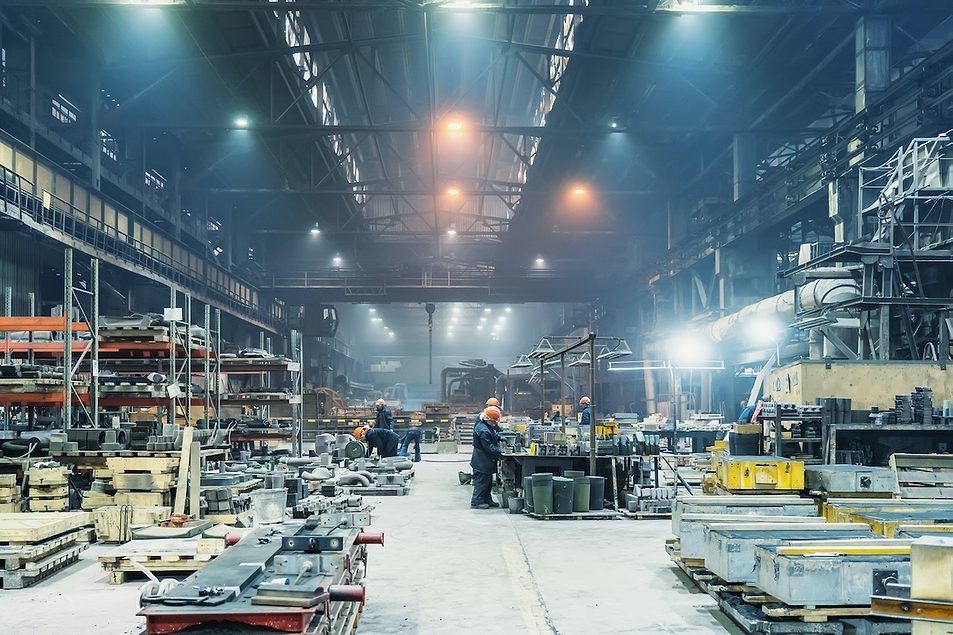
U.S. manufacturing reshoring is accelerating — with $114.7B in new construction spending in 2022 — but faces five critical headwinds: (1) grid instability threatening energy-intensive fabs (e.g., TSMC’s Arizona site may demand 1,200 MW); (2) acute labor shortages (570K openings in March 2024; 1.9M projected vacancies by 2033); (3) climate-driven disruptions (300+ extreme weather events tracked in 2024); (4) fragile domestic supplier ecosystems; and (5) 297,696 federal regulatory restrictions. These challenges directly impact supply chain resilience, lead times, and capital deployment decisions for global practitioners.
According to www.supplychainbrain.com, U.S. manufacturing is experiencing a historic reshoring wave — with new manufacturing construction spending reaching an annual rate of $114.7 billion in 2022, a 40% increase year-over-year and a 62% increase over the past five years, per the U.S. Census Bureau. This surge is driven by the CHIPS and Science Act, rising labor and transportation costs, U.S. tariffs on China, geopolitical tensions, and strategic efforts to reduce single-source dependency and strengthen supply chain resilience. The semiconductor sector exemplifies this trend: a recent report projects the U.S. will triple its domestic semiconductor manufacturing capacity between 2022 and 2032. The U.S. semiconductor market in aerospace and defense alone is expected to reach $7.93 billion in 2024. Major firms including Intel, NVIDIA, Samsung, and Micron Technology are expanding their U.S. footprints.
Powering U.S. Manufacturing
The physical construction of facilities is often the simplest part; infrastructure and utility readiness present greater hurdles. The U.S. electricity grid faces growing instability as fossil fuel and nuclear plants retire, while renewable generation lacks sufficient storage and transmission capacity to meet surging demand. For example, TSMC’s Arizona fab will initially require 200 megawatts — enough to power ~40,000 homes — and up to five additional fabs in the area could push regional demand to 1,200 megawatts. Unreliable power threatens operational continuity, especially for energy-intensive industries like semiconductors and aerospace.
Labor Shortages and Disruptions
There were 570,000 U.S. manufacturing job openings in March 2024, yet projections indicate 1.9 million manufacturing jobs could remain vacant by 2033. This skills gap impedes production scaling, delays factory commissioning, extends lead times, and hinders technology adoption. Labor disruptions — including strikes, layoffs, and protests — rose 74% in 2023 year-over-year, according to EventWatchAI, Resilinc’s risk-monitoring platform. In Q1 2024, labor disruptions ranked as the number-two disruption impacting manufacturing.
Climate Change Risk
Resilinc has tracked over 300 extreme weather events so far in 2024 that threaten supply chain continuity. NOAA reports April 2024 was the hottest month on record, extending an 11-month global record-breaking streak. Increasingly intense heatwaves, floods, droughts, and hurricanes damage roads, railways, ports, and energy infrastructure — undermining the very resilience reshoring aims to achieve.
Maintaining a Strong Supply Base
China’s decades-deep supplier ecosystem — offering ready access to components from nuts and bolts to advanced subsystems — cannot be quickly replicated in the U.S. Companies reshoring final assembly but still relying on Chinese or Taiwanese suppliers for critical parts have not meaningfully reduced exposure. Building new domestic or nearshore supplier networks is time-intensive and costly, delaying full operational independence.
Regulatory Complexity
Federal legislation such as the CHIPS and Science Act and the Inflation Reduction Act provides incentives, yet regulatory burdens remain steep. According to the National Association of Manufacturers, the industrial sector faces 297,696 restrictions on its operations from federal regulations. Compliance costs compound across federal, state, and local jurisdictions — spanning environmental, safety, labor, and permitting domains.
Source: Supply Chain Brain
Compiled from international media by the SCI.AI editorial team.


