

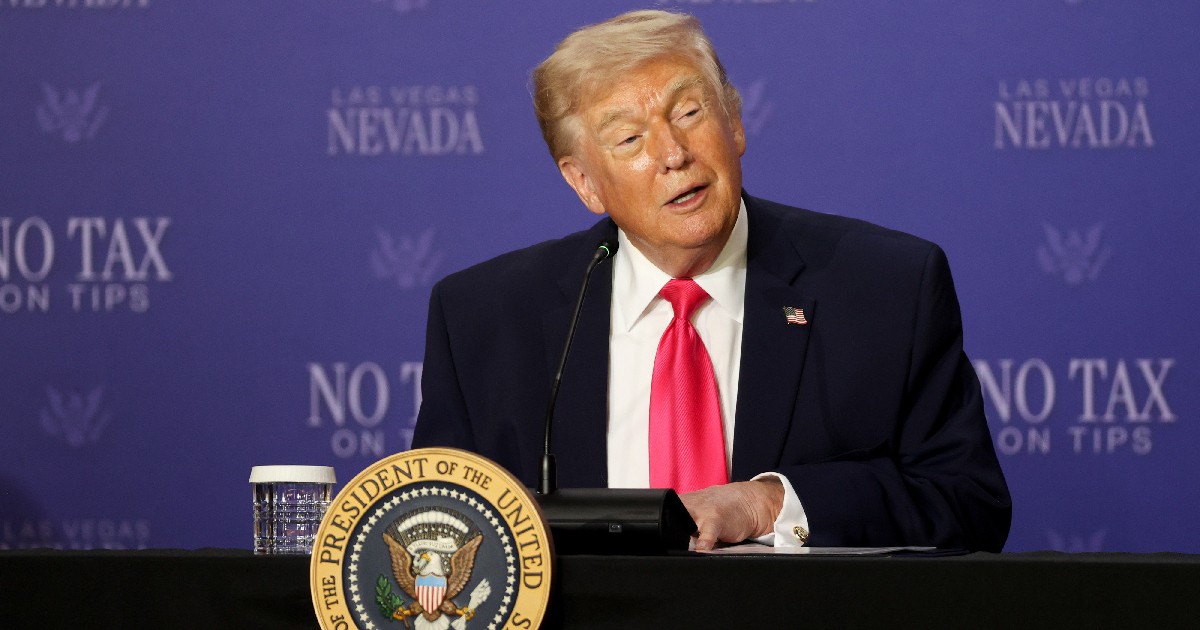
On April 20, 2026, former President Donald Trump signed five Defense Production Act determinations to authorize U.S. Department of Energy funding for coal power, liquefied natural gas, domestic petroleum, and power-grid infrastructure. The move responds to rising energy costs amid the Iran war, surging AI-driven electricity demand, and political pressure ahead of the November midterm elections. Funding derives from Trump’s prior tax-and-spending package and targets bottlenecks including manufacturing shortages, regulatory delays, and financing gaps. The DPA invocation follows Trump’s Day-One national emergency declaration on energy supply and contrasts with Biden’s prior DPA use for solar panels and heat pumps.
According to www.ttnews.com, President Donald Trump invoked the Defense Production Act to provide federal funds for a wide range of energy projects, as his administration faces pressure to help curb rising oil and gas costs.
Five Presidential Determinations Signed
Trump on April 20 signed five presidential determinations under the law, according to a White House official on condition of anonymity to detail the measures ahead of a public announcement. Those measures broadly cover a number of sectors, including coal power, liquefied natural gas, domestic petroleum and power-grid infrastructure.
Funding Scope and Eligible Projects
The move allows the Energy Department to deploy funding that was secured last year in Trump’s flagship tax-and-spending package. The directives authorize the use of tools including energy purchases and financial support, the official said, in a bid to overcome delays, financing shortfalls, regulatory hold-ups and market barriers impacting the industries.
With Trump’s signature, the determinations set the stage for the federal government to release funds targeting purchases under those categories later. Projects eligible for awards could include coal-fired power plants, gas-turbine and transformer manufacturing facilities and critical electrical production sites — all of which have been subject to shortages.
Strategic Context and Political Drivers
- Trump on April 20 signed five Defense Production Act determinations to fund energy projects, a White House official said.
- The move aims to curb rising oil, gas and power costs amid the Iran war, surging AI-driven demand and midterm election pressure.
- The determinations allow the Energy Department to deploy funds for purchases and financial support across coal power, LNG, petroleum and grid infrastructure.
Consumer worries about high energy costs have weighed heavily on the White House as the Iran war drags on. Voter worries about high costs of living — including for electricity and gasoline — threaten to cost Republicans control of Congress in November’s midterm election. Surging power demand — in part to help supply the artificial intelligence industry — also threatens to keep driving up electricity bills Trump promised to slash in office.
Trump has pushed to expand domestic oil production, saying that will help ease energy bills and match the growing demand for power by rapidly developing industries such as artificial intelligence.
Historical Use and Legal Framework
The Defense Production Act allows presidents to take unilateral actions to bolster U.S. national defense capabilities, including by directing private-sector companies to expand production of critical industrial materials. Trump has already invoked the Cold War-era statute to advance some of his energy priorities, including a bid to clear the way for renewed oil production off the southern California coast.
Former President Joe Biden also invoked the DPA to bolster energy technology, with the aim of boosting domestic production of solar panels, transformers, heat pumps and fuel cells.
Trump set the stage for aggressively using the law on his first day back in office, when he formally declared a national emergency tied to U.S. energy supply and infrastructure. The directive said the country faced an “extraordinary threat” from insufficient energy production, transportation and refining capacity.
Ralph Dimenna of Aperia Technologies breaks down the latest advances in tire management technology. Tune in above or by going to RoadSigns.ttnews.com.
Source: Transport Topics
Compiled from international media by the SCI.AI editorial team.


